

Running a global, decentralized storage network like Walrus feels a bit like guiding a real walrus across an ocean: strong, steady, but facing real waves. The goal is simple and human — let people store and share data without trusting a single gatekeeper. The hard part is everything in between.
When data is spread across many independent nodes, you gain resilience and freedom, but you also inherit new challenges. Nodes come and go. Connections vary. Some places are fast, others slow. Keeping data available, verified, and fairly distributed means making careful tradeoffs between speed, cost, and reliability. Scaling isn’t just “add more machines” — it’s coordinating many different actors who don’t know each other, yet must agree on what’s stored and what’s valid.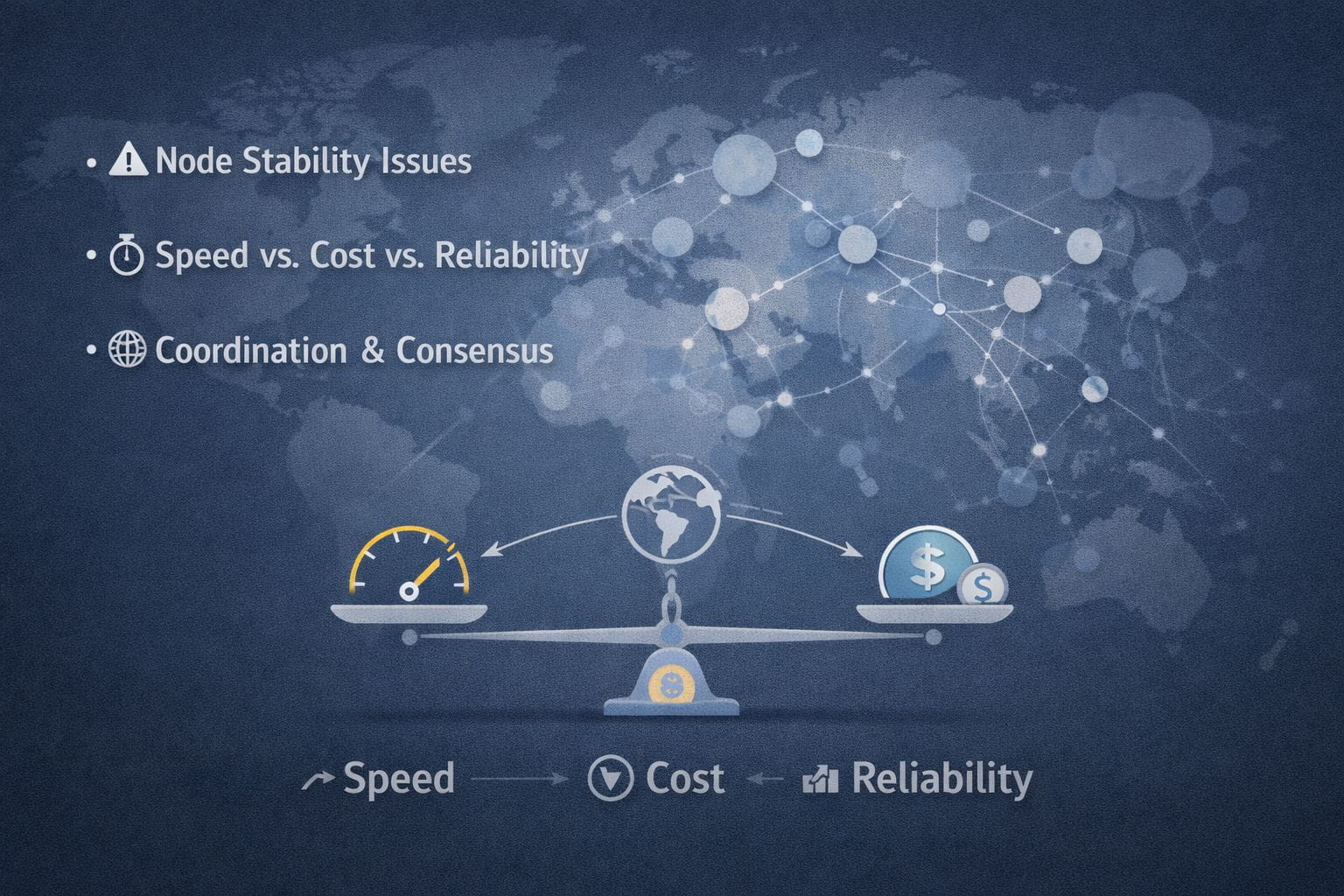
Walrus is built around the idea that storage should be durable, verifiable, and shared by the network, not owned by one company. The community is part of this work: running nodes, testing limits, and improving the system step by step. It’s not magic. It’s patient engineering, honest constraints, and a long-term vision of open, dependable data for everyone.

