
Trading signals are heavily marketed as an easy way to make money in crypto. Many beginners believe that joining a signal group will guarantee profits without needing to learn trading themselves.
The truth is very different. While trading signals can be useful, blindly relying on them often leads to losses and disappointment. Understanding what signals really are — and what they are not — is essential.
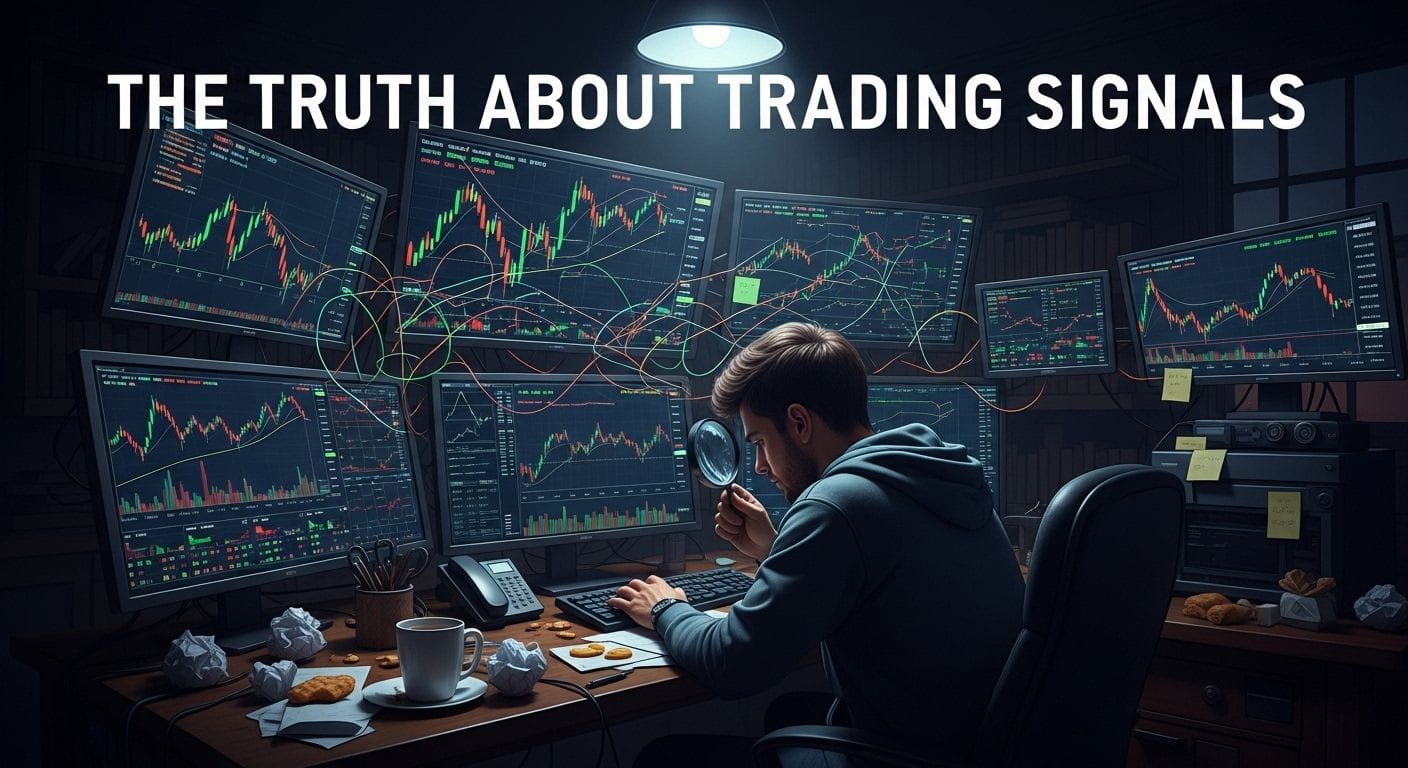
What Are Trading Signals?
Trading signals are trade suggestions that usually include:
Entry price
Take-profit targets
Stop-loss level
They are shared through Telegram, Discord, or paid subscription services.
Myth 1: Trading Signals Guarantee Profits
Many signal providers claim very high win rates.
Reality
No signal is 100% accurate
Even professional traders have losing trades
Market conditions change constantly
Losses are unavoidable, even with good signals.
Myth 2: You Don’t Need to Learn Trading
Beginners often believe signals replace education.
Reality
Without knowledge:
You don’t understand risk
You panic during drawdowns
You don’t know when to avoid bad signals
Signals without understanding are dangerous.
Myth 3: Signal Providers Always Share the Truth
Most signal groups only show winning trades.
Reality
Losing trades are often hidden
Results are cherry-picked
Risk management is rarely shown
This creates unrealistic expectations.
The Biggest Problem: No Risk Management
Many beginners follow signals with:
Too much capital
No position sizing
No stop-loss discipline
Even a good signal can cause heavy losses without proper risk control.
When Trading Signals Can Be Useful
Trading signals can help if:
You understand basic technical analysis
You manage your own risk
You treat signals as ideas, not guarantees
You analyze the market yourself
Smart traders use signals as confirmation, not instructions.
How Beginners Should Use Signals Safely
✔ Never risk more than you can afford to lose
✔ Always calculate position size
✔ Use stop-loss properly
✔ Avoid overtrading
✔ Focus on learning alongside using signals
Better Alternative for Beginners
Instead of relying fully on signals:
Learn basic chart patterns
Understand support and resistance
Study market structure
Practice on demo or small capital
Education builds independence.
Trading signals are not a shortcut to success. They can help, but only when used with knowledge, discipline, and proper risk management. Blindly following signals turns trading into gambling.
📌 Signals don’t make traders profitable — skills do.


