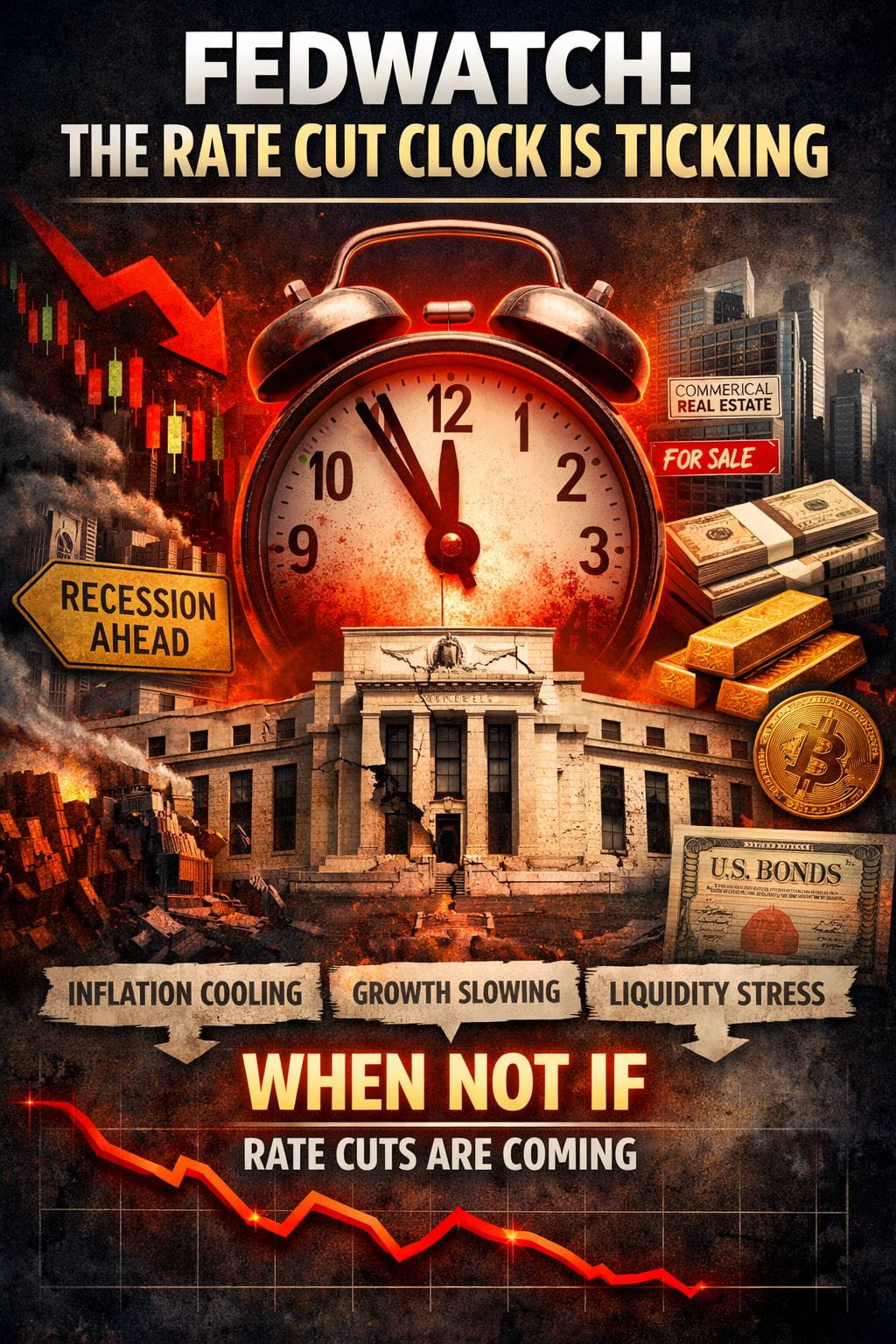
Markets aren’t guessing anymore — they’re pricing the pivot.
According to #FedWatch probabilities, the Federal Reserve is moving from “higher for longer” to when, not if rate cuts begin. Inflation has cooled just enough, growth is slowing just enough, and liquidity stress is quietly creeping back into the system.
This is how regime shifts start.
🔍 WHAT FEDWATCH IS SIGNALING
FedWatch probabilities are doing something important:
Peak rates are already behind us
Terminal rate expectations are compressing
First rate cuts are being pulled forward on the curve
🧠 The market is front-running the Fed — again
History is clear:
The Fed never cuts unless something breaks.
And something is starting to crack.
🧠 WHY THE FED HAS NO ROOM LEFT
The Fed is boxed in:
Government debt servicing is exploding
Commercial real estate is under pressure
Regional banks are fragile
Consumer credit delinquencies are rising
Liquidity is thinning beneath the surface
They can talk tough — but policy follows stress, not speeches.
FedWatch isn’t emotional.
It’s probabilistic.
And right now, it’s screaming policy reversal ahead.
📉 RATE CUTS ≠ BULLISH (AT FIRST)
This is the trap retail always falls into.
Rate cuts usually come after:
Risk assets roll over
Volatility spikes
Credit markets tighten
The real opportunity comes after the panic, when liquidity floods back in.
Watch the sequence: 1️⃣ Economic slowdown
2️⃣ Fed cuts
3️⃣ Market drawdown
4️⃣ Liquidity injection
5️⃣ Explosive rebound
That’s the cycle.
💥 WHY THIS MATTERS FOR MARKETS
When FedWatch probabilities shift, capital moves early:
Bonds front-run the pivot
Gold sniffs out debasement
Equities reprice growth risk
Crypto reacts fastest to liquidity inflection points
This isn’t about guessing headlines.
It’s about positioning before confirmation.
🎯 THE BOTTOM LINE
FedWatch is no longer debating if rates fall —
It’s debating how fast.
The Fed will follow the market, as always.
And when the pivot is confirmed, the window for smart positioning will already be closing.
Stay early.
Stay liquid.
Watch the probabilities — not the noise.