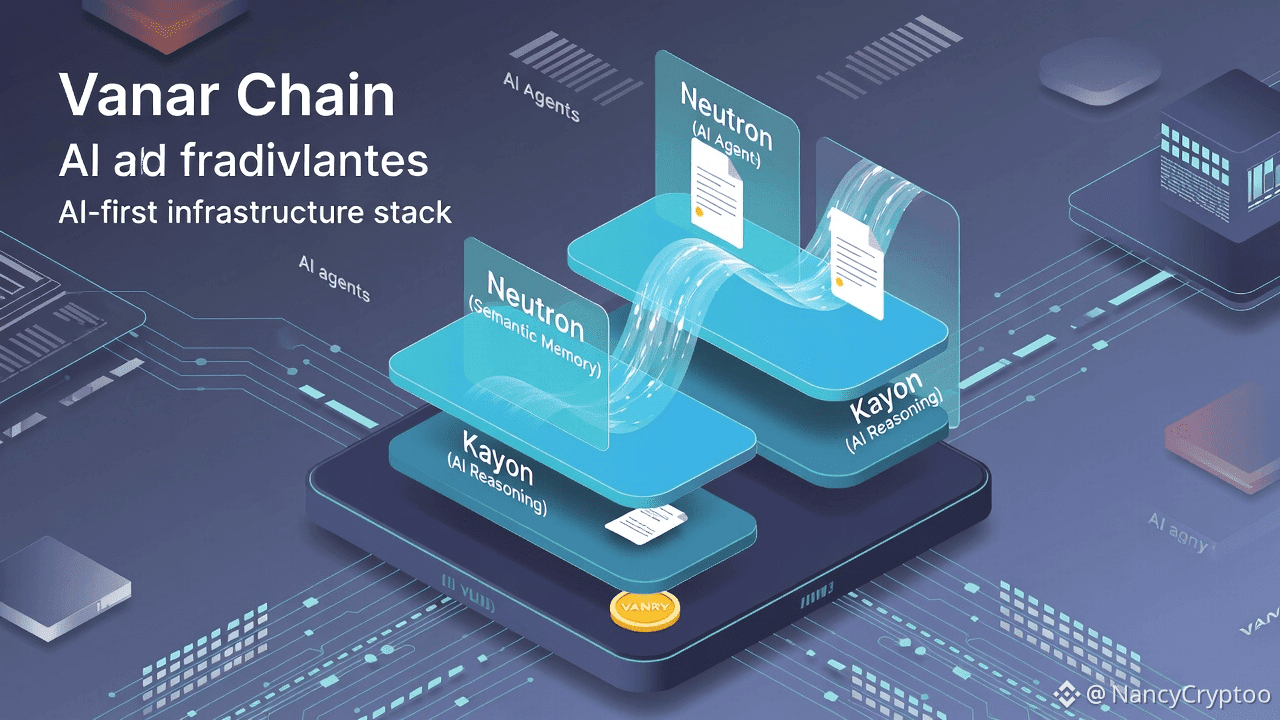
The next evolution of blockchain is not faster transactions or cheaper fees — it’s fundamentally making the chain intelligent by design. Vanar Chain tackles this challenge by embedding AI infrastructure directly into its protocol stack, creating a platform where reasoning, memory, and automated logic live natively on chain.
Traditional blockchains are optimized for data storage and execution. They can settle transactions and run smart contracts efficiently. But when applications require deep semantic understanding, real-time analysis, or compliant automation — especially for enterprise use cases — developers must stitch together off-chain services, Oracle networks, and external compute layers. This fragmented model limits trust, increases complexity, and opens vectors for inconsistency.
Vanar’s solution is an AI-native Layer 1 with a multi-layer stack that includes:
Neutron: a semantic memory layer that turns documents, files, and datasets into compact, searchable knowledge units on chain.
Kayon: an AI reasoning layer that enables natural-language queries and context-aware insights over on-chain and enterprise data.
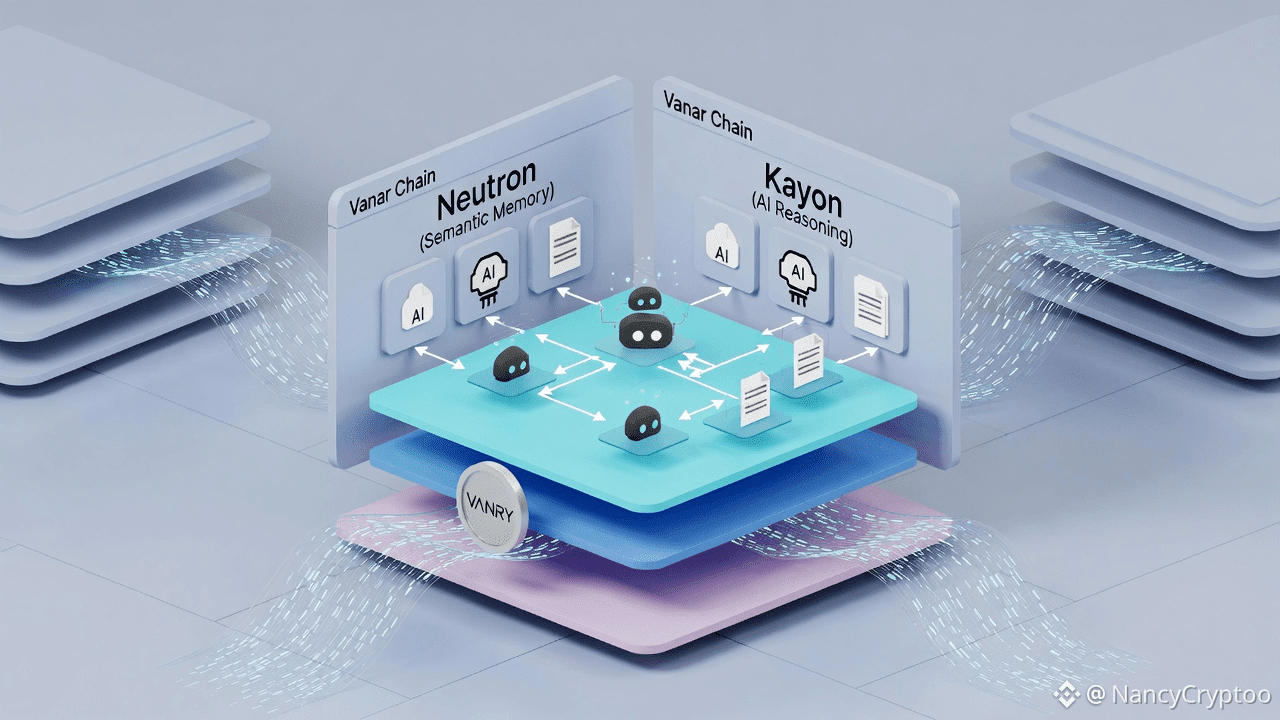
This architecture means dApps can understand not just what data exists, but what it means — and use that information for automated workflows, compliance checks, and intelligent decisioning.
The $VANRY token is central to this ecosystem. It covers gas fees, powers staking for network security, and rewards participants who support validators — and it even exists in wrapped form for interoperability across EVM chains.
Why this matters: as AI agents become participants in economic activity — negotiating contracts, reasoning about data, and triggering autonomous actions — infrastructure must support semantics and intelligence at the base layer. Vanar Chain’s integrated AI stack is a concrete step toward that future, offering tools that go beyond simple execution to enable reasoned outcomes on chain.
By prioritizing structural readiness for AI workflows, Vanar positions itself not merely for speculative narratives but for real long-term utility in the next phase of Web3 innovation.