

HELOO TWIN TULIPS FAMILY ON BINANCE SQUARE How Plasma Enables Faster and Cheaper Blockchain Transactions Globally
The first time people used blockchain, it felt like a breakthrough. Value could move without banks, borders, or permission. But as adoption grew, so did the problems. Transactions became slow during peak hours. Fees rose to levels that made small payments impractical. What started as a tool for freedom began to feel crowded and expensive. Plasma emerged from this tension, not as a replacement for blockchains, but as a way to help them breathe @Plasma again.
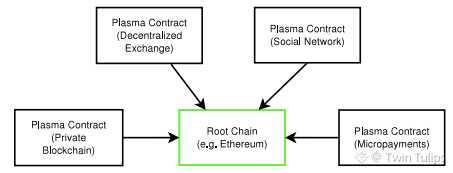
Plasma is a scaling framework designed to move most transactions off the main blockchain while keeping security anchored to it. Instead of forcing every transaction to compete for space on a single chain, Plasma allows the creation of smaller, independent chains known as Plasma chains. These chains handle large volumes of activity and periodically report back to the main network. The result is a system that can process far more transactions at a fraction of the cost.
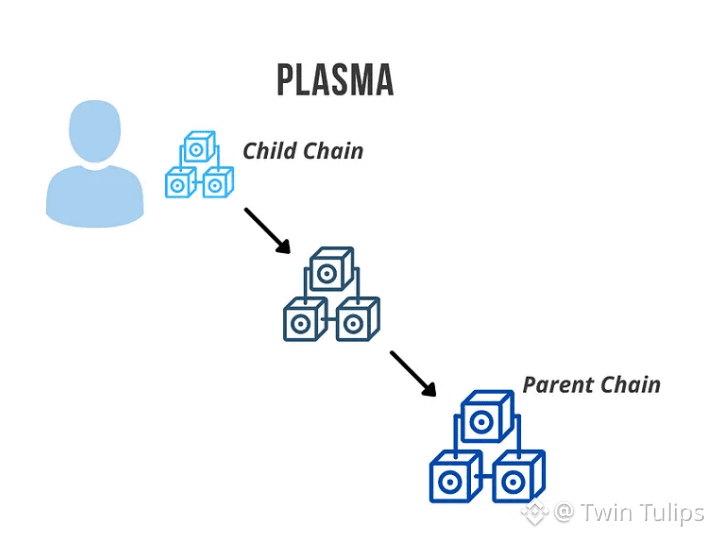
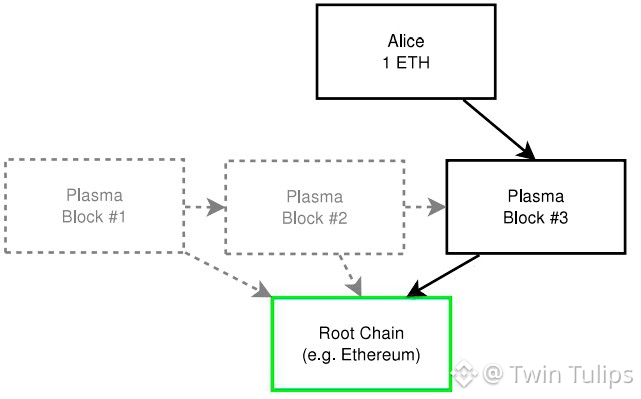
At its core, Plasma works by bundling transactions together. Users interact on a Plasma chain where confirmations are fast and fees are minimal. Only essential data, such as cryptographic proofs and summaries of activity, are sent back to the main blockchain. This reduces congestion and keeps the base layer focused on security rather than day-to-day transaction traffic#Plasma .
One of Plasma’s most important design features is its security model. Funds are ultimately locked on the main chain, not on the Plasma chain itself. This means users do not have to blindly trust operators running the off-chain system. If something goes wrong, users can exit the Plasma chain and reclaim their assets directly from the main blockchain. This exit mechanism is what gives Plasma its credibility in a trust-minimized environment.
The speed advantage of Plasma becomes clear in real-world use. On a busy main blockchain, confirmation times can stretch from seconds to minutes, sometimes longer. Plasma chains, by contrast, can finalize transactions almost instantly. This makes them suitable for applications that require frequent interactions, such as gaming, micro-payments, and decentralized exchanges that rely on quick execution.
Cost reduction is another major benefit. Because Plasma chains do not require every transaction to be recorded on the main chain, fees drop significantly. Users are no longer paying for scarce block space with every action. Instead, they share the cost of occasional checkpoints posted to the base layer. For users in regions where transaction fees can be a real barrier, this opens the door to broader participation in blockchain systems.
Plasma also supports global scalability. As demand increases, more Plasma chains can be deployed without overloading the main network. Each chain can be optimized for specific use cases or regions, allowing blockchain infrastructure to scale horizontally rather than vertically. This flexibility is critical for blockchains aiming to serve millions of users worldwide$XPL .
Despite its advantages, Plasma is not a perfect solution. The exit process can be complex, and users must remain attentive during challenge periods to protect their funds. This introduces some friction, especially for less technical participants. Over time, developers have worked to improve user experience and reduce these risks, but the learning curve remains a consideration.
Plasma’s influence can also be seen in how it shaped later scaling solutions. Concepts such as off-chain computation, fraud proofs, and layered architectures inspired other technologies like rollups. Even when Plasma itself is not used directly, its design principles continue to guide how developers think about scalability.
From a broader perspective, Plasma represents an important step in blockchain’s evolution. It acknowledges that no single layer can efficiently handle every function. By separating execution from settlement, Plasma allows blockchains to remain secure while becoming more practical for everyday use. This balance is essential if decentralized systems are to compete with traditional payment networks on a global scale.
As blockchain adoption expands, the demand for fast and affordable transactions will only grow. Plasma offers a glimpse into how decentralized networks can meet this demand without sacrificing their core values. It may not be the final answer to scaling, but it laid critical groundwork for a more efficient and inclusive blockchain ecosystem.
For readers exploring the future of blockchain infrastructure, Plasma is worth understanding not just as a technology, but as a mindset shift. It reminds us that progress often comes from building smarter layers, not bigger ones. How do you see off-chain scaling solutions shaping the next phase of global blockchain adoption?


