There is a point every ecosystem reaches where speed stops being the main story. In the early phase everyone is excited about building fast, shipping fast and testing ideas quickly. But once real users start depending on a product the conversation changes. You can no longer rely on hope that things keep working. You need infrastructure that is stable even when the network is not. This is exactly where Walrus Protocol feels different from the typical Web3 storage solutions we have seen in the past.
Most storage networks were created during a time when the industry cared more about expansion than endurance. More nodes. More capacity. More incentives. But as builders learned the hard way, storage does not matter if it cannot survive churn. Nothing destroys trust faster than a missing image or a broken asset. The user never blames the protocol. They simply lose confidence in the product. Walrus is built specifically to avoid those quiet failures that slowly kill applications over time.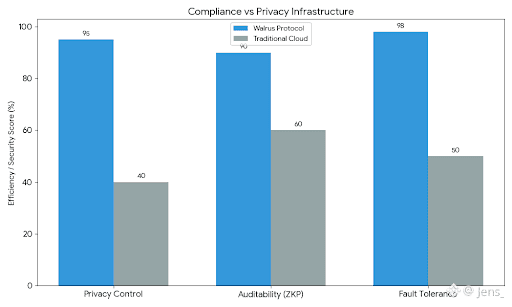
The mindset behind Walrus is simple but powerful. Assume nodes will fail. Assume participants will come and go. Assume incentives will fluctuate. Then design a system that still keeps data available even when these assumptions become reality. Most networks do not do this. They treat churn like a risk. Walrus treats churn like a fact of life. And when you build with that mindset the entire architecture becomes stronger.
Sui builders are already noticing the difference. For the first time they have a storage engine that feels like proper infrastructure. You do not need to manually prepare backups. You do not need extra logic to protect assets. Walrus handles fragility on its own because it was designed for unpredictable environments. Instead of storing data in a way that hopes nodes stay online, Walrus encodes and distributes it so the network itself can recreate it without depending on any single node. This is what makes it reliable in the long run.
What people forget is that decentralization means nothing if your data disappears under pressure. If a system cannot guarantee availability then the decentralization is only theoretical. Walrus is one of the few networks that truly understands this. Reliability is the foundation. Everything else is built on top of that. When your storage layer is dependable every other part of your application becomes easier to build and maintain.
The interesting thing is how Walrus achieves this reliability. The protocol splits files into pieces, distributes them across independent nodes and uses encoding methods that allow the original file to be recovered even if a good portion of the nodes are offline. This process happens continuously and naturally. There is no emergency mode. There is no manual repair. The system heals itself as the network changes. That is how real infrastructure should behave.
What makes Walrus stand out is that it is not trying to be everything. It is focused. It is simple in its intention. It wants to be the most dependable storage layer for ecosystems that cannot afford to lose user data. And this clarity is rare. Many networks overextend themselves. Walrus goes deep on one problem and solves it properly.
This is why more Sui projects are building with it. When your storage layer is predictable you can create better products. You can build games without worrying about missing textures. You can launch marketplaces without broken assets. You can structure social apps without glitches in user content. Walrus brings consistency where most protocols bring uncertainty.
And then there is the role of $WAL. It is not just a token that sits on the side of the network. It actually supports the health of the entire storage ecosystem. Good nodes that keep the network stable earn because they contribute to long-term resilience. Instead of rewarding unsustainable growth Walrus rewards reliability. The incentives align perfectly with the architecture.
The more I look at Walrus the more it feels like a protocol built for the next stage of Web3. The early days rewarded speed and experimentation. The future will reward systems that survive real demand. Builders are tired of patching problems created by fragile infrastructure. They want foundations they can trust. Walrus provides that. And it does so quietly without hype because reliability is not loud. But it matters more than anything else.
Users will not adopt applications that break randomly. They will not trust platforms where assets vanish. Real adoption depends on stability. Walrus is one of the few networks preparing for that future instead of repeating the mistakes of past cycles. When you put all of this together you see that Walrus is not just a storage layer for Sui. It is becoming one of the main reasons the ecosystem feels ready for serious, long-term builders.
In the end the story is simple. Web3 does not need flashy storage. It needs dependable storage. Applications need a foundation that can handle churn, pressure and unexpected change. Walrus delivers that foundation with a design centered around real world conditions rather than ideal scenarios. That is why builders trust it. That is why Sui is benefitting from it. And that is why the future of reliable decentralized storage is being shaped by Walrus right now.
@Walrus 🦭/acc ecosystem are building something that will matter long after the hype cycles fade. Reliability lasts.