

Vanar emerged from a different starting point than most Layer-1 networks. When it was founded, the industry was already crowded with blockchains promising new financial systems, but very few were designed by teams that had shipped consumer products at scale. The Vanar team had lived inside environments where user retention, brand trust, and operational stability mattered more than theoretical elegance. The gap they saw was not a lack of innovation, but a lack of systems that behaved like real infrastructure rather than prototypes.
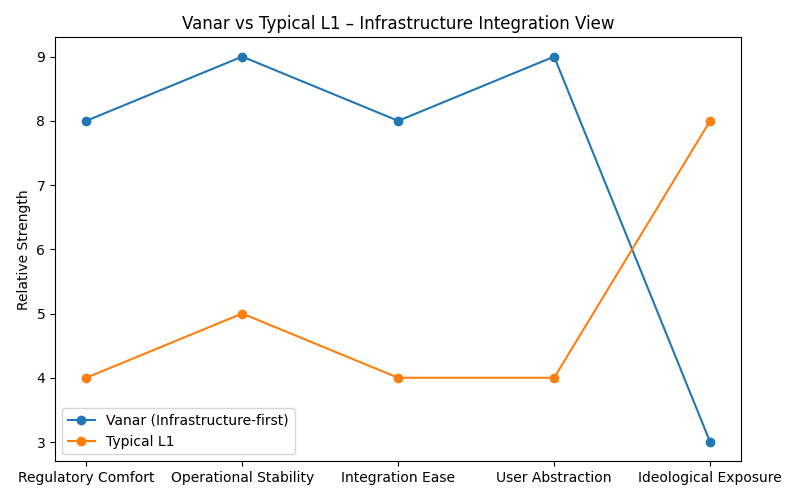
Most Web3 narratives assume that users will adapt to blockchain. Vanar assumes the opposite. Its architecture reflects the belief that technology must adapt to users, regulators, and businesses if it wants to survive outside niche communities. This is why Vanar does not frame itself as a financial revolution, but as a practical settlement and execution layer for digital experiences that already exist.
The tension Vanar addresses is subtle but critical: decentralization without chaos. Brands, entertainment platforms, and AI-driven systems operate in environments where mistakes are expensive and trust is fragile. Complete openness without guardrails is not freedom in these contexts; it is risk. Vanar’s approach balances transparency with control, allowing systems to remain verifiable without exposing end users to complexity they did not ask for.
Its design mirrors real financial behavior. In traditional systems, users do not interact with clearing layers directly. They interact with interfaces, while settlement happens invisibly. Vanar applies the same logic to blockchain. The chain does the work quietly, while applications handle the relationship with users. This is not an ideological compromise, but a practical one.
A realistic use case can be seen in branded digital collectibles tied to entertainment franchises. A company launching such assets needs predictable fees, compliance awareness, and a user experience that does not scare away non-technical fans. Vanar allows the company to issue, manage, and settle these assets without turning its customers into amateur system administrators.
Developers using Vanar are not chasing novelty; they are minimizing risk. Institutions exploring blockchain through gaming, media, or AI platforms would interact with Vanar as a stable base layer that does not force them into experimental economic assumptions. The system is designed to be boring in the right ways.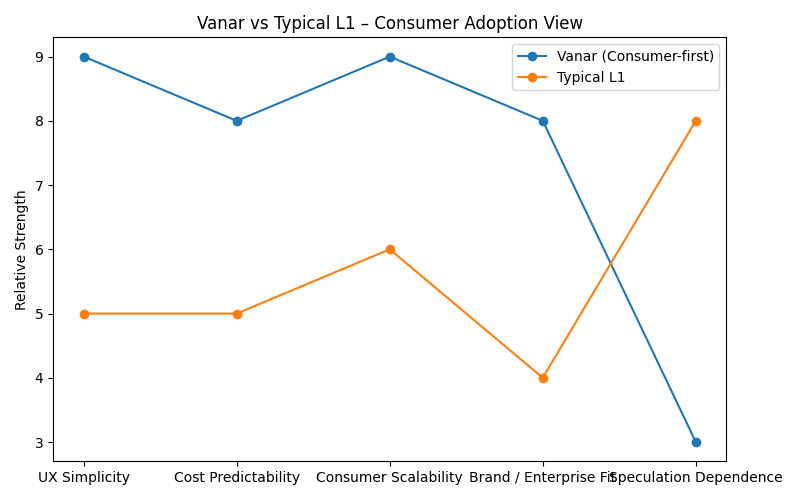
The VANRY token plays a functional role in maintaining this stability. It compensates validators, enables transaction execution, and aligns incentives across the network. Its purpose is operational. Without sustained usage, it has no reason to exist, which quietly anchors its value to real activity rather than narrative momentum.
Vanar’s relevance has grown as the industry matures. As speculative excess fades, infrastructure that respects regulation and user behavior becomes more attractive. Many projects struggle because they were built for an audience that no longer exists. Vanar continues because it was built for one that is only now arriving.
Such projects are often overlooked because they do not promise transformation; they promise continuity. Markets tend to misprice continuity until it becomes unavoidable.
Vanar’s future role is not to redefine crypto culture, but to support its integration into everyday digital life. If Web3 is to become invisible and trusted, systems like Vanar will be doing most of the work, quietly and without applause.