
Blockchain is no longer limited to digital assets.
In 2026, DePIN 2.0 (Decentralized Physical Infrastructure Networks) are accelerating — enabling communities to build, own, and operate real-world infrastructure using crypto incentives.
This is Web3 stepping fully into the physical world.
⚙️ What Is DePIN 2.0?
DePIN projects use tokens to incentivize people to deploy and maintain physical infrastructure.
This includes:
• wireless networks and internet coverage,
• data centers and compute nodes,
• mapping, sensors, and IoT devices,
• energy grids and charging stations.
Contributors earn rewards for providing real-world services, while usage is tracked transparently on-chain.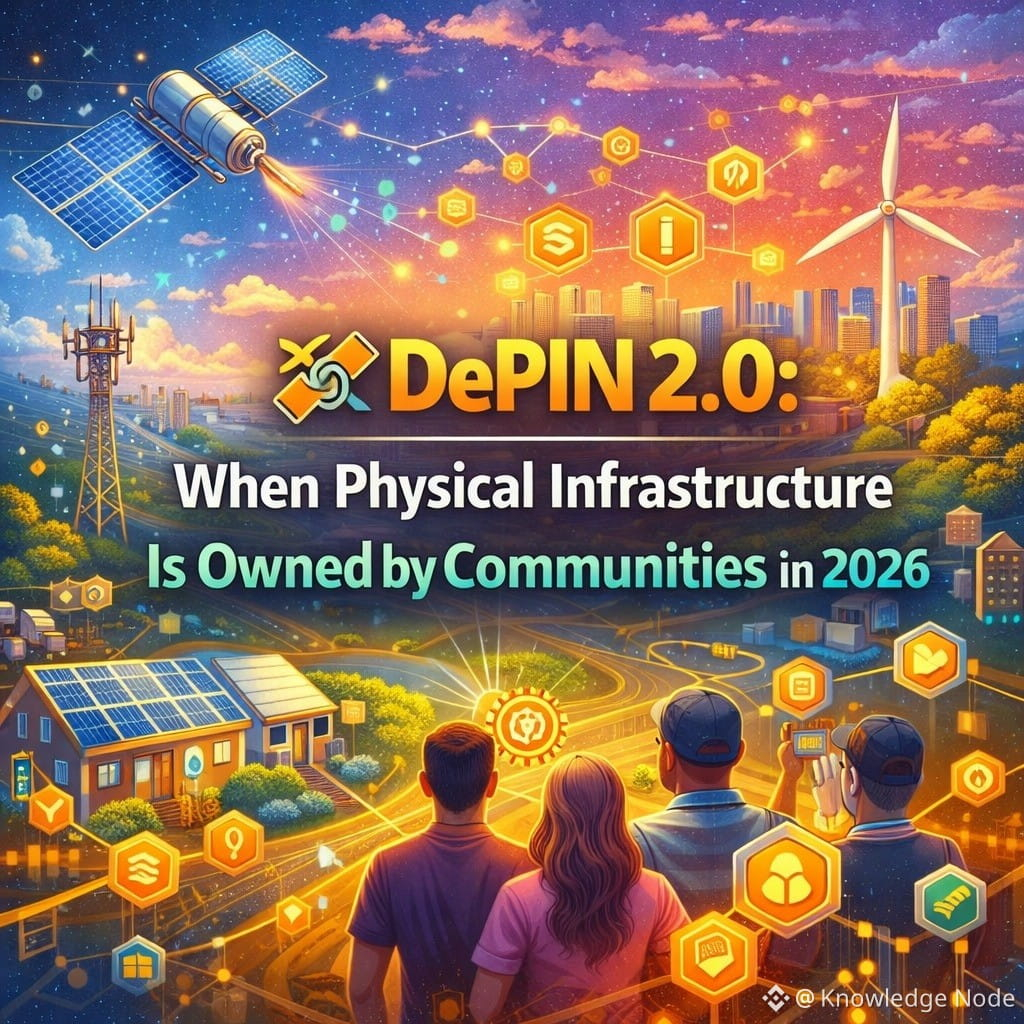
🚀 Why It’s Trending in 2026
• Centralized infrastructure is expensive and slow to scale.
• Communities want ownership, not just access.
• Token incentives make global coordination possible.
• AI, IoT, and smart cities need distributed infrastructure.
Infrastructure is becoming permissionless and user-owned.
💡 Final Takeaway
DePIN 2.0 is redefining who owns the real-world networks we depend on.
In 2026, roads, data, energy, and connectivity won’t only belong to corporations — they’ll increasingly be built and operated by global communities, coordinated through blockchain.
#CryptoTrends2026 #DePIN #Web3Infrastructure #BlockchainUseCases #Decentralization #BinanceSquare #Write2Earn