Vanar is a layer-1 blockchain designed from the ground up to support large-scale mainstream applications Unlike many networks built primarily for decentralized finance Vanar focuses on providing an optimal environment for real-world use cases At the heart of this strategy is its application layer a set of tools and infrastructure that allows developers to build responsive and user-friendly experiences.This foundation creates a unique potential for the technology to span different industries notably gaming and financial services.
Gaming Demands Speed and Low Cost
The gaming industry requires blockchains that can handle thousands of transactions per second with minimal latency and near-zero costs Vanar's architecture is built for high throughput which is critical for in-game actions like minting items processing trades or updating player status For developers the low transaction costs mean they can design game economies without burdening users with high fees This makes blockchain integration seamless where the technology powers ownership and verifiable scarcity of digital assets without disrupting the player's experience.
In contrast financial applications prioritize security regulatory compliance and institutional-grade reliability Vanar's application layer supports these needs through features designed for enterprise use This includes the potential for know-your-customer (KYC) integration and the ability for developers to create compliant digital asset frameworks The network’s security model and predictable operating costs provide a stable foundation for tokenizing real-world assets building payment solutions or creating verifiable credit histories bridging traditional finance with blockchain efficiency.
One Layer Multiple Verticals
The cross-vertical potential exists because Vanar's application layer is fundamentally modular. It provides the core benefits of blockchain—immutabilitt transparency and user-owned assets—in a package that can be adapted to different regulatory and technical requirements. A game developer and a fintech builder both use the same underlying chain but can implement features appropriate to their field. This flexibility allows the network to host a diverse ecosystem where value and assets can potentially flow between different types of applications, from a game's virtual marketplace to a formal lending protocol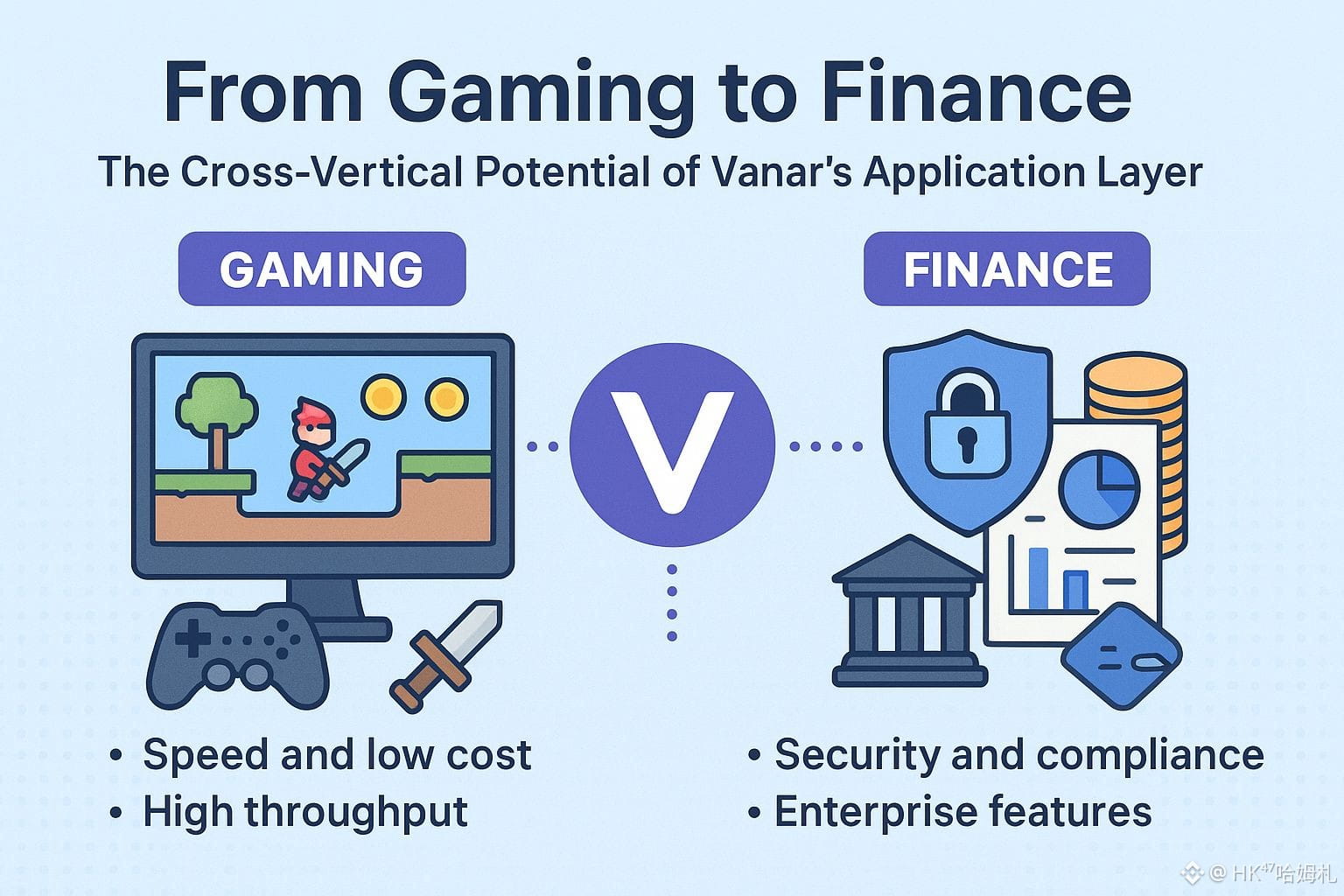

Cikk
From Gaming to Finance: The Cross-Vertical Potential of Vanar's Application Layer
Felelősségkorlátozó nyilatkozat: Harmadik felek véleményét tartalmazza. Nem minősül pénzügyi tanácsnak. Szponzorált elemet tartalmazhat. Lásd a Feltételeket.

VANRY
--
--