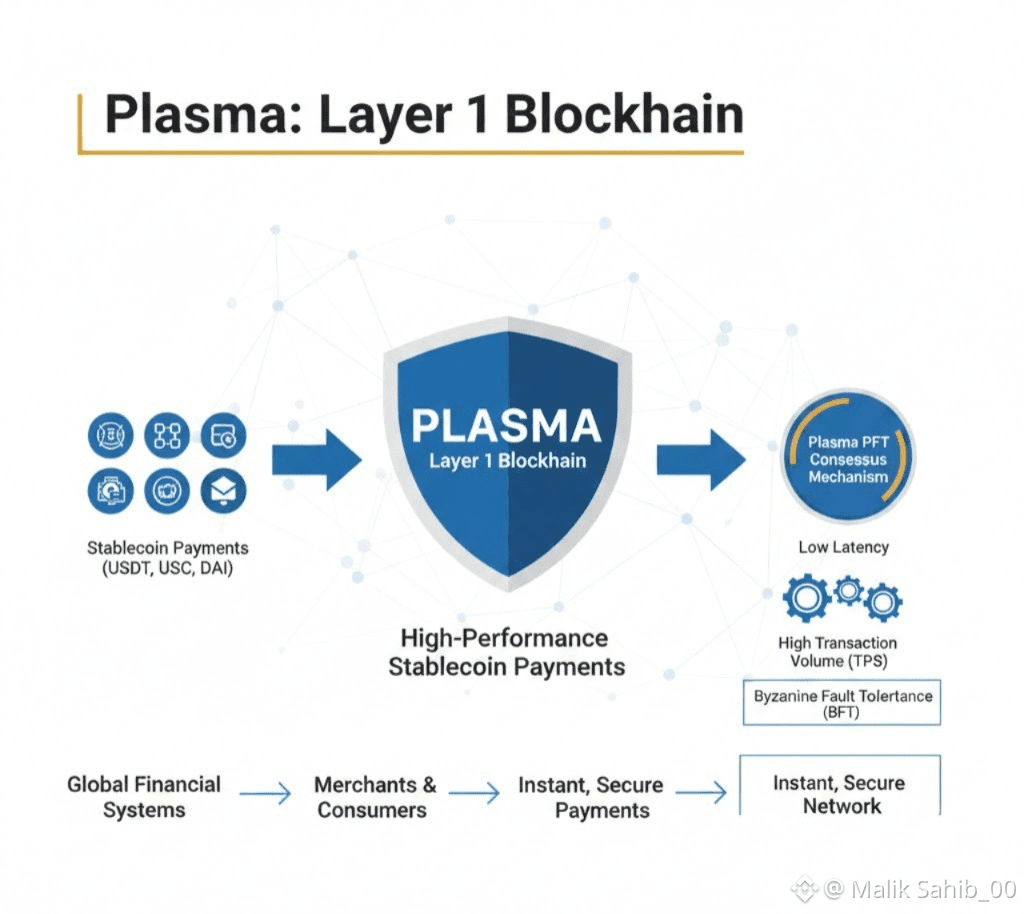
Plasma is a Layer 1 blockchain designed for high-performance stablecoin payments. It employs a proprietary consensus mechanism called Plasma PFT to achieve Byzantine Fault Tolerance (BFT). Plasma PFT aims to process large volumes of transactions with low latency and finality guarantees, specifically designed for the stablecoin payments market.
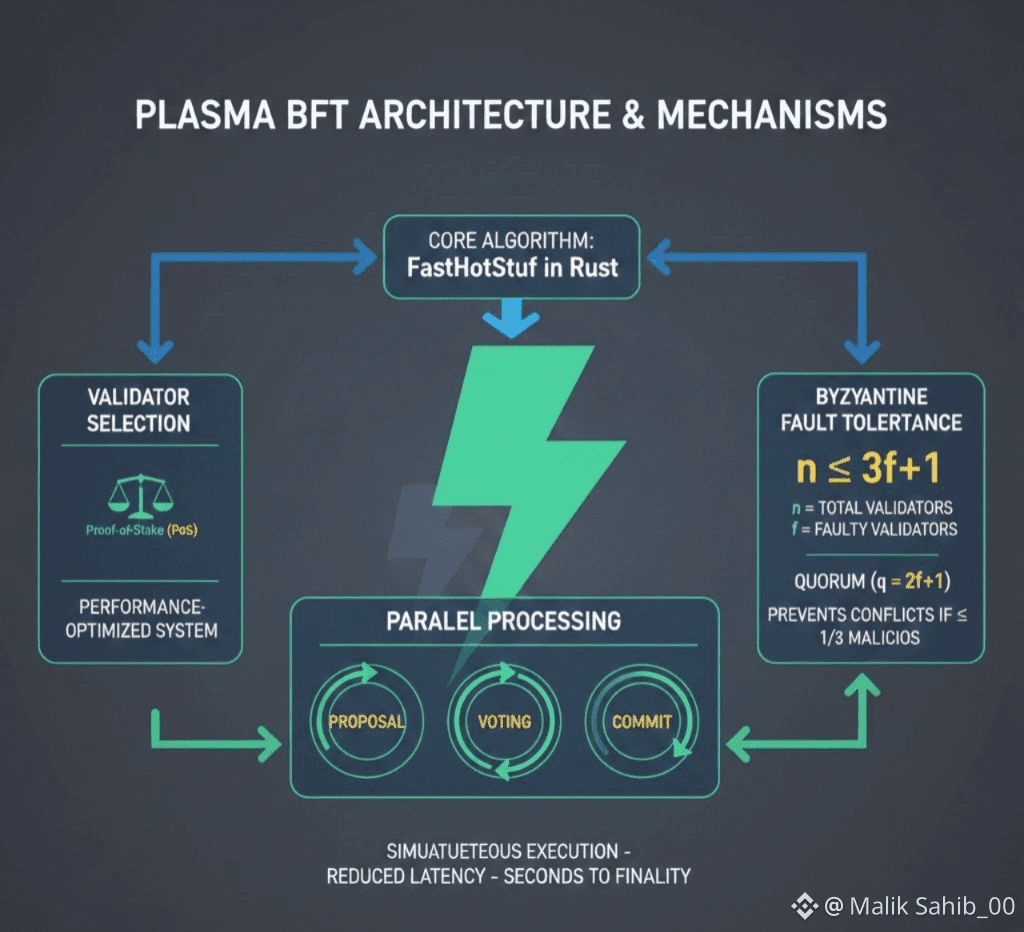
• Plasma PFT Architecture and Mechanisms: Core Algorithm: Plasma PFT is a high-performance implementation of the FastHotStuff consensus algorithm, written in Rust. Parallel Processing: Unlike traditional sequential consensus, Plasma parallelizes and executes the proposal, voting, and commit processes simultaneously. This architecture reduces latency, enabling block finality to be achieved within seconds. Byzantine Fault Tolerance: The network operates under the condition of `n ≥ 3f+1`, where `n` is the total number of validators and `f` is the number of ignored or defective validators. The validation process requires a quorum (q = 2f+1), ensuring that two conflicting blocks are not completed unless more than one-third of the validators act maliciously. Validator Selection: Validator selection is managed by a performance-optimized Proof-of-Stake (PoS) system.
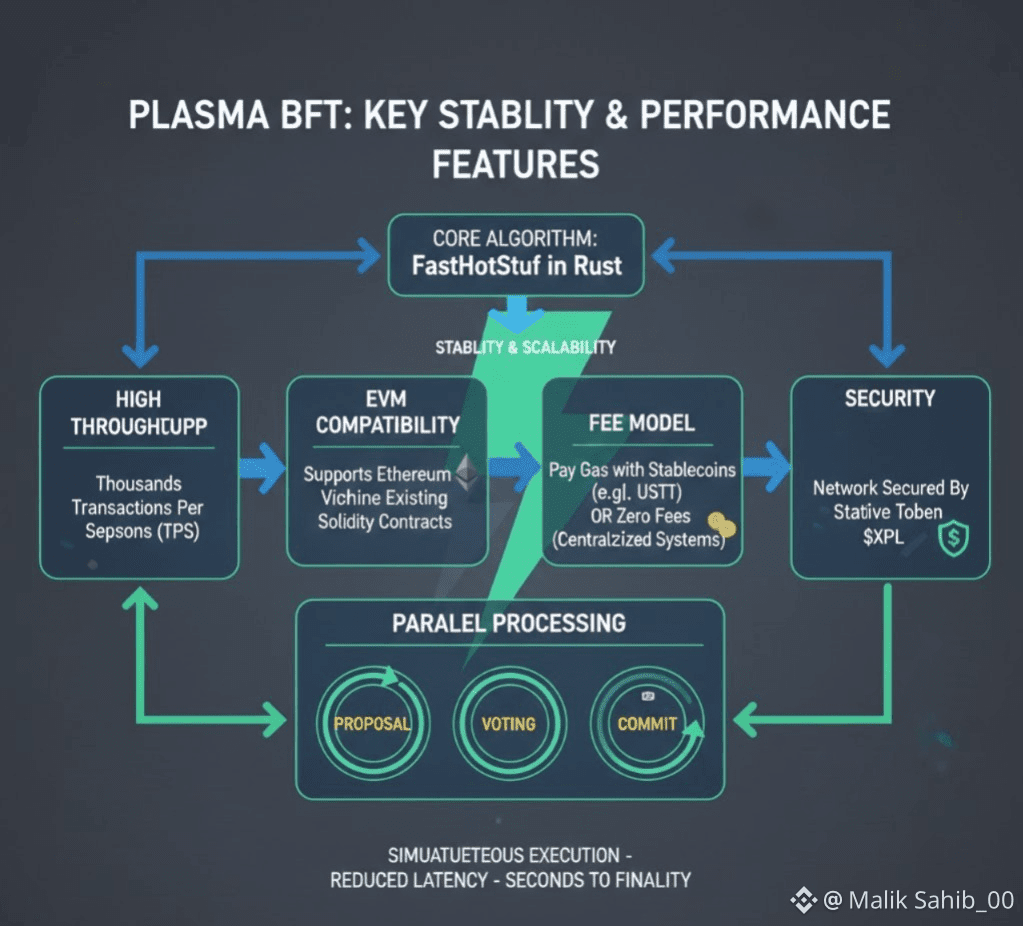
• Key Stability and Performance Features: High Throughput: This system is designed to process thousands of transactions per second (TPS). EVM Compatibility: Plasma supports the EVM, enabling developers to deploy existing Solidity contracts. Fee Model: It employs a unique fee model that allows users to pay gas fees using stablecoins (such as USDT) or to be completely free of fees through centralized payment systems. Security: The network is secured by staking its native token ($XPL).
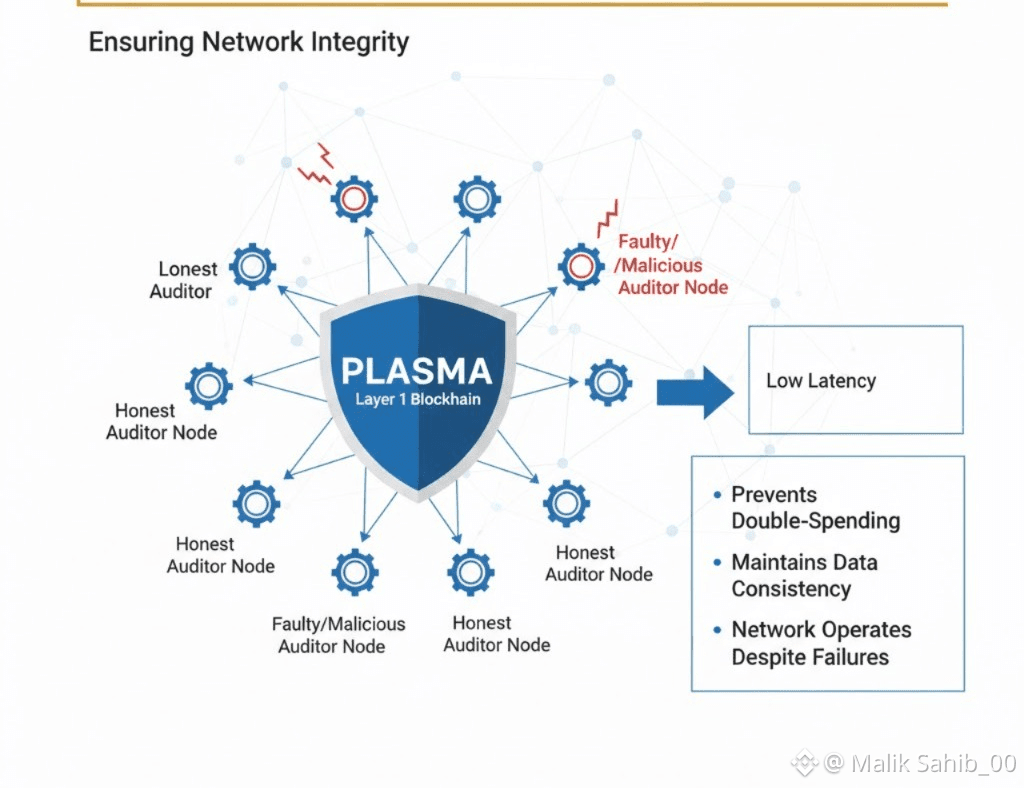
Byzantine Fault Tolerance (BFT) Background: Byzantine fault tolerance refers to the ability of a decentralized system to continue operating even if some nodes fail or engage in malicious activity. In the context of Plasma, this ensures the network maintains its integrity, prevents double-spending, and allows the network to continue operating even if some auditors act dishonestly.