
Web3 has always been decent at moving value around. Tokens, transactions, swaps no problem. But the moment you bring real data into the picture, things get messy. Videos, images, AI datasets, game assets, frontends… all of that stuff is huge. And blockchains were never meant to store it directly. That’s the gap @Walrus 🦭/acc is filling, and in 2026, it’s no longer theoretical. Walrus is a decentralized storage and data availability protocol built around one very practical idea: keep large files off-chain, but make them verifiable and controllable from the chain. Instead of forcing data into smart contracts, Walrus stores it as “blobs” and lets contracts on Sui reference them using cryptographic proofs. The chain coordinates. Walrus handles the heavy lifting. That separation is the whole point and it’s why this actually scales.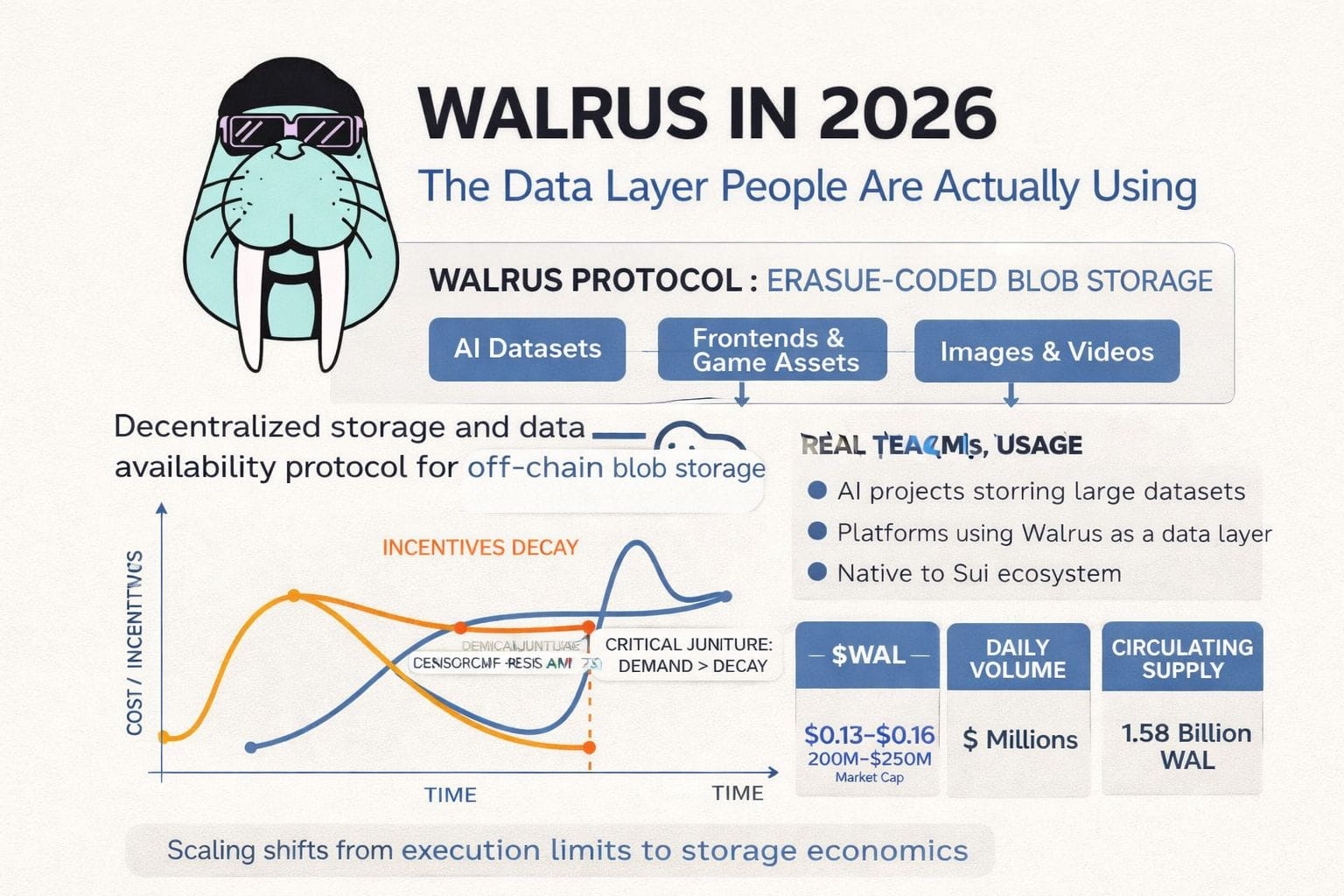
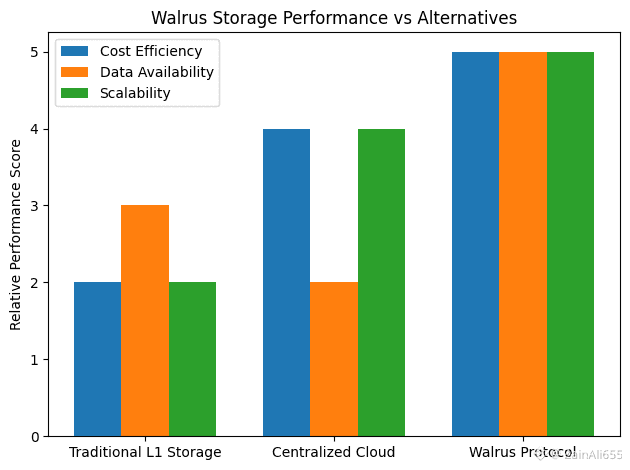
Under the hood, Walrus uses erasure coding. In plain terms, files are split into shards and distributed across many storage nodes. You don’t need every shard to recover the data, just enough of them. Compared to full replication (where entire files are copied everywhere), this is way more efficient. Less bandwidth. Less cost. Same idea of resilience. And cost matters more than people admit. When decentralized storage is too expensive, builders quietly fall back to centralized cloud providers. Walrus directly attacks that problem, which is why we’re starting to see real usage instead of just whitepapers. Let’s ground this with actual numbers.
Right now, $WAL trades roughly in the $0.13–$0.16 range, depending on the market, with a market cap around $200M–$250M and a circulating supply of about 1.58 billion WAL. Daily trading volume regularly sits in the millions. That’s not a dead token being propped up by hype that’s steady activity for a mid-cap infrastructure asset. More importantly, there are real teams using the protocol. AI-focused projects like Talus are integrating Walrus to store and retrieve large datasets for on-chain agents. That’s not “upload a file and forget about it” storage that’s storage baked directly into an application workflow. Other platforms are using Walrus as a decentralized data layer instead of building fragile custom solutions off-chain. This is the kind of adoption that actually matters. It’s quiet, but it’s sticky.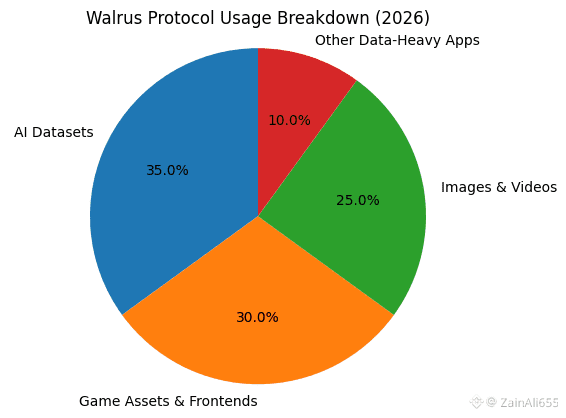
From an ecosystem perspective, Walrus being native to Sui helps a lot. Sui handles fast execution and coordination. Walrus handles data. Together, they make it easier to build apps that feel complete not just financial primitives, but games, social platforms, AI tools, and data-heavy products. Of course, it’s not all upside. Decentralized storage only works if node operators stay properly incentivized over time. That’s an ongoing challenge for every storage network, not just Walrus. Competition is real too. Filecoin and Arweave have years of head start, and switching storage layers isn’t trivial once data is committed. #walrus has to keep winning on reliability, tooling, and developer experience.
 There’s also the attention issue. Storage isn’t exciting. No one’s posting memes about shard availability or repair rates. Progress tends to be slow and invisible until suddenly, a lot of apps depend on it. And honestly, that’s usually a good sign. The way I see it, Walrus isn’t trying to be flashy. It’s trying to be necessary. If apps on Sui keep growing and data-heavy use cases keep expanding, Walrus doesn’t stay optional. It becomes part of the plumbing.
That’s why the real signal here isn’t price movement. It’s usage, integrations, and steady market participation. Those things don’t show up overnight but when they do, they tend to last. So when I look at Walrus in 2026, I don’t see a hype cycle. I see infrastructure quietly doing its job. And in crypto, that’s usually where the long-term value ends up hiding.



