
Imagine this: Blockchain still feels clunky for real businesses, right? But here’s Vanar Chain, quietly building something different. They’re layering in intelligence so payments and assets don’t just move—they evolve. Vanar isn’t just another Layer 1. It’s an infrastructure where AI is everywhere, turning boring, static transactions into systems that can actually think. If you’ve ever wondered why Web3 hasn’t nailed enterprise finance yet, pay attention—Vanar’s take on PayFi and tokenized real-world assets (RWAs) is a total reset. The native smarts here handle compliance, context, and cash flow—no more headaches.
At its core, Vanar Chain’s a modular Layer 1 blockchain. Launched in mid-2024 (after rebranding from Virtua), it’s built to be carbon-neutral and fast, with high throughput. The team started in 2023 and now has somewhere between 50 and 200 people, including talent from traditional finance. Saiprasad Raut, their Head of Payments Infrastructure, knows how to bridge fiat and crypto. This isn’t hype—it’s a long-game build. The chain runs on Proof of Authority, guided by Proof of Reputation, so validators get picked for their track records, not just their stake. With three-second block times and support for up to 18,000 nodes after the V23 upgrade, Vanar hits about 99.98% transaction success. That’s the kind of reliability AI-powered systems need.
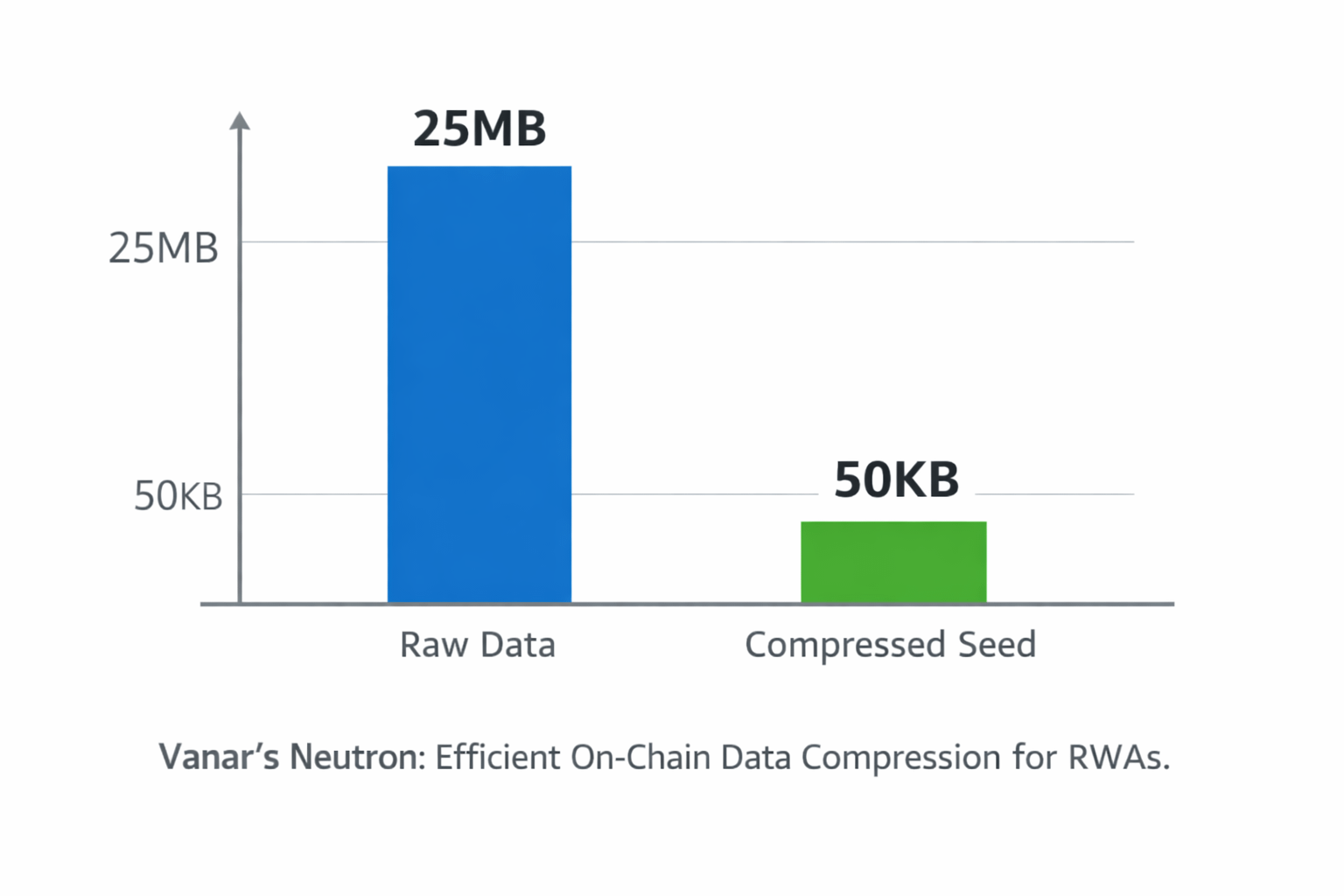
But what really sets Vanar apart? Their five-layer, AI-native stack. It’s built to turn raw data into actual knowledge. Start with the base Vanar Chain layer: It’s EVM-compatible, so developers can jump in easily, but it’s also optimized for structured user-defined functions (UDFs). That means fast, dirt-cheap transactions—think fees as low as $0.0005, and those numbers come from multiple sources. Next, meet Neutron, the semantic memory layer. It can squeeze a 25MB property deed or PDF invoice down to about 50KB, turning it into a verifiable, AI-readable object that lives right on-chain. This isn’t just storage. It’s smart compression using neural and algorithmic tricks, so companies can upload compliance docs or financial records without blowing up the blockchain or depending on off-chain oracles.
Then comes Kayon, Vanar’s contextual AI reasoning engine. It analyzes data in real time—offering insights, predictions, and on-chain logic for things like checking transactions against regulations or looking up asset histories. For PayFi (where payments and finance meet), Kayon makes sure settlements happen with built-in reasoning, cutting risks for tokenized assets like gold or copper. You can see this already: Vanar’s powering Cireta’s launchpad (over $200 million in assets moved) and just teamed up with Veduta for tokenizing precious metals. No more messy middleware. Everything’s native, verifiable, and autonomous—systems that can “think” before they act.
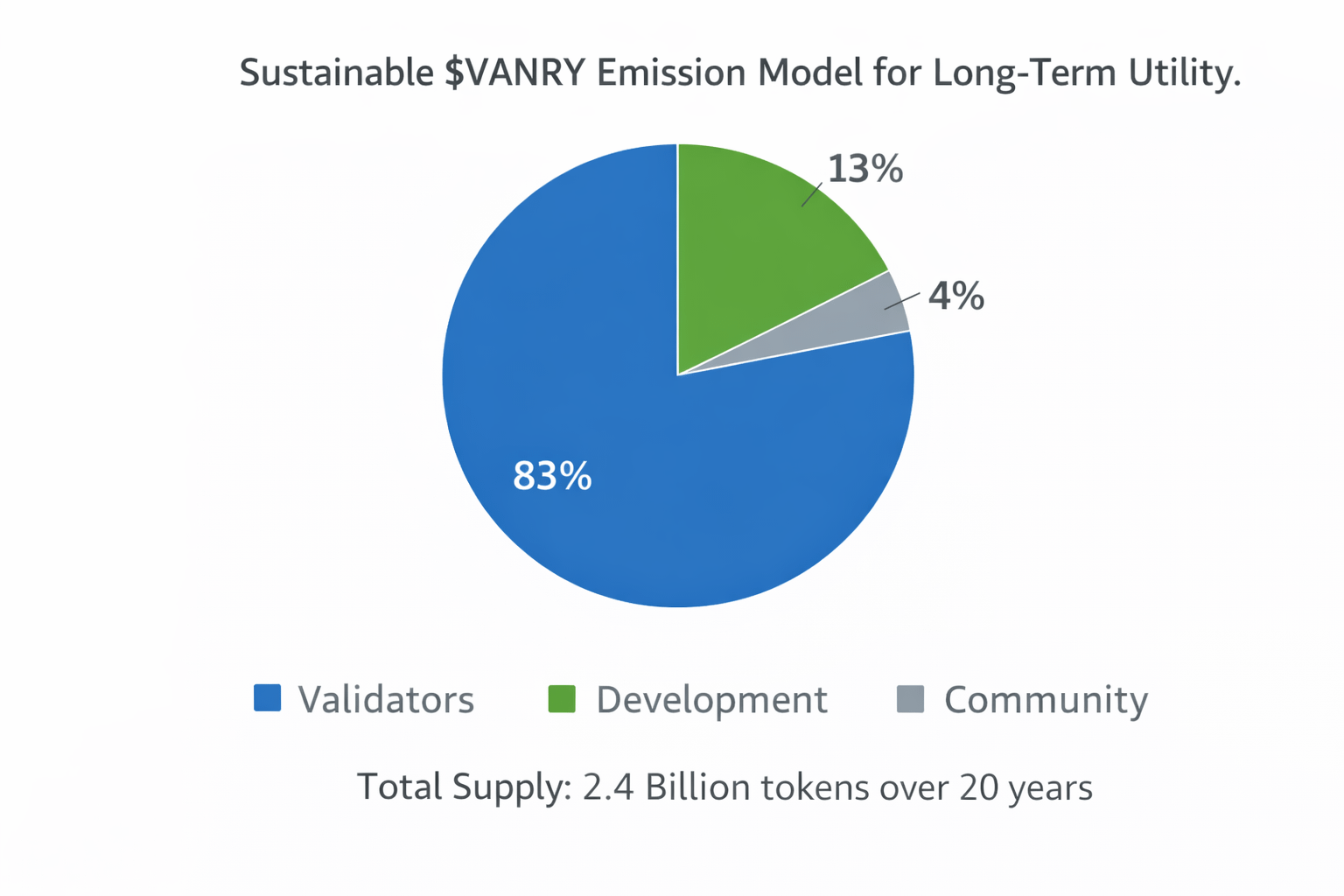
Looking ahead, Vanar’s Axon layer will bring in intelligent automations, while Flows will roll out industry-specific apps, like streamlined RWA tokenization for big businesses. Cross-chain support starts with Base, so Vanar can tap into ecosystems like Coinbase, where compliance is everything. This opens the door for scale—tokenized assets that actually adapt to market data or user context, powered by $VANRY for compute and fees. There’s a hard cap of 2.4 billion tokens (1.2 billion at launch, the rest released over 20 years: 83% to validators, 13% for development, 4% to community), and the circulating supply sits around 2.29 billion. In short, Vanar ties token utility to real-world usage, from billing agents to cross-chain moves.
But here’s where it gets really interesting: Vanar’s partnerships are bridging Web2 and Web3 in a way that’s hard to ignore. Google Cloud helps them deploy nodes—so the foundation’s solid. NVIDIA’s in the mix for hardware-level AI power. Worldpay is on board for next-gen agentic payments, and Movement Labs boosts interoperability. So, this isn’t some isolated playground—it’s a network ready for enterprises to plug in without reinventing the wheel. Developers get SDKs in JavaScript, Python, and Rust, plus tools like Kickstart for fast AI app building. That makes it way easier for traditional businesses to jump into tokenized finance.
Bottom line? In a world where AI is rewriting the rules, Vanar didn’t just bolt on intelligence—it’s built in from the start. For pros in PayFi and RWA, that means faster adoption and systems that learn from data, automate compliance, and settle transactions safely, no humans needed. Whether it’s micropayments in digital economies or tokenized invoices for global trade, Vanar’s stack brings the predictability and brainpower that Web3 needs to finally go mainstream.$VANRY @Vanarchain #Vanar
