
Walrus (WAL) is quickly becoming one of the most talked‑about infrastructure projects in the Web3 space because it tackles a problem most blockchains don’t talk about enough — real data storage at scale. Instead of just moving tokens, Walrus aims to build a decentralized storage layer for files that applications actually need, like images, videos, game assets, AI datasets, receipts, and more.
What Walrus Is and How It Works
At its core, Walrus is a decentralized data storage protocol built on the Sui blockchain that lets users and developers store and retrieve large binary files — also called “blobs” — without relying on centralized servers. This means your files stay verifiable, accessible, and resilient even if parts of the network go offline.
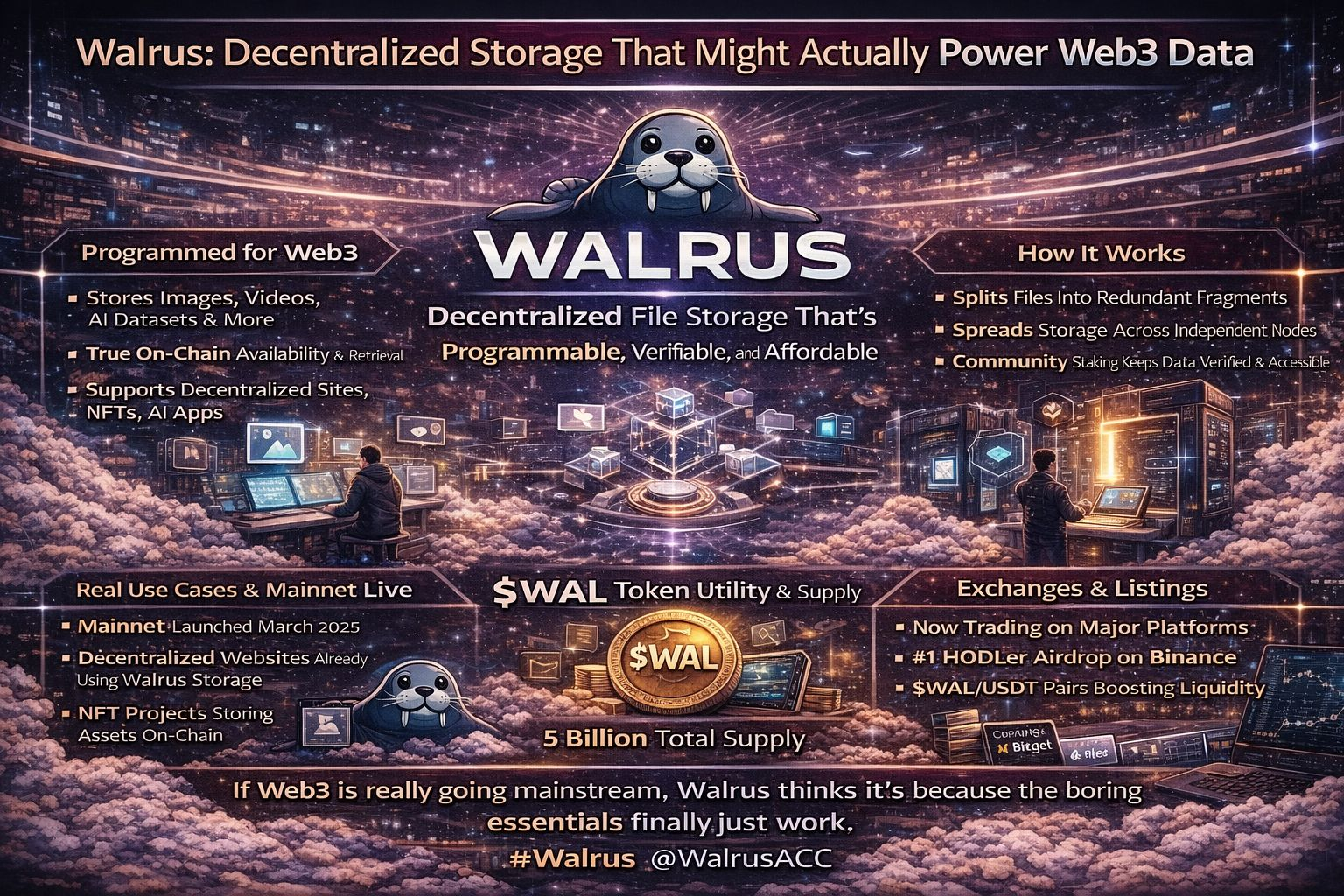
Unlike traditional cloud storage, Walrus splits data into fragments using advanced erasure coding and spreads them across a network of independent storage nodes. This makes storage far more reliable and significantly cheaper than many existing decentralized solutions.
Mainnet Live and Ecosystem Growth
Walrus officially launched its mainnet in March 2025, making programmable decentralized storage available for real applications. Developers can now build Web3 apps that store data directly on a decentralized network rather than relying on centralized systems with “trust us” terms.
Since launch, the protocol has also seen community engagement through airdrops, staking programs, and incentive events. Some early users report eye‑catching airdrop outcomes, and the sentiment around Walrus’s future is strong within parts of the Sui community.
$WAL Token Utility and Tokenomics
The WAL token is the heart of the Walrus ecosystem.
Storage Payments: Users pay for storage in WAL, which is then distributed over time to the nodes that store the data.
Security & Staking: Nodes stake WAL to participate in network validation and earn rewards. Token holders can also delegate their WAL to help secure the system.
Governance: WAL holders help decide protocol upgrades, pricing models, and more.
The total supply of WAL is 5 billion tokens, with a large portion allocated to the community and ecosystem growth, including airdrops and reserves to support long‑term adoption.
Real Use Cases and Integration
Walrus isn’t just about storage on paper — it’s already being used in real projects. The protocol supports things like decentralized websites (called Walrus Sites), on‑chain NFT asset storage, and even AI dataset availability. Because it’s programmable and integrated with Sui’s smart contracts, developers can build richer Web3 applications that rely on verifiable data instead of centralized servers.
The project is also compatible with ecosystems beyond Sui, meaning it could serve as a backbone for data storage on multiple blockchains.
Exchanges, Listings, and Market Reception
Since launch, WAL has started trading on several exchanges, expanding accessibility for users and builders worldwide. It has been featured in Binance’s HODLer Airdrop program and listed in trading pairs like WAL/USDT, helping boost liquidity and awareness.
There’s also community‑reported support and trading activity on platforms like Bitget and CEX•IO, further increasing its tradability outside just the Sui ecosystem.
Why It Matters for Web3 Adoption
Most blockchains today handle tokens well but struggle with actual data storage — the kind required by real applications. Walrus aims to change that by splitting, distributing, and storing data across a decentralized network that stays recoverable even if nodes fail. This resilience is a key step toward reliable Web3 apps that can run independently of centralized servers.
If decentralized applications are really going mainstream, many believe it’ll be because systems like Walrus finally get the “boring but essential” parts right — making data storage dependable, affordable, and fully decentralized.

