
If you zoom out and look at what Plasma has been doing lately, a pattern starts to show. Nothing flashy. No sudden pivot. Just steady progress toward one very specific goal: becoming a reliable settlement layer for stablecoins.
And honestly? That’s kind of the point.
One of the more important recent moves is Plasma expanding its cross-chain liquidity and settlement reach. In practical terms, this means stablecoins like USDT can move between Plasma and other ecosystems more smoothly, without fragile bridges or clunky handoffs. Liquidity isn’t trapped. It flows. For a settlement-focused chain, that’s non-negotiable. You can’t be the place where money settles if money can’t easily get in and out.
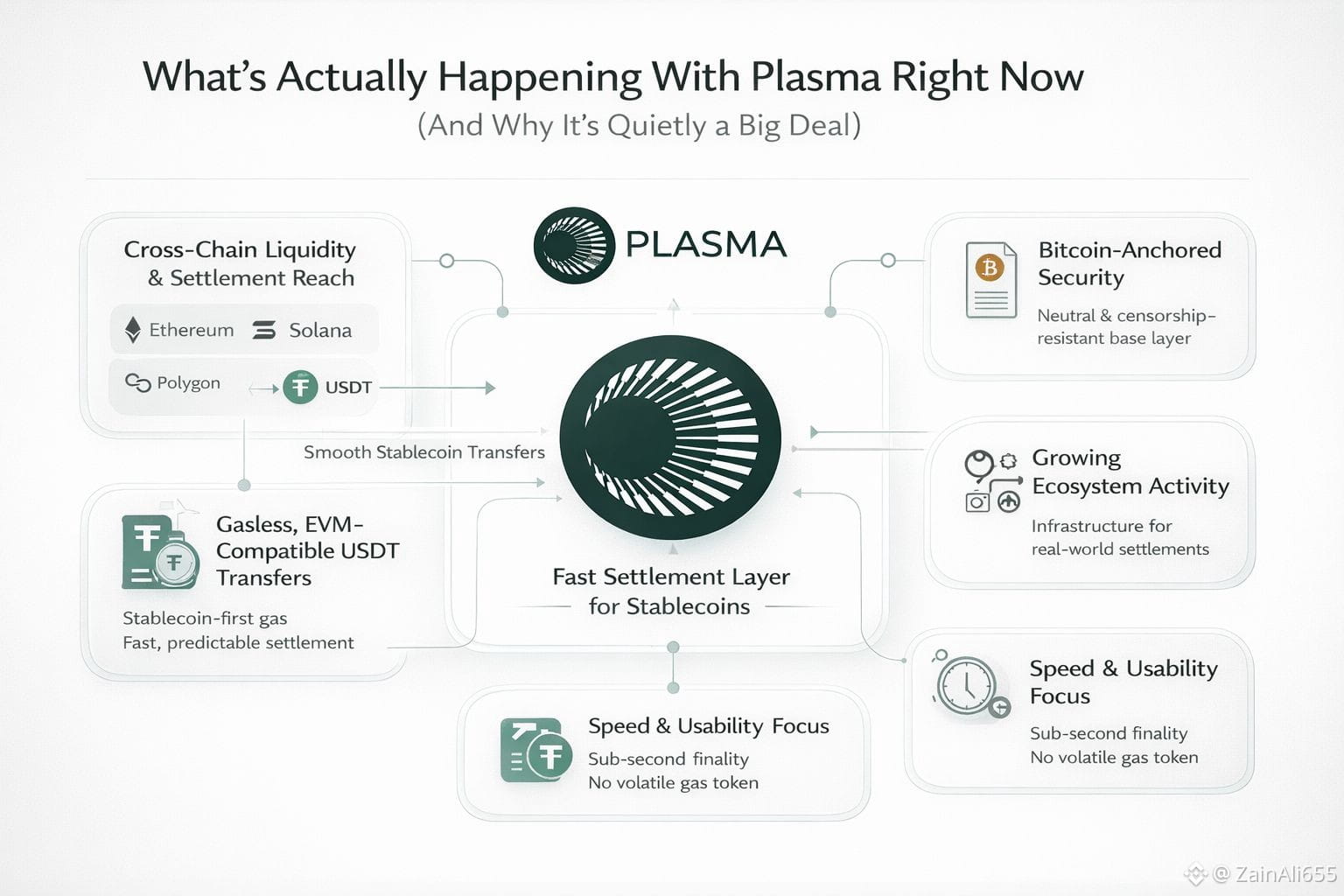
What makes this interesting is that @Plasma isn’t doing this just to chase TVL numbers. The goal is predictability. If you’re settling payments, payroll, or remittances, you don’t care about farming incentives. You care about whether funds arrive quickly, reliably, and without surprise costs. Cross-chain reach makes Plasma usable in real workflows, not just isolated crypto loops.
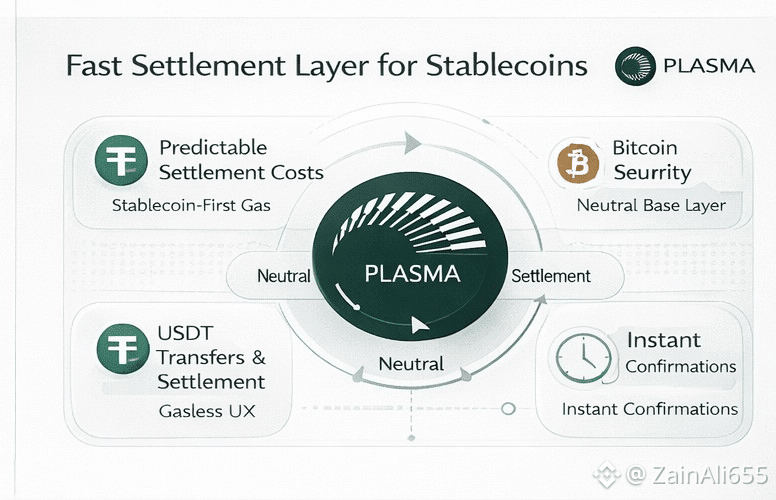
Speed is still the backbone of the design. Plasma’s sub-second finality is one of those things that sounds like marketing until you experience it. Then you realize how broken most blockchain payments feel by comparison. Waiting 15 or 30 seconds for a “simple transfer” doesn’t scale to merchants or high-frequency usage. Plasma is trying to push settlement speed to the point where users stop thinking about confirmations entirely.
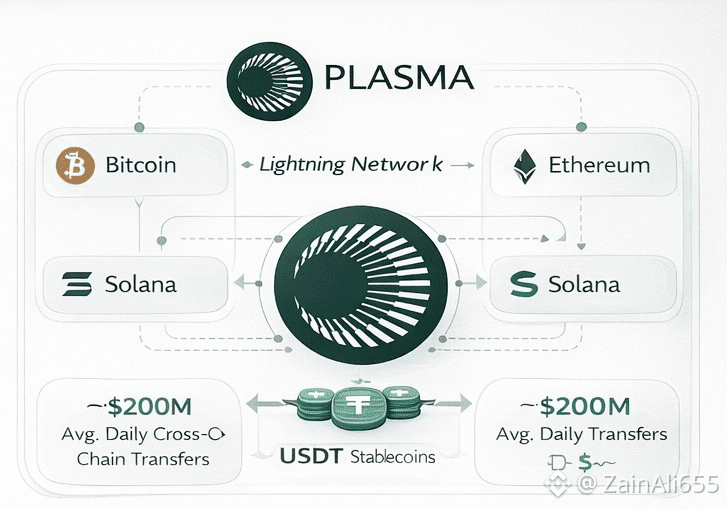
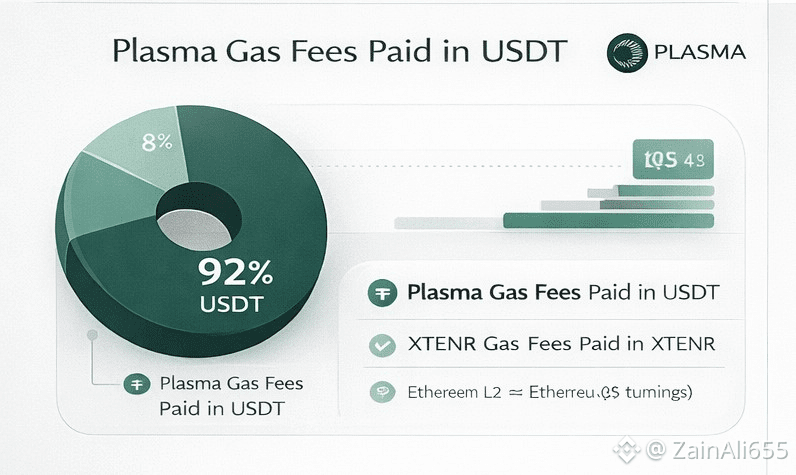
UX choices follow the same logic. Gasless USDT transfers and stablecoin-first gas remove a problem most crypto users have just learned to tolerate. No volatile gas token. No explaining fees in something that isn’t dollars. You send USDT, you pay fees in USDT, and that’s it. It’s boring in the best way.
Under the hood, Plasma stays fully EVM-compatible. That matters more than people admit. Developers don’t want to relearn tooling or rewrite contracts just to access better payment rails. Plasma lets builders deploy familiar Ethereum apps while benefiting from faster finality and payment-optimized economics. It lowers the cost of experimentation, which is usually what unlocks real usage.
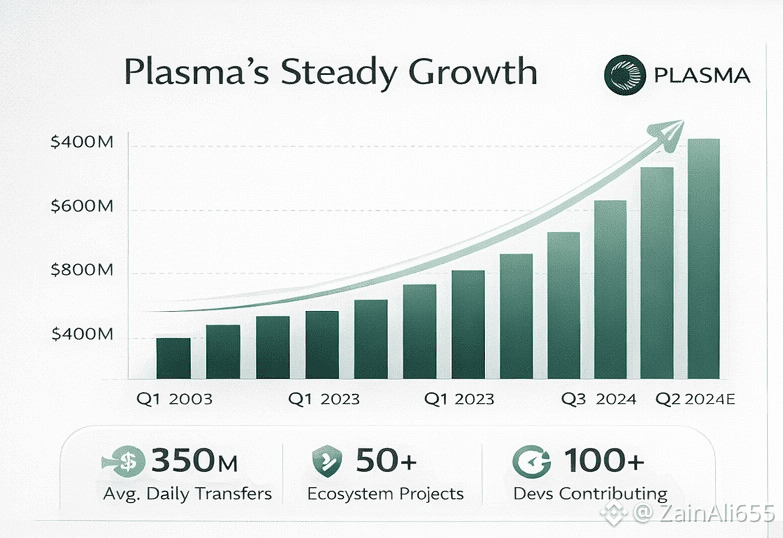
There’s also growing ecosystem activity, which is easy to miss if you’re only watching price charts. More projects are deploying and using $XPL as infrastructure rather than a speculative playground. That’s an important distinction. Settlement layers don’t need hundreds of flashy apps. They need a smaller number of applications that actually move money and do it consistently.
Security-wise, Plasma continues to lean into Bitcoin-anchored security. This isn’t about copying Bitcoin. It’s about anchoring settlement guarantees to the most neutral, censorship-resistant base layer available. As stablecoins become more politically sensitive, neutrality stops being a philosophical nice-to-have and starts becoming a real requirement. Plasma’s design is clearly thinking ahead here.
Of course, there are challenges. Stablecoin settlement is a crowded space. Ethereum L2s are improving fast. New payment-focused chains are launching with similar promises. And adoption always takes longer than people expect, especially when you’re building infrastructure instead of hype.
There’s also complexity. Cross-chain flows add risk. Bitcoin anchoring adds engineering overhead. Plasma has to prove that all of this holds up under real-world load, not just ideal conditions.
Still, the direction feels coherent. #Plasma isn’t chasing narratives. It’s tightening the plumbing. And history tends to favor the systems that quietly become dependable rather than the ones that shout the loudest.
If stablecoins really are turning into the internet’s default money, then settlement layers that prioritize speed, neutrality, and boring reliability are going to matter a lot. Plasma is clearly betting on that future and doing it without over promising.
That’s why it’s worth paying attention now. Not because it’s loud. But because it’s building the kind of infrastructure people end up relying on without even realizing it.


