
They wake up thinking about paying bills, finding a little joy, escaping into a game after a long day, sharing a moment with friends, supporting a creator they love, buying something because it means somethingnot because it’s “on-chain.” And that’s exactly why Vanar’s story, at its best, is less about tech bravado and more about a quiet promise: Web3 shouldn’t feel like work. It should feel like life—simple, familiar, and worth your time.
Vanar is built around a very human frustration that has followed crypto for years: the gap between what Web3 could be and what it actually feels like to use. For the average person, the experience has often been intimidating—wallet setups, seed phrases, confusing networks, random errors, expensive fees, and the constant fear of doing one wrong thing and losing everything. That friction doesn’t just slow adoption; it scares people away. If the next three billion users are ever going to show up, it won’t be because they suddenly learned blockchain terminology. It will be because they didn’t have to.

That’s the emotional center of Vanar’s positioning. It’s trying to build a Layer-1 blockchain that makes sense in real life—where mainstream users don’t want “decentralization lectures,” they want a smooth experience that doesn’t punish them for being new. And instead of targeting only the finance-first crowd, Vanar leans into the places where people already spend attention, money, and emotion: gaming, entertainment, and brands. Those worlds understand something crypto projects often forget: humans don’t adopt technology because it’s impressive—they adopt it because it’s useful, fun, and easy.
There’s a reason Vanar keeps highlighting products like Virtua Metaverse and VGN games network. These aren’t just buzzwords; they’re signals of intent. A lot of chains feel like empty highways—beautifully engineered, but with no cars. Vanar is trying to build the cars first. When a metaverse world or a game network sits in the same ecosystem as the chain itself, you’re not relying on hypothetical developers someday choosing your infrastructure—you’re trying to generate real activity from experiences people can actually enter, play, collect, and share.
And that matters, because consumer adoption is emotional. People stick with platforms that give them identity, progress, ownership, and belonging. In games, your items aren’t just “assets”—they’re trophies, memories, status, and sometimes the story of years of your life. When a chain promises to support gaming and entertainment, it’s indirectly promising to respect that emotional value: that your collection won’t disappear because a server shuts down, that what you earned stays yours, and that your digital life isn’t rented on someone else’s terms.
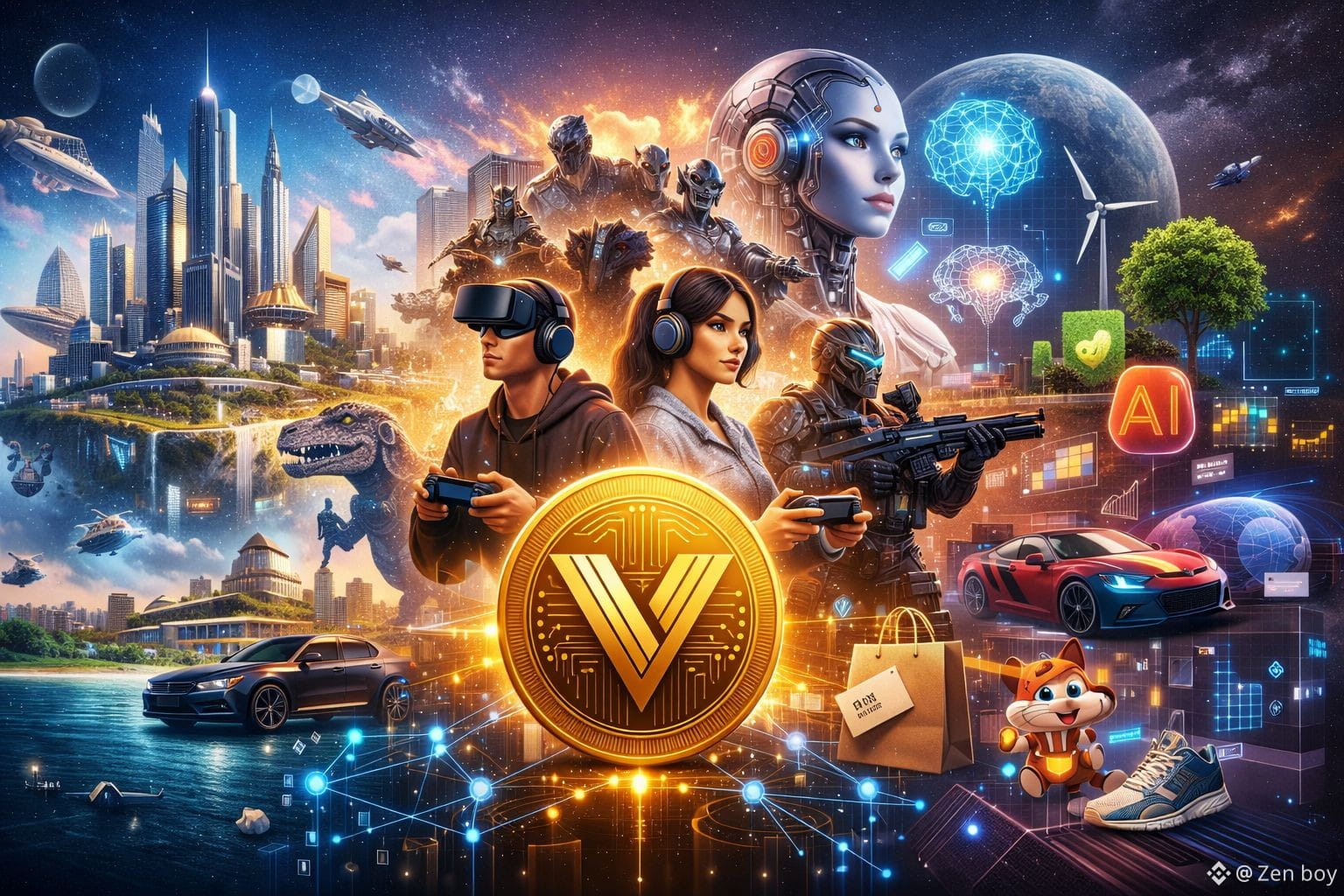
Vanar also leans into an “AI-ready” and “data-native” direction—another signal that it’s thinking about where consumer tech is going. Whether people love AI or feel nervous about it, the truth is AI is becoming the default layer in modern apps: recommendations, personalization, assistants, automation, smarter worlds, smarter experiences. Vanar’s pitch is that Web3 shouldn’t be stuck in a past era where blockchains only move tokens and store simple records. It wants to be the kind of infrastructure where applications can carry richer data and support more intelligent behaviors in a more integrated way—so experiences feel more alive, responsive, and
If you’re building for everyday users—people who don’t have the patience to troubleshoot, and don’t have the appetite to lose money because of complexity—then reliability isn’t optional. Predictable fees, stable performance, and clean onboarding aren’t “nice to have.” They’re the difference between curiosity and abandonment. A gamer who encounters lag, failed transactions, or confusing wallet steps isn’t going to “learn more about blockchain.” They’re going to uninstall.
That’s why Vanar’s early design choices, including a more controlled validator approach for performance and stability, fit the adoption narrative. It’s a pragmatic choice: make the system consistent enough to support consumer-grade experiences now, and evolve decentralization over time. The tradeoff is also clear: more control early on means more responsibility, more scrutiny, and a bigger requirement to prove the roadmap is real—not just promised. For a mainstream audience, the chain must feel safe; for a crypto-native audience, it must become credibly neutral. Vanar’s long-term credibility will depend on whether it can balance both without breaking either.
Then there’s VANRY, the token powering the system. For most everyday users, the healthiest scenario is one where they barely notice the token at all. The token should be infrastructure—quiet, functional, dependable. If Vanar is serious about mainstream adoption, the token economics need to support smooth usage at scale, not create confusion or volatility-driven friction that leaks into the user experience. People won’t embrace “the future” if it feels like walking on thin ice.
And that leads to the real, human question beneath all the tech: What kind of world is Vanar trying to build for people?

If Vanar succeeds, the win won’t be a headline about TPS or a chart about ecosystem growth. The win will be subtler and more powerful: a person playing a game without knowing they’re using a blockchain, a fan collecting something meaningful without fear, a creator building a community with real ownership, a brand running an experience that doesn’t collapse under demand. The win is when Web3 stops feeling like an exclusive club and starts feeling like the internet did when it became simple enough for everyone.
That’s the promise Vanar is chasing: not just “mass adoption,” but a gentler, more inviting doorway into Web3. The path there is demanding—because consumer trust is hard to earn and easy to lose. Performance must be real, onboarding must be effortless, governance must mature, and the ecosystem must keep shipping experiences people actually care about.
