
Plasma has a habit of revealing itself slowly. Plasma doesn’t pull attention with sharp moves or loud narratives, and plasma seems comfortable operating in that space. When I started watching plasma more closely, what stood out wasn’t momentum or excitement, but the quiet consistency of how plasma keeps functioning even when market focus drifts elsewhere.
I’ve followed payment-focused blockchains long enough to recognize familiar cycles. Most chains launch with broad ambitions, then narrow them after friction appears. Plasma made that narrowing decision early. Plasma chose stablecoin settlement as the core problem worth solving, and plasma built its architecture around that single assumption instead of stretching itself thin.
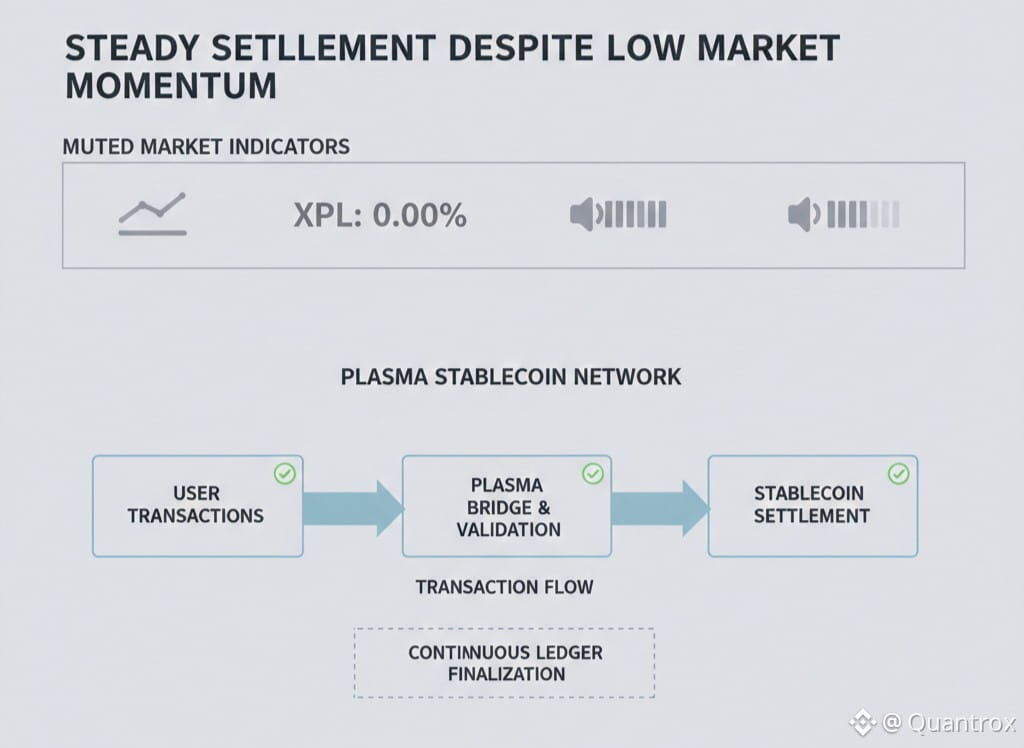
Right now, XPL reflects that calm rather than contradicting it. XPL sits around 0.1430, with a 24-hour high near 0.1472 and a low around 0.1274. RSI rests at roughly 44.16, firmly neutral, not signaling urgency in either direction. XPL isn’t trying to tell a dramatic price story, and plasma doesn’t seem dependent on one. This is usually the phase where attention fades and participation thins out, yet plasma validators continue operating as if nothing unusual is happening.
Plasma runs on a BFT-style proof-of-stake system designed for fast finality and predictability. Plasma doesn’t experiment for the sake of novelty. Plasma optimizes for certainty, because money movement demands reliability more than cleverness. That design choice shows up most clearly when the network is quiet, when transactions still settle cleanly without anyone feeling the need to check confirmations twice.
One subtle but important part of plasma’s design is how it handles fees. Plasma removes friction for basic stablecoin transfers, while more complex actions quietly route through XPL. Most users never have to think about it, which is exactly the point. Plasma absorbs complexity internally instead of exposing it, letting XPL do the coordination work behind the scenes.
Running infrastructure on plasma isn’t something you do casually. Validators lock XPL, maintain uptime, and manage systems that cost real money to operate. If XPL price weakens, you don’t just exit with a click. You’re committed to hardware, monitoring, and operational discipline. That kind of friction naturally filters out short-term behavior, especially during sideways conditions like the current range.
What’s also noticeable is how plasma infrastructure is distributed. Different regions, different hosting strategies, different operational decisions. Plasma doesn’t mandate this, but the network benefits from it. Geographic and operational diversity introduces cost and complexity, which people only accept when they’re thinking beyond short-term incentives.
XPL’s role inside plasma stays deliberately understated. XPL secures consensus, compensates validators, and enables governance without demanding constant attention. Plasma doesn’t frame XPL as something that needs constant narrative reinforcement. It treats XPL like a tool that should work reliably whether anyone is talking about it or not.
There’s something quietly disciplined about plasma’s overall approach. Plasma seems built for periods like this, when price is neutral, RSI sits in the middle, and excitement is elsewhere. Plasma doesn’t optimize for moments of attention. Plasma optimizes for continuity, for transfers that go through without friction, day after day.
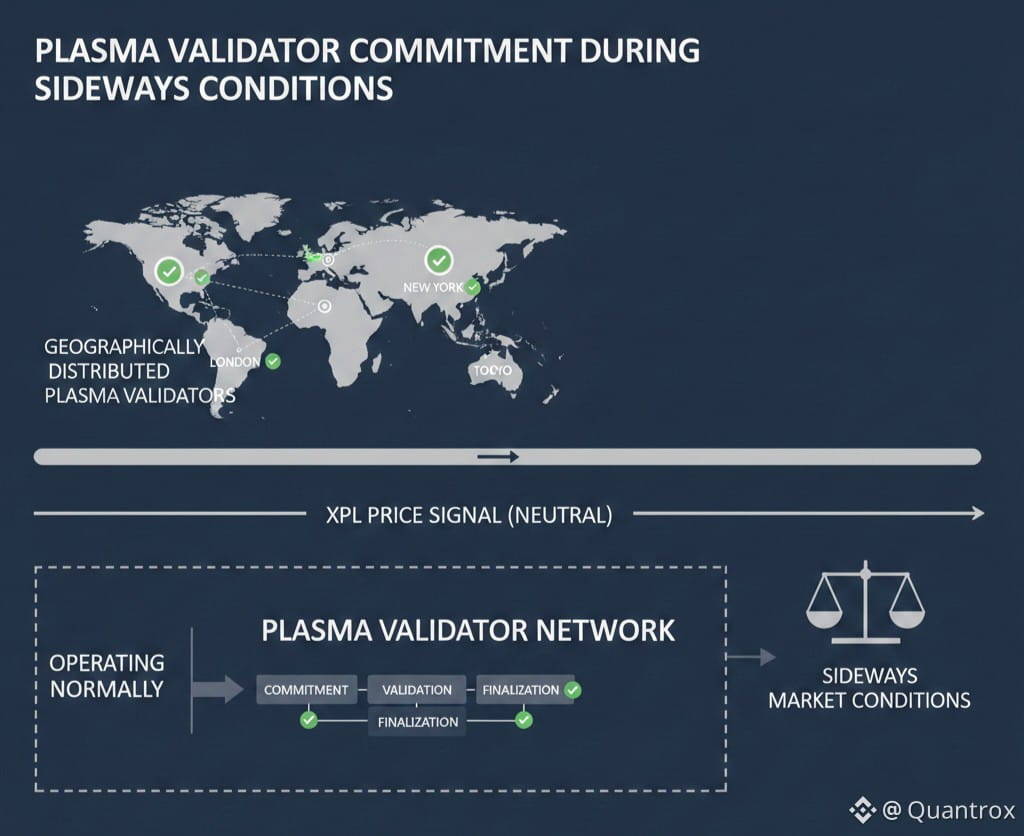
I could be reading too much into behavior patterns. That’s always a risk. But after watching many networks lose operators the moment incentives soften, you start noticing when plasma attracts participants who stay active during dull stretches. Plasma validators aren’t behaving like visitors waiting for volatility.
Plasma keeps settling transactions. XPL keeps securing the network. Plasma continues doing exactly what it was designed to do, even when the market mood is undecided. Over time, that kind of quiet consistency becomes harder to ignore, even if it never demands attention.

