

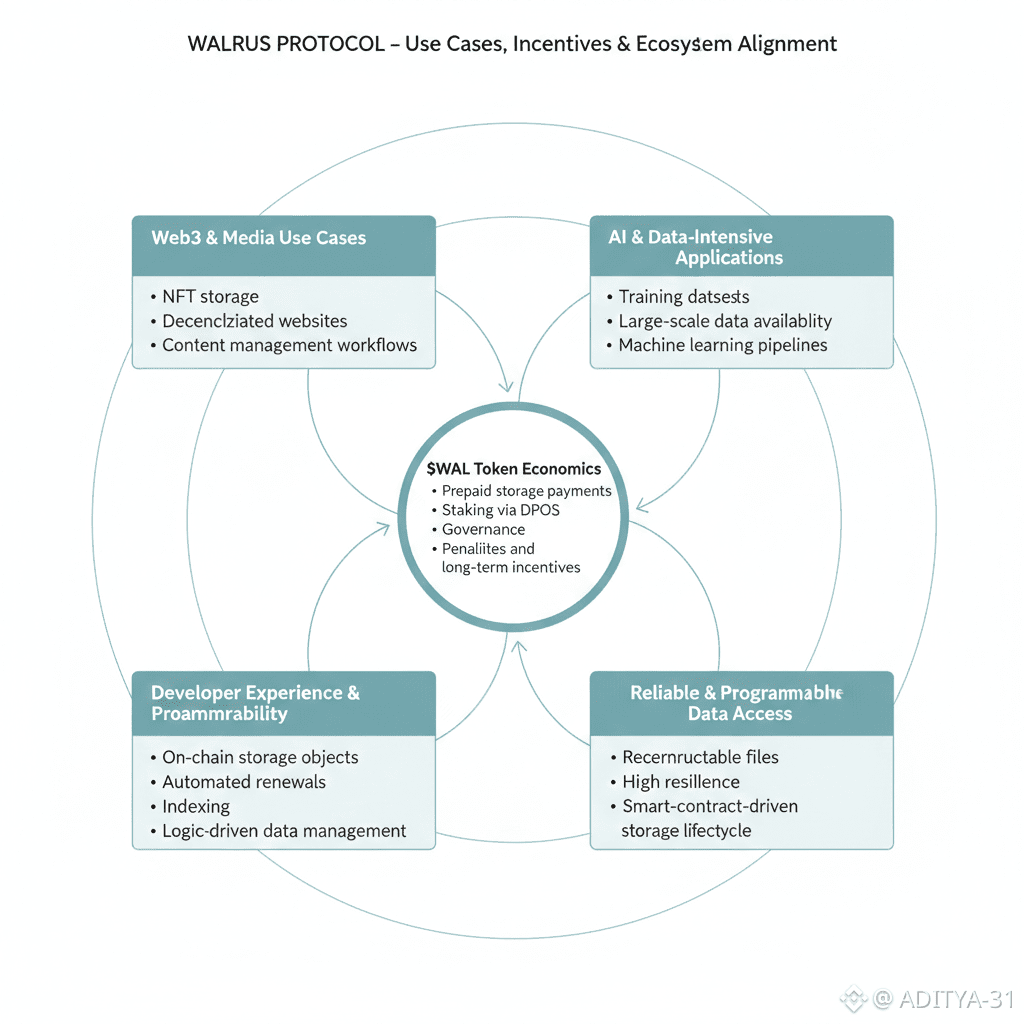
Walrus Protocol ek decentralized storage network hai jo traditional centralized cloud systems ki limitations ko door karke Web3 era ke liye scalable, resilient aur programmable storage infrastructure provide karta hai. Ye storage network specifically large files aur unstructured data — jaise media, images, videos, PDFs, aur AI training datasets — ko effectively handle karne ke liye design hua hai, bina single point of failure ya censorship ke risk ke.
Core Purpose
Walrus ka main goal hai Web3 applications ke liye data reliability, ownership, aur accessibility ko redefine karna. Centralized cloud storage me data ek single provider ke control me hota hai, jisse security aur censorship risks bante hain. Walrus is problem ko solve karta hai by distributing data across a network of independent storage nodes, jahan encoded data fragments (blobs) multiple locations par store kiye jate hain, taaki data recoverable rahe even if kuch nodes offline ho jayein.
Technical Architecture
Walrus Sui blockchain ke upar built hai, jahan Sui metadata aur proofs ko control plane ke roop me manage karta hai. Data blobs ko erasure coding jaisi advanced encoding techniques ka use karke multiple encoded fragments me break kiya jata hai. Ye system ensure karta hai ki even major node failures ke samne bhi original files reconstructable hoti rahein — making the network highly resilient and reliable.
Walrus blobs ko on-chain objects me convert karta hai aur smart contracts ke sath integrate karta hai, jisse data programmable hota hai. Is se developers complex use cases — like automated renewals, on-chain indexing, and other data-centric logic — build kar sakte hain without needing separate centralized storage infrastructure.
Programmable Storage & Developer Experience
Walrus ka ek key innovation ye hai ki data aur storage resources ko programmable on-chain resources bana deta hai. Ye architecture sirf file hosting nahi karta, balki storage ko application logic ka integral part banata hai. Iska lifecycle — from writing and storing to reading and managing — Sui ke smart contract environment ke sath tightly integrated hai, making decentralized data storage accessible for dApps, games, NFTs, and other Web3 use cases.
Real World Use Cases
Walrus ka infrastructure multiple practical scenarios ke liye use ho raha hai, including:
NFT aur media storage — large files ko decentralized environment me persistently store karna
AI aur machine learning datasets — scalable storage for training data
Decentralized websites & applications — applications jahan data logic smart contracts ke sath interact karta hai
Content management workflows — future-proof alternate to centralized providers
Recent ecosystem integrations show growing adoption, jaise Pudgy Penguins aur Tusky jaisi platforms ne Walrus ko choose karke apne storage workflows ko decentralized aur reliable banaya hai.
WAL Token & Network Incentives
Walrus protocol ka native token $WAL ecosystem ke economic layer ko power karta hai. Users $WAL tokens se storage payments karte hain, detailing ki data store karne ka cost prepay kiya jata hai aur nodes/stakers ko distribute hota hai. Delegated Proof-of-Stake model WAL holders ko network security aur stability me participate karne ka mauka deta hai, jahan staking se node selection aur rewards linked rehte hain. Governance aur penalties (including deflationary burns) bhi WAL token mechanism me include hain, jo long-term economic alignment ko support karte hain.
Ecosystem Growth & Adoption
Walrus ka mainnet launch March 2025 me hua, jo Web3 data stacks ke liye ek new infrastructure layer activate karta hai. With partnerships, funding rounds, and ecosystem engagements, Walrus is positioning itself na sirf as decentralized file storage — balki as a programmable data layer for next-generation Web3 applications.
Why Walrus Matters for Web3
Walrus Protocol decentralized storage ko secure, affordable, and integrated with smart contracts banata hai — traditional storage solutions ke opposite, jahan data governance, censorship resistance aur blockchain-native programmability pre-integrated features hain. Is design se developers data-heavy use cases quickly build aur scale kar sakte hain, jisse Web3 apps data reliability aur economic incentives dono ke sath thrive kar sakte hain.

