
In the ever-evolving world of blockchain, a fresh contender has risen with a laser-sharp focus on stablecoin payments. @Plasma is a purpose-built Layer-1 blockchain designed from the ground up to make stablecoin settlement faster, cheaper, and more secure — especially for global payments and financial infrastructure.
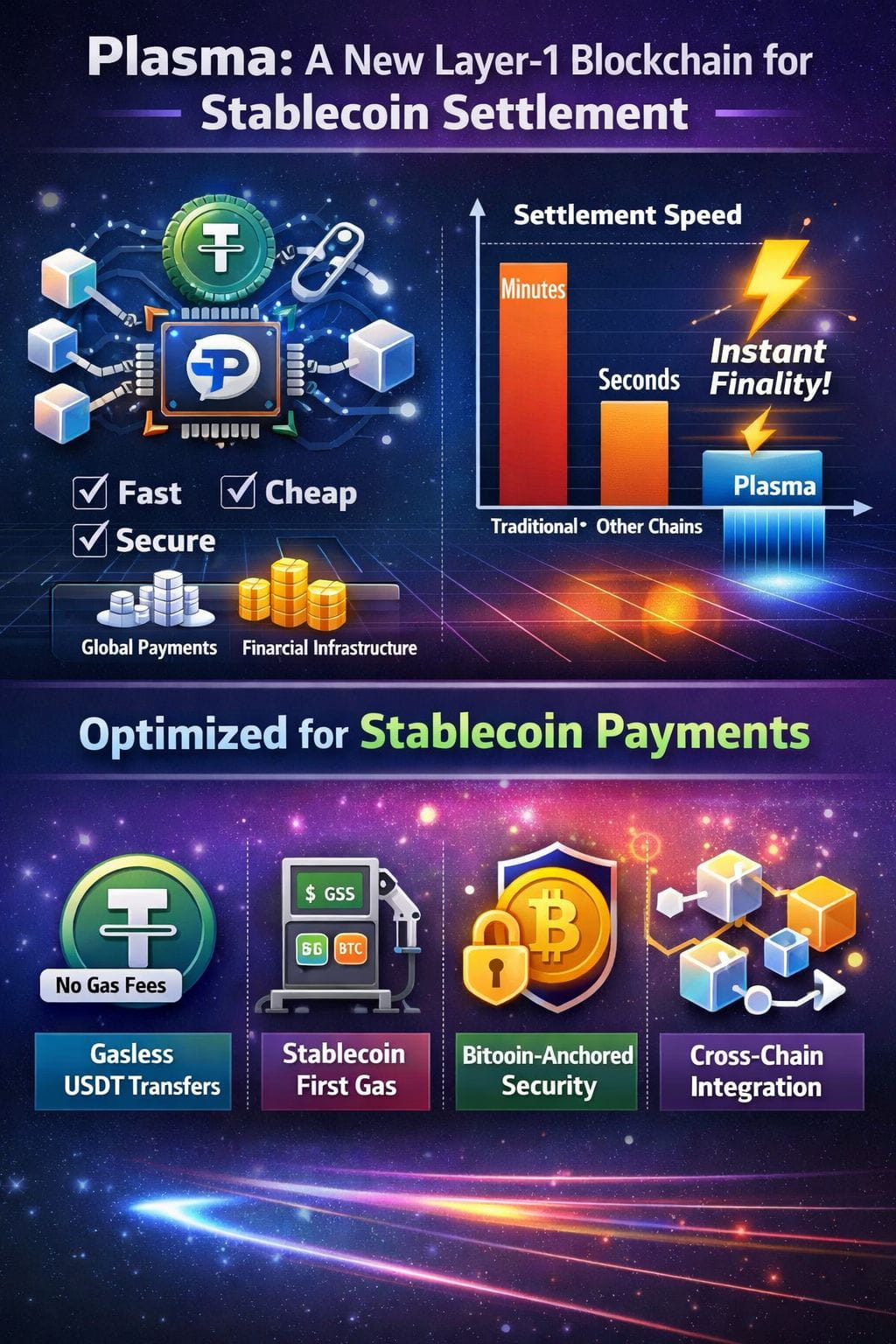
Unlike most blockchains that handle many types of assets and use cases, Plasma’s core mission is simple: optimize the movement of stablecoins like USDT — making everyday transfers feel as easy as sending an email, but with Bitcoin-level security backing each transaction.
At the heart of Plasma’s technology stack are some powerful innovations. It combines a full Ethereum Virtual Machine (EVM)-compatible execution layer (Reth) with a PlasmaBFT consensus engine that delivers sub-second finality — meaning transactions settle nearly instantly. In a world where users are tired of slow confirmations and high fees, this speed is a game-changer.
But Plasma doesn’t stop there. It introduces stablecoin-first features like gasless USDT transfers and custom gas payment options, allowing fees to be paid in stablecoins or even Bitcoin — a huge usability win for both retail customers and businesses that don’t want to juggle native tokens just to pay network fees.

A cornerstone of Plasma’s design is its Bitcoin-anchored security, which strengthens neutrality and censorship resistance. By anchoring parts of its transaction history to Bitcoin’s robust network, Plasma aims to offer settlement security that traditional blockchains alone can’t match — an attractive feature for institutions and payment providers seeking trusted rails for money movement.
The network’s native token, XPL, plays a central role — it’s used for gas, governance, staking (as the protocol grows), and supporting liquidity within financial applications built on Plasma.
Plasma’s design is not just theoretical — the chain has gone live, introducing a stablecoin-native architecture where assets like USDT are the foundational currency of the network. Integrations with bridging partners such as Rhino.fi enable users to bring stablecoins onto Plasma from over 35 other chains, powering seamless cross-chain settlements from day one.
This launch marks a new chapter in blockchain infrastructure. While systems like Ethereum or Solana serve broad DeFi and dApp markets, Plasma is staking a claim as the first stablecoin native settlement layer — prioritizing payments, remittances, and financial services above all else.
Recent articles highlight Plasma’s clear vision: build infrastructure that reduces friction in payments at the base layer, making blockchain-based money movement more competitive with traditional systems while keeping transactions fully transparent and on-chain.
Industry observers also note that Plasma’s focus on stablecoin settlement — plus its institutional-ready features — positions it to serve both retail users in high-adoption markets and financial institutions seeking efficient rails for payments and treasury settlement.

As stablecoins continue to grow in global importance, Plasma’s tailored architecture and Bitcoin-anchored security model could play a key role in reshaping how value moves across borders — from everyday transfers to complex financial infrastructure. What was once a niche innovation has now become a critical layer in the future of money movement.



