

Walrus Protocol ko agar simple words me samjha jaye, to ye sirf ek decentralized storage network nahi hai. Ye ek aisa system hai jo data ko Web3 aur AI applications ke liye genuinely usable banana chahta hai. Sui blockchain par built Walrus ka focus ye hai ki data sirf store na ho, balki verify ho sake, programmable ho, aur real applications ke logic ka active hissa ban sake.
Traditional cloud storage me data ek centralized provider ke control me hota hai. Walrus is model ko break karta hai. Yahan data ko network ke multiple independent nodes ke across distribute kiya jata hai, jisse availability improve hoti hai aur single point of failure ka risk almost khatam ho jata hai. Agar kuch nodes offline bhi ho jaate hain, tab bhi data recoverable rehta hai. Ye approach censorship resistance aur long-term reliability dono ko strengthen karti hai.
Walrus ka ek important difference ye hai ki ye large data ke liye design kiya gaya hai. Videos, images, AI datasets, training files — jo cheezein normally decentralized systems ke liye heavy hoti hain — unko efficiently handle karna Walrus ke architecture ka core part hai. Advanced encoding aur redundancy techniques use karke protocol ye ensure karta hai ki data fragmented hone ke baad bhi usable rahe.
Lekin Walrus sirf storage tak limited nahi hai. Yahan stored data ko on-chain programmable objects ke jaise treat kiya jata hai. Iska matlab ye hai ki smart contracts aur decentralized apps directly data ke sath interact kar sakte hain. Data sirf “upload karke bhool jane wali cheez” nahi rehta, balki application logic ka hissa ban jata hai. Ye feature data-driven dApps, AI workflows aur composable Web3 systems ke liye kaafi important hai.
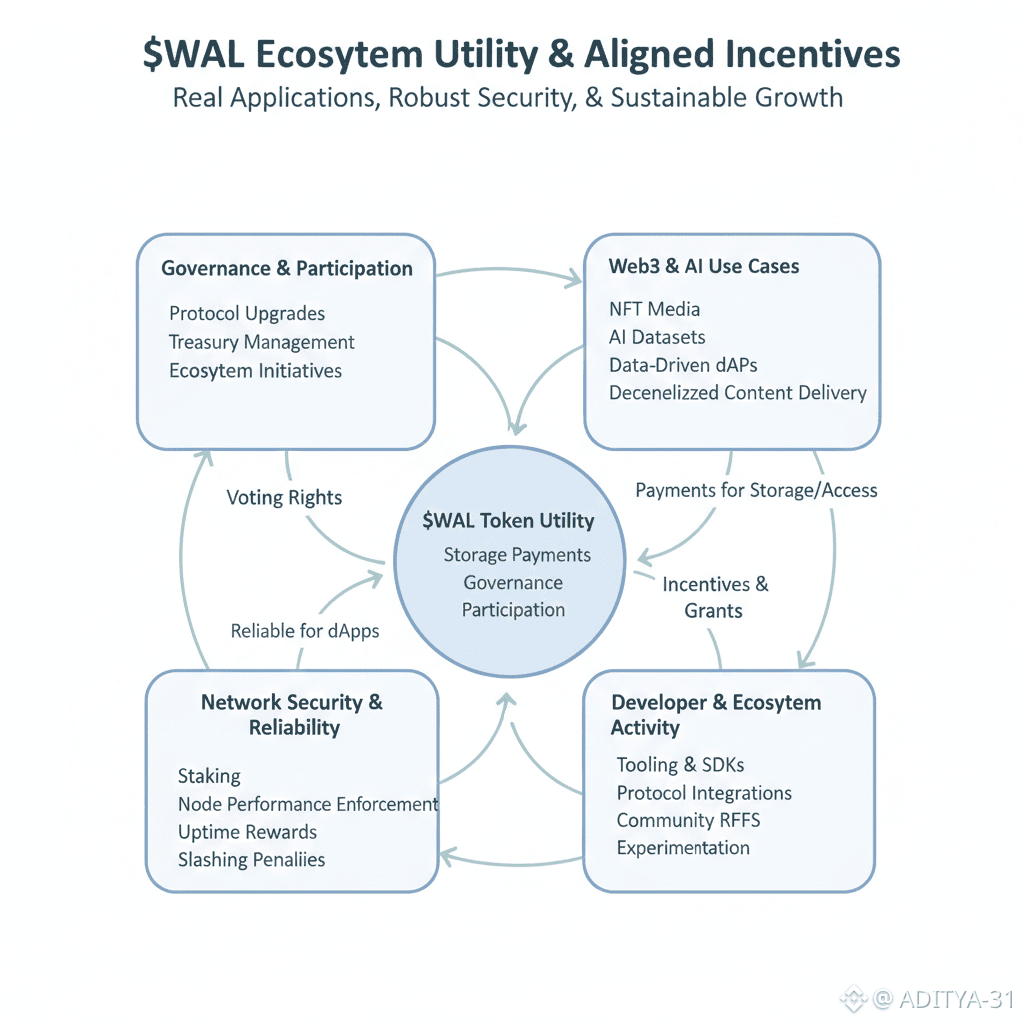
Is poore ecosystem ko power karta hai native token $WAL. WAL ka role sirf trading ya speculation tak limited nahi hai. Ye storage payments, staking, network security aur governance sab me actively use hota hai. Users WAL ke through storage pay karte hain, node operators aur delegators network ko secure rakhne ke liye rewards earn karte hain, aur token holders protocol decisions me participate kar sakte hain. Agar koi node network ke standards par perform nahi karta, to penalties bhi apply hoti hain, jisse overall network health maintain hoti hai.
Use cases ki baat karein to Walrus ka scope kaafi wide hai. NFT media assets, AI training datasets, decentralized content delivery, identity-related data, aur high-volume Web3 applications — sab jagah Walrus ka storage layer fit ho sakta hai. Sui blockchain ki fast finality aur performance ke saath integration Walrus ko enterprise-grade use cases ke liye bhi relevant banata hai.
Ecosystem side par bhi movement dikh rahi hai. Developers actively Walrus ke tools ke sath experiment kar rahe hain, integrations build ho rahi hain, aur community-driven initiatives jaise RFP programs ecosystem growth ko push kar rahe hain. Ye signals dikhate hain ki Walrus sirf whitepaper idea nahi hai, balki ek working infrastructure layer ki taraf move kar raha hai.
Final Thought
Walrus Protocol ka core idea simple hai, lekin execution ambitious. Ye data ko Web3 aur AI ke liye ek passive resource nahi, balki programmable, verifiable aur reliable asset banana chahta hai. $WAL token is system ka economic glue hai jo incentives, security aur governance ko align karta hai. Agar Web3 ko real-world scale par data handle karna hai, to Walrus jaise infrastructure layers future stack me important role play kar sakti hain.

