
In a major development for decentralized AI infrastructure, FLock.io — a platform focused on decentralized, privacy‑preserving AI training — has partnered with Walrus, the programmable decentralized storage and data availability protocol built on the Sui blockchain. This collaboration aims to unlock secure, community‑owned AI model development, addressing a core challenge in AI: storing and sharing training data and model parameters without centralizing sensitive information. 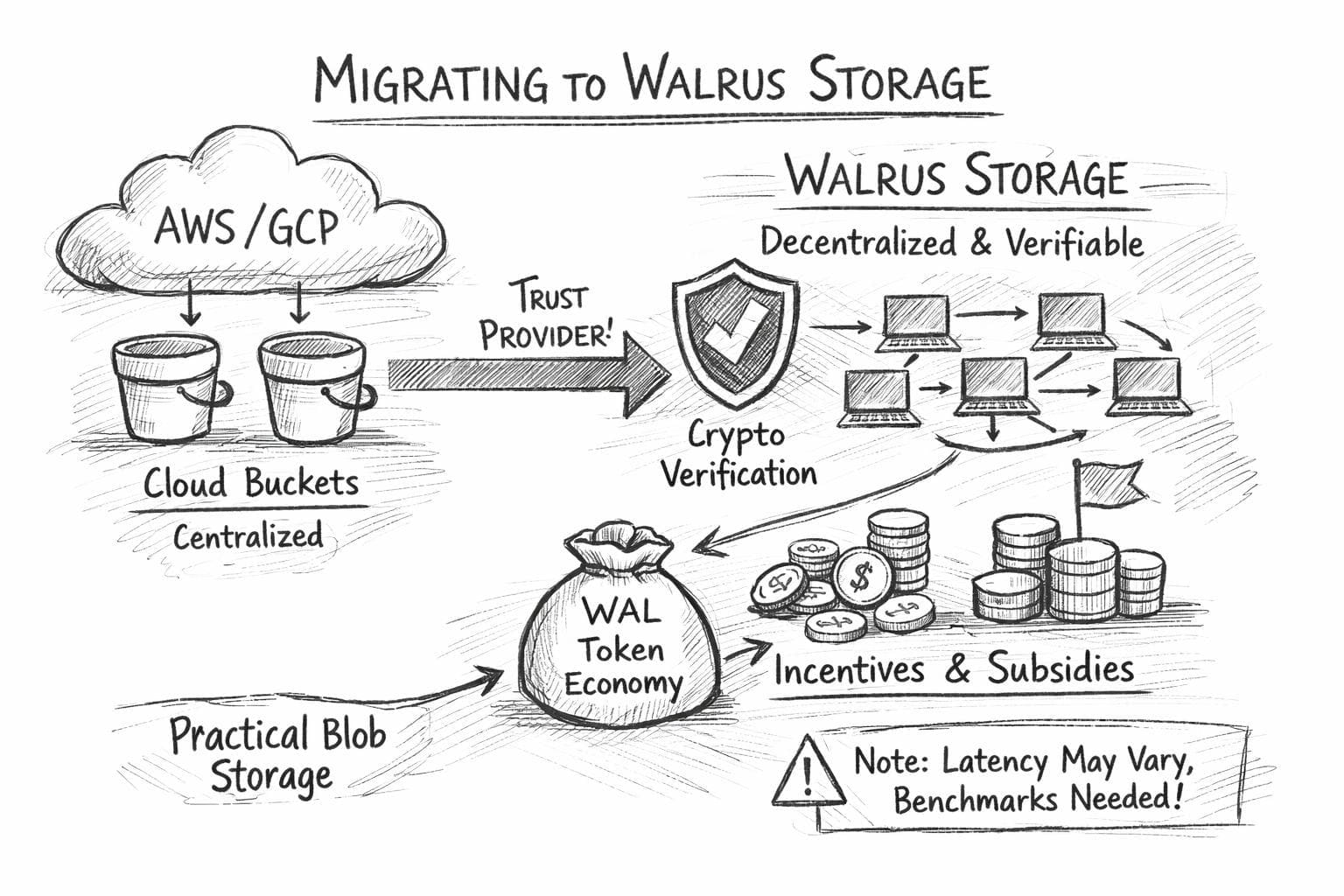
Walrus: A Decentralized Data Layer for Web3 and AI
Walrus is a decentralized storage and data availability protocol designed to handle large binary files (“blobs”), datasets, and rich media in a programmable, trustless manner. Unlike traditional storage systems, Walrus encodes data across distributed storage nodes, ensuring high availability and resilience while maintaining low replication overhead. Each stored file is represented as an on‑chain object on Sui, enabling programmability, composability, and verifiable availability guarantees through smart contracts.
Walrus isn’t limited to just general storage — it explicitly supports AI‑related use cases, such as storing training datasets, model weights, and proofs of correct training, making it ideally suited as a data substrate for decentralized machine learning systems.
FLock.io: Decentralized AI Training Meets Walrus
FLock.io is among the first projects to integrate deeply with Walrus’s decentralized data layer. It uses Federated Learning and blockchain to enable decentralized, privacy‑preserving AI model training, where communities — not corporations — own models and data. At the core of this approach are components like:
AI Arena — competitive, community‑driven model training
FL (Federated Learning) Alliance — privacy‑focused collaboration among training nodes
Moonbase — decentralized model hosting environment
Uptake of Walrus by FLock.io addresses a persistent problem in federated and decentralized AI: secure, decentralized storage of model gradients and parameters. By integrating Walrus with SEAL, a decentralized secrets management system that enforces gated access and encryption, FLock.io and Walrus ensure that training contributions remain confidential and accessible only to authorized federation members.
According to FLock.io founder Jiahao Sun, prior data solutions lacked either decentralization or sufficient encryption, creating obstacles for onboarding users who care about data sovereignty. Walrus’s decentralized, encrypted storage removes these hurdles and lets FLock.io expand its FL Alliance with confidence.
Beyond Storage: Decentralized AI and Agentic Models
Both projects have ambitious long‑term goals. The next phase of the collaboration focuses on fine‑tuning an open‑source foundation model, optimized for agentic interactions within the Sui ecosystem. This includes developing a prototype akin to a “Copilot for the Sui blockchain” — capable of generating Move‑native smart contracts, assisting development workflows, and supporting context‑aware reasoning.
Walrus’s infrastructure provides the global data layer for this vision, giving developers full control over data while enabling new forms of value creation in decentralized systems. Rebecca Simmonds, Managing Executive at the Walrus Foundation, highlighted that the partnership showcases the power of Walrus to support secure and programmable foundations for cutting‑edge decentralized AI.
Growing Ecosystem Adoption
FLock.io isn’t the only AI project building on Walrus. Other integrations reflect a broader trend of decentralized AI and data systems leveraging Walrus for scalable storage. For example, the Swarm Network is using Walrus to power verifiable AI agents that conduct real‑time fact‑checking and store context‑rich reasoning artifacts, further validating Walrus’s role as a foundational data layer in decentralized AI ecosystems.
Conclusion
The FLock.io and Walrus partnership represents a pivotal step in the evolution of decentralized AI. By combining Walrus’s decentralized storage and SEAL’s encryption with FLock.io’s federated learning infrastructure, developers can train, store, and collaborate on AI models securely and without reliance on centralized platforms. This collaboration not only strengthens the decentralized AI stack on Sui but also paves the way for new paradigms of privacy‑preserving, community‑owned AI innovation.


