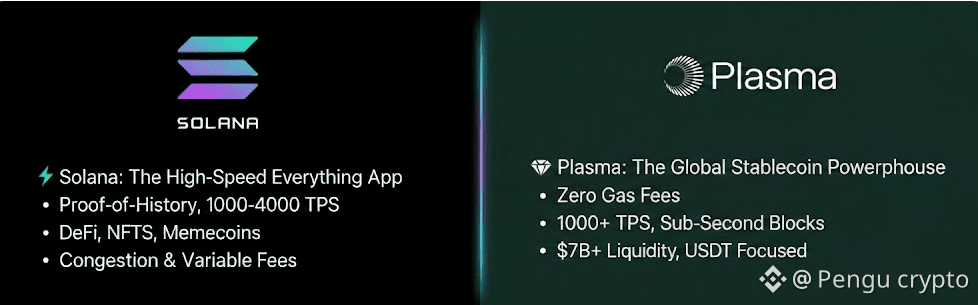
Speed matters in blockchain, but specialization wins markets. Let's break down the clash between Solana's "do everything" approach and Plasma's laser focus on stablecoin payments.
⚡ Solana: The Multi-Tool
Solana's Proof-of-History pushes 1,000-4,000 TPS, creating a massive ecosystem for DeFi, NFTs, and memecoins. The network handles volume, but that diversity comes with costs. When Bonk or another token goes viral, the whole chain feels it. Fees spike. Transactions slow down. You're competing with NFT minters and memecoin traders just to send a payment.
💎 Plasma: Built Different
Plasma picked one job: move stablecoins efficiently. Zero gas fees for USDT transfers. Over 1,000 TPS consistently, with sub-second blocks that don't crater when some new token launches. $7 billion in deposits backed by Tether, Bitfinex, and Founders Fund. Integrations with Aave, Fluid, and Pendle already processing real volume.
The choice is clear. Solana is Times Square—vibrant, chaotic, sometimes gridlocked. Plasma is a dedicated payment highway. No traffic from NFT drops or memecoin frenzies slowing down your remittance.
🛠 The Real Difference
Solana excels at versatility. Need a DEX? Launch an NFT collection? Deploy a gaming token? It handles everything, which is both strength and weakness.
Plasma doesn't try to be everything. It's Western Union rebuilt on-chain, except faster, cheaper, and working 24/7 across 100+ countries. When a nurse in Dubai sends money to family in the Philippines, she doesn't care about NFT infrastructure. She cares about fees and speed. Plasma delivers: zero fees, instant settlement.
Bottom Line
Solana remains king of blockchain diversity. But for global payments and stable value transfer? Plasma wins on specialization. Zero fees and institutional-grade security beat general-purpose infrastructure when you're just trying to move money.