

Dusk is not the kind of project that demands attention the moment you hear its name. It doesn’t rely on noise or exaggeration. Instead, it feels like something you slowly come to understand, and once you do, it stays with you. Founded in 2018, Dusk is a Layer 1 blockchain built for a very specific and often ignored reality: real financial systems need privacy, structure, and rules, not just speed and openness. It exists because finance, at its core, is human, and humans don’t live their financial lives in public.
For a long time, blockchains treated transparency as an absolute virtue. Everything visible. Everything permanent. That idea worked for experiments, for early communities, and for simple transfers. But the moment serious finance entered the conversation, the cracks started to show. Institutions can’t operate when every position is exposed. Companies can’t plan when strategies are visible to competitors. Individuals can’t feel safe when their financial history is permanently open. At the same time, regulators cannot allow systems where nothing can be verified. Markets need trust, and trust requires accountability. This is where most blockchain designs break down.
Dusk starts from a different emotional place. It accepts that privacy is not suspicious. It’s normal. It also accepts that regulation is not the enemy. It’s protection. The project was built around the belief that these two things should not cancel each other out. Instead, they should reinforce one another. Dusk aims to prove compliance without forcing exposure, and to provide privacy without sacrificing integrity. That balance is difficult, but it’s also necessary.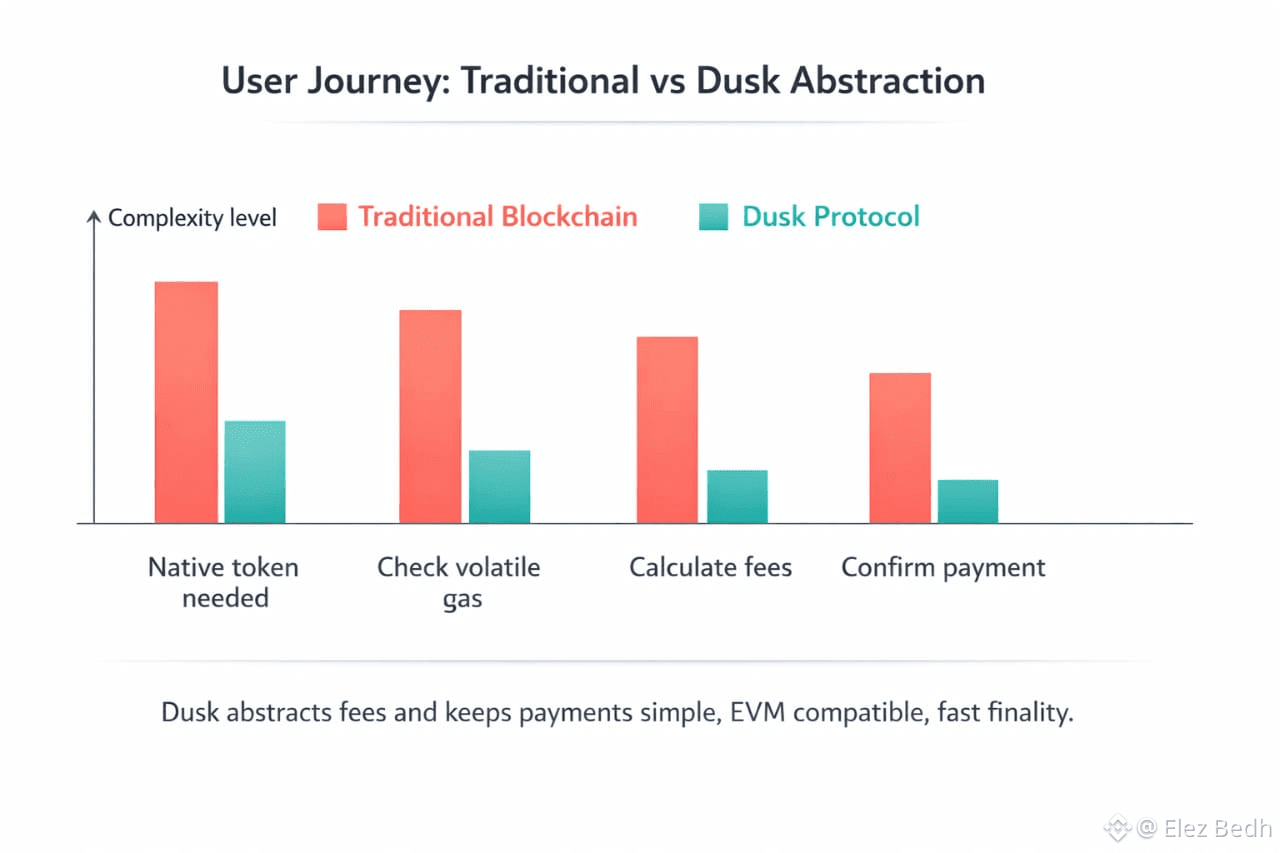
To achieve this, Dusk had to be built as a full Layer 1. Borrowing another network’s assumptions would have meant inheriting limitations that don’t fit regulated finance. Probabilistic finality, fully public state, and one-size-fits-all execution models don’t align with how real markets function. So Dusk created its own foundation, including its own consensus mechanism, networking layer, and execution environment.
At the heart of the network is a Proof of Stake consensus system designed for certainty. Blocks move through a clear process of proposal, validation, and final approval by small, randomly selected committees. Once a block is finalized, it is final. There is no waiting for extra confirmations and no lingering doubt about reversals. This matters deeply in finance. Settlement must be definitive. Trades cannot exist in a state of “maybe.” Dusk understands this not as a technical detail, but as a core requirement.
Behind the scenes, the network also focuses on efficient communication between nodes. Instead of flooding the network with redundant messages, Dusk uses a structured approach that allows information to move quickly and cleanly. Most users will never think about this, but they will feel it. The difference shows up as reliability, consistency, and a system that feels stable rather than fragile.
Privacy on Dusk is not about disappearing. It’s about control. The network uses zero-knowledge proofs so that transactions and smart contracts can be verified without revealing sensitive details. The system checks that the rules were followed, not who followed them or how much was involved. This mirrors how trust works in the real world. You don’t show your entire bank history to prove you can afford something. You show just enough to satisfy the requirement.
Dusk supports both transparent and confidential transactions because not everything needs to be hidden, and not everything should be public. This flexibility matters. It allows applications to choose the right level of visibility instead of being forced into extremes. For regulated assets, Dusk goes further by enabling confidential financial instruments where ownership rules, investor limits, and corporate actions are enforced automatically without exposing private data to the public.
Identity is handled with the same care. Instead of putting personal information on-chain, Dusk allows users to hold their own credentials and prove specific facts when required. A user can prove they are eligible, compliant, or approved without revealing who they are beyond what is strictly necessary. This changes how compliance feels. It no longer feels invasive. It feels respectful. Institutions gain assurance, and individuals keep their dignity.
In everyday use, this design quietly reshapes financial workflows. A company can issue shares on-chain without broadcasting its cap table to the world. Investors can trade without exposing their positions. Dividends can be distributed automatically. Voting can happen privately. Settlement occurs in seconds, not days. Auditors and regulators can verify outcomes without tearing the system open. Everything works, but nothing is unnecessarily revealed.
These choices were not made because they were easy. They were made because avoiding complexity would have meant avoiding reality. Regulated finance is complex, and pretending otherwise only creates fragile systems. Zero-knowledge proofs were chosen because trust should not depend on exposure. Custom consensus was chosen because finality matters. Identity was built in because ignoring it would have guaranteed failure. Every decision points back to one question: can this system survive outside of ideal conditions?
Progress for Dusk will not be measured by hype. It will be measured by quieter signals. Real assets issued on-chain. Institutions integrating the network. Developers choosing it for serious applications. Validators participating consistently. Performance holding steady under real demand. These are slow indicators, but they are honest ones.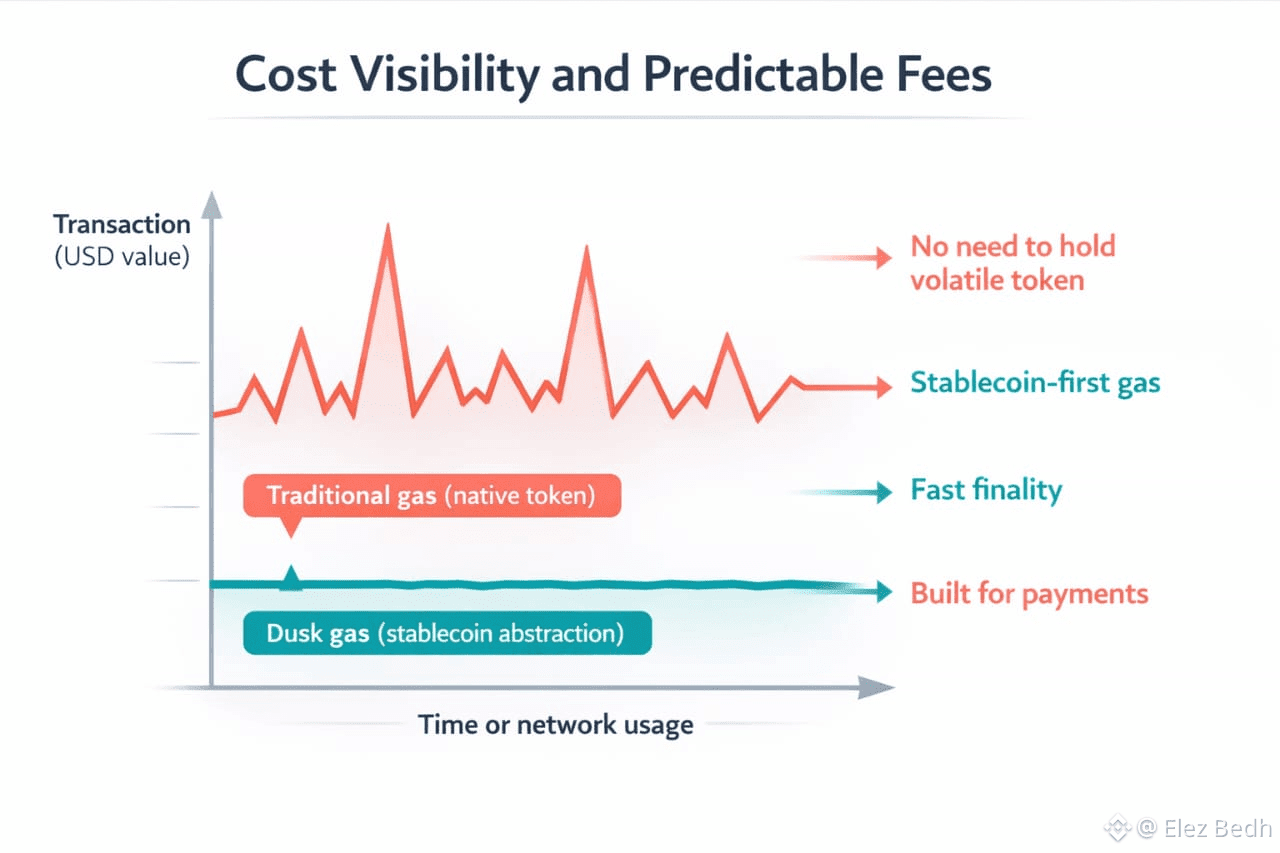
There are real risks. The technology is complex, and privacy systems leave little room for error. Regulations can shift. Adoption can take time. Competition exists from both public chains adapting and private systems pretending to be decentralized. There is also the risk of being early, of building something solid before the world fully realizes it needs it.
But there is another risk that feels larger. The risk of continuing to force global finance into systems that were never designed to handle it. The risk of choosing visibility over dignity, speed over trust, and convenience over sustainability.
Dusk’s future is not about dominating headlines. It’s about becoming quietly essential. More real-world assets. Better tools. Smoother experiences. Execution environments that feel familiar while gaining privacy by default. Infrastructure that works without demanding attention.
What makes Dusk stand out is not just its engineering. It’s its restraint. It doesn’t try to replace everything. It doesn’t frame regulation as an obstacle. It doesn’t treat privacy as rebellion. It treats finance like something that affects real people, real livelihoods, and real responsibility.
I’m drawn to Dusk because it feels like someone finally listened. To regulators who worry about stability. To institutions that need discretion. To users who are tired of being exposed just to participate. We’re seeing a shift in what maturity looks like in this space. Less noise. More meaning. Less spectacle. More structure.
Dusk may never be the loudest project in the room. But if it continues on this path, it has the potential to become one of the most trusted. And in finance, trust is not optional. It’s everything.
