


Most talks about data security start with tech stacks and diagrams but the real issue is memory. Can the data you stored months or years ago still be trusted today. If the past changes even slightly then every decision built on it becomes shaky. This is not theory it happens quietly and often goes unnoticed until damage is done.
I once saw a team argue over numbers that should have matched perfectly. Same source same time same logic. Everyone blamed models or human mistakes. Nobody wanted to admit the truth. The data itself had changed over time. Not hacked not deleted just slowly altered. That moment explains why systems like Walrus exist.
Walrus does not ask users to trust storage providers forever. It keeps asking one hard question again and again. Do you still have the data exactly as it was. And it only accepts proof.
This is where epochs matter. An epoch is a fixed period of time. At the end of each one storage nodes must prove they are still holding the correct data. If the proof fails the system does not guess why. It records the failure and applies consequences. Simple and strict.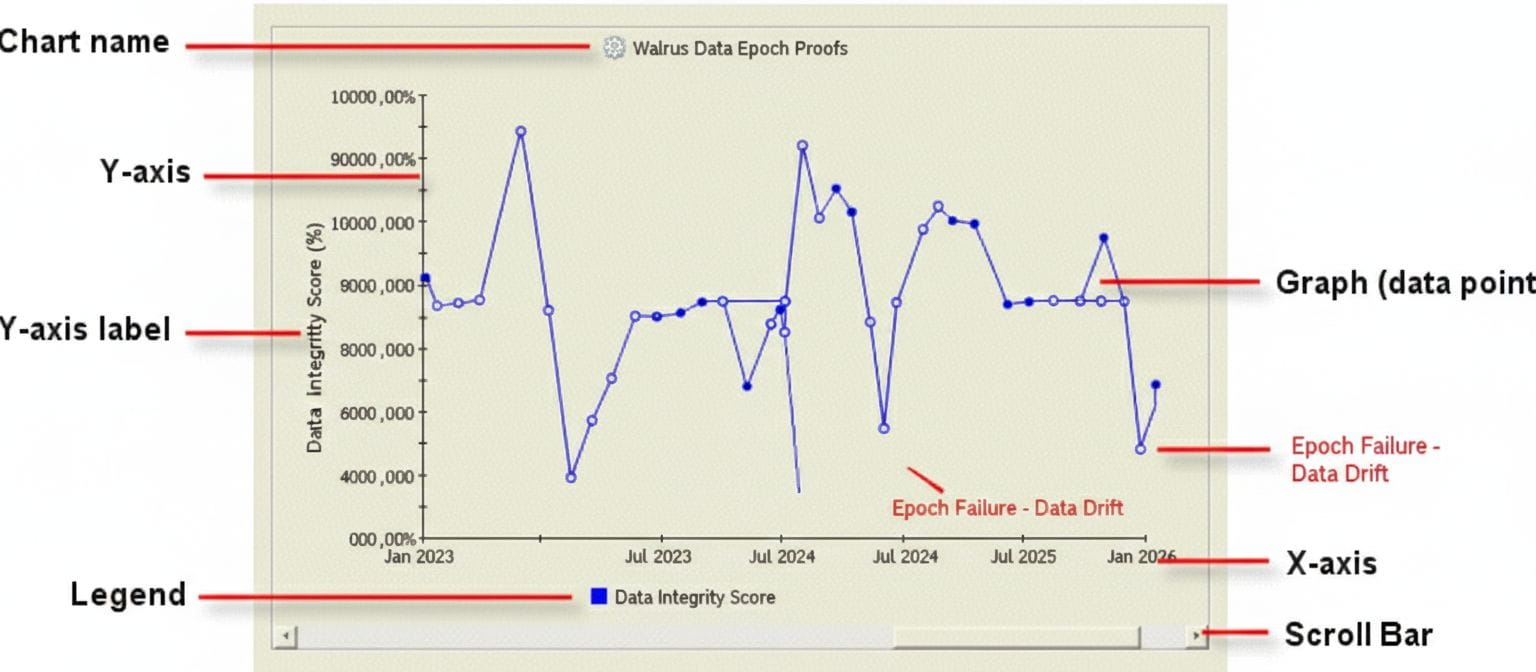
This changes behavior. In most storage systems responsibility fades after upload. Over time files may still exist but be wrong slightly changed or poorly rebuilt after partial loss. Long term storage does not mean permanent truth. Walrus keeps responsibility alive by checking repeatedly and early before problems grow.
For traders and analysts this matters more than it seems. Strategies models and backtests all rely on historical data you did not verify yourself. When that data drifts confidence drops execution suffers and people start tweaking endlessly. Later someone finds missing or altered history and by then trust in the process is already damaged.
Walrus makes integrity visible over time. Epoch proofs create a record showing data stayed correct across many checkpoints not just once. This turns trust into something reviewable.
There is also strong economic pressure. Storage nodes stake value and lose it if they fail. Systems built on incentives usually survive stress better than systems built on promises. Binance research and other verified sources often highlight this same point incentives matter more than ideals.
Walrus is not perfect. It depends on adoption competition and whether incentives stay attractive. Not every use case needs this level of rigor. But Walrus clearly chooses correctness over convenience.
Think about AI companies licensing training data for years. Without verification history disputes become emotional. With epoch proofs they become factual. That difference can decide partnerships lawsuits and reputations.
Infrastructure value shows slowly. It appears when other systems fail under pressure. Walrus is built for that timeline. Epochs are not a trick. They are a habit enforced by code a habit of checking not assuming and refusing to let time blur truth.
Data does not need to be exciting. It needs to be right when nobody is watching. Walrus is betting that proving truth again and again beats asking for trust once. That bet matches how things really break which is why it matters.

