
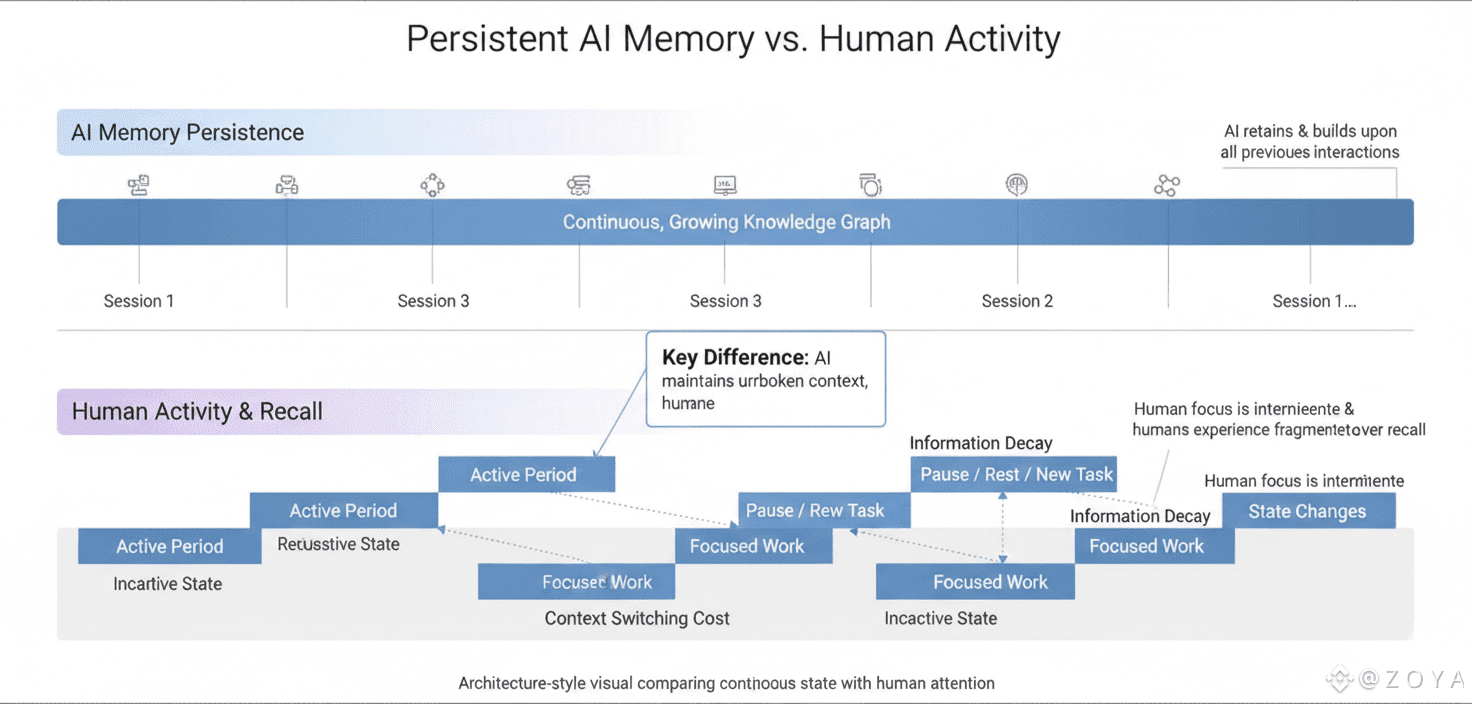
I assumed context would reset. It usually does. You close a window, you reopen it later, and whatever mattered gets reconstructed from notes and assumptions. This time, it didn’t. I picked up where we left off and realized the system hadn’t let go of anything. It was still carrying the full shape of what we’d already done.
Nothing felt urgent while it was happening. Small actions. Repeated tests. Slight variations that felt like exploration, not commitment. The chain kept clearing them with the same calm it clears everything else. No slowdown. No prompt asking if we were sure.
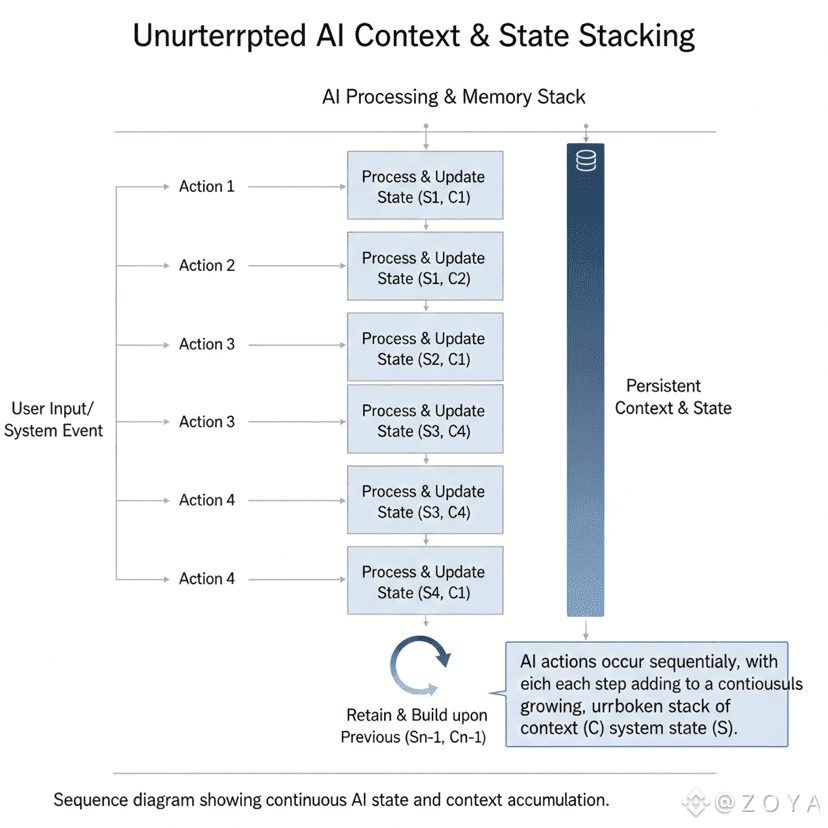
A week later, the weight showed up. Not as a failure. As continuity. The system remembered decisions we’d mentally downgraded to drafts. AI context had persisted. Automation had treated every instruction as real enough to settle. The past hadn’t expired just because we stopped paying attention.
That’s the mismatch teams don’t plan for. Human memory is selective. Infrastructure memory is not. AI-ready systems don’t forget between sprints. They don’t reinterpret intent after meetings end. They just keep going, carrying forward whatever was last true.
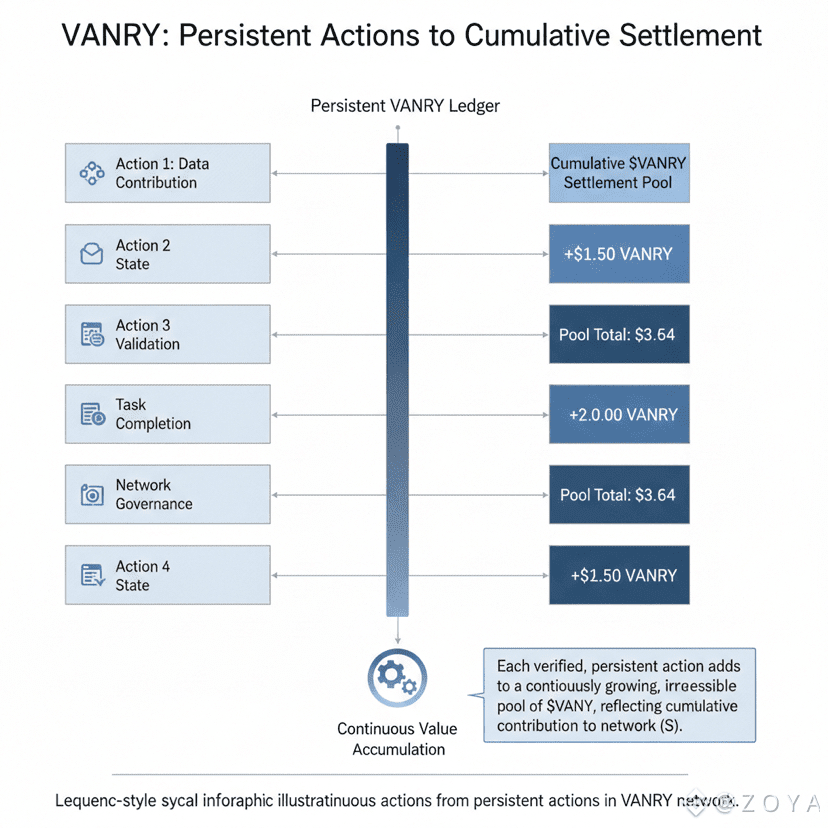
When finance asked why this cycle felt heavier than the last, there wasn’t a clean story to tell. The system behaved. The users behaved. The difference was that repetition had been preserved instead of washed away. $VANRY surfaced it quietly, not as friction, but as accounting that refused to pretend the past hadn’t happened.
Vanar doesn’t enforce discipline. It exposes the cost of lacking it. Memory doesn’t punish mistakes. It just refuses to forget them.
Nothing broke.
Nothing reset.
And that was the point.
