
@Walrus 🦭/acc Much of DeFi’s early architecture was built around a narrow assumption: capital is mobile, risk is acceptable, and participants are willing to trade long-term ownership for short-term opportunity. That assumption produced rapid experimentation, but it also embedded structural weaknesses that have proven persistent forced selling during volatility, liquidity that evaporates under stress, incentive systems that reward extraction over stewardship, and balance sheets that are fragile by design. Protocols like Walrus emerge not as reactions to market cycles, but as responses to these deeper design failures.
At its core, Walrus exists because DeFi has struggled to treat capital as something to be preserved rather than constantly redeployed. In most systems, liquidity is incentivized through emissions or leverage, which implicitly assumes that participants will accept dilution, liquidation risk, or volatility in exchange for yield. This creates reflexive pressure: when prices fall, collateral values drop, liquidations trigger, and users are forced to sell precisely when they least want to. The system remains solvent, but participants lose ownership. Walrus’ design philosophy starts from a different premise that financial infrastructure should minimize forced behavior and give users more control over timing and exposure.$WAL
This philosophy extends beyond finance into data itself. By building on Sui and using erasure coding combined with blob storage, Walrus treats data availability as a shared economic responsibility rather than a centralized service. Traditional cloud storage optimizes for efficiency at scale, but it does so by concentrating trust, pricing power, and censorship control. In DeFi, this concentration often reappears indirectly: protocols rely on centralized storage layers for state, metadata, or off-chain computation, creating hidden points of failure. Walrus’ decentralized storage model accepts higher coordination complexity in exchange for resilience, acknowledging that robustness is rarely the cheapest option in the short term.
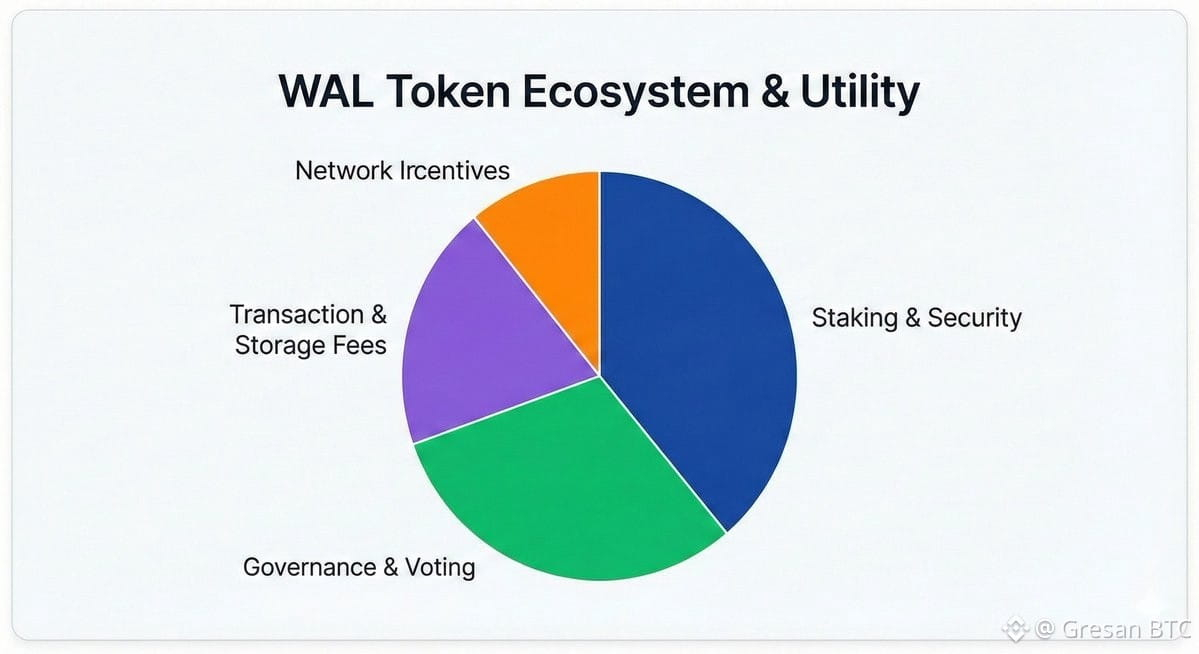
One of the overlooked inefficiencies in DeFi is how liquidity is framed. Liquidity is often treated as a speculative resource something to be farmed, looped, or mercenary by default. In reality, liquidity is a balance sheet tool. It allows users to meet obligations, manage duration mismatches, and avoid selling productive assets. Walrus’ approach reframes liquidity provision and borrowing as mechanisms to delay irreversible decisions. By enabling users to access liquidity without immediately relinquishing ownership, the protocol reduces the probability that volatility alone dictates outcomes.
@Walrus 🦭/acc Stablecoins play a similar role in this framing. Rather than being instruments for leverage or yield optimization, they function as accounting units and buffers against forced asset sales. When stablecoins are integrated into systems designed for long-term capital preservation, they become tools for risk isolation rather than risk amplification. Walrus’ emphasis on conservative primitives reflects an understanding that stability is not created by complexity, but by limiting the number of ways a system can fail under stress.
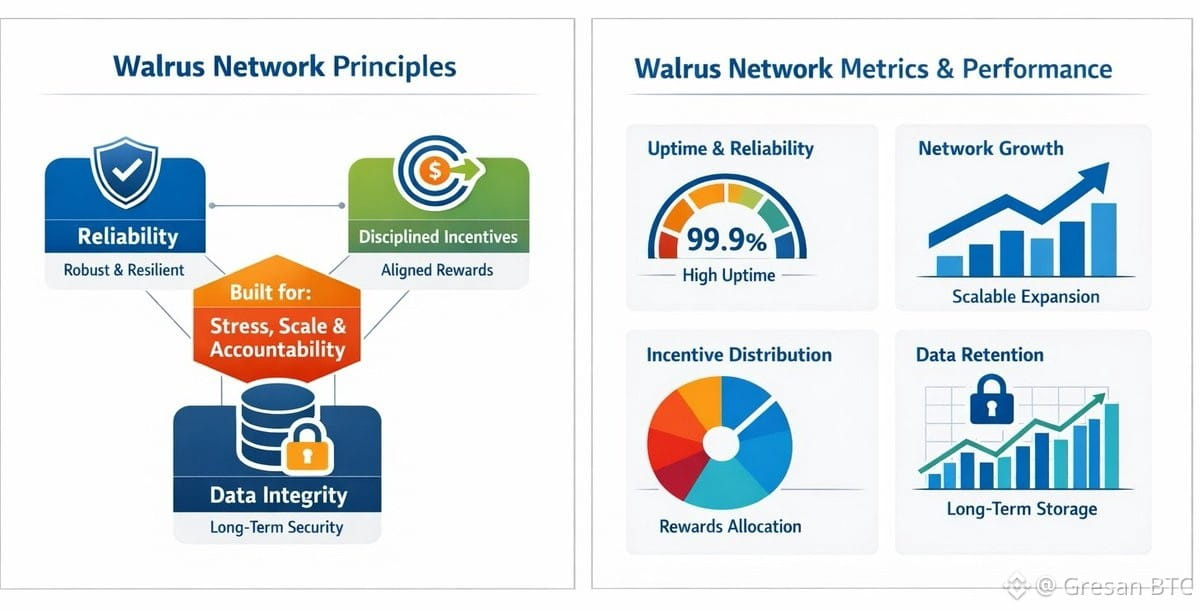
Incentives, too, are treated with restraint. Short-term rewards can bootstrap activity, but they often attract participants whose time horizon is shorter than the protocol’s risk exposure. Walrus appears to accept slower adoption in exchange for alignment favoring contributors and users whose incentives are tied to system health rather than emissions schedules. This is a trade-off that sacrifices early metrics in favor of durability, a choice that is rarely popular but often necessary.
There are, of course, costs to this approach. Decentralized storage with redundancy is less capital-efficient than centralized alternatives. Conservative risk parameters can limit composability with more aggressive DeFi strategies. Reduced emphasis on yield makes the protocol less attractive to users seeking immediate returns. These are not oversights; they are explicit decisions that prioritize predictability over growth and survivability over optimization.
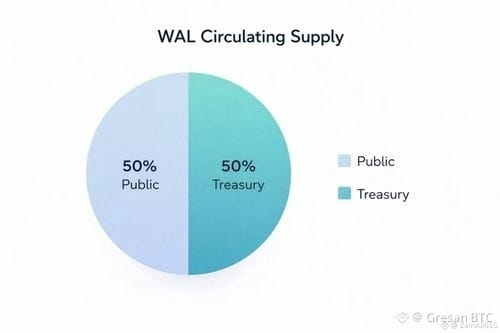
Viewed through this lens, Walrus is less about introducing new features and more about correcting economic behavior that DeFi has normalized. #walrus It assumes that users value ownership, optionality, and time values that are often obscured in environments dominated by leverage and incentives. By designing for scenarios where markets are stressed rather than exuberant, the protocol positions itself as infrastructure rather than opportunity.
If Walrus proves relevant in the long run, it will not be because it outpaced others in growth or yield, but because it aligned itself with a quieter truth: financial systems are judged not by how they perform when conditions are favorable, but by how much autonomy they preserve when conditions are not. In that sense, its significance lies less in momentum and more in endurance.

