
I’ve always believed that the real promise of blockchain isn’t just financial freedom it’s data sovereignty. The ability for individuals to truly own, move, and control their digital lives. That belief is what led me to follow Plasma closely.
Unlike many projects that focus on launching yet another DeFi token or improving transaction speed, Plasma tackles a deeper and more fundamental problem: our data is still trapped. Even in a decentralized world, information remains siloed, expensive to move, and hard to reuse across networks. Plasma exists to change that.
This article explains Plasma in simple terms what problem it solves, how it works, and why I believe it matters far beyond price charts and token metrics.
The Core Problem: Fragmented Data and Costly Storage
Blockchains have unlocked an explosion of decentralized applications, but they’ve also created new friction.
Each chain operates like its own isolated island. Data stored on Ethereum cannot be easily read or used on Solana, Avalanche, or other networks. If developers try to store large amounts of data directly on-chain, costs quickly become prohibitive. As a workaround, many rely on off-chain storage solutions like IPFS or Arweave.
While useful, these systems don’t solve the real issue: seamless, native data portability across chains. The result is a fractured ecosystem where applications struggle to communicate and users juggle multiple wallets, identities, and data silos.
Decentralization promised freedom but data remains locked.
Plasma: A Chain-Agnostic Data Layer
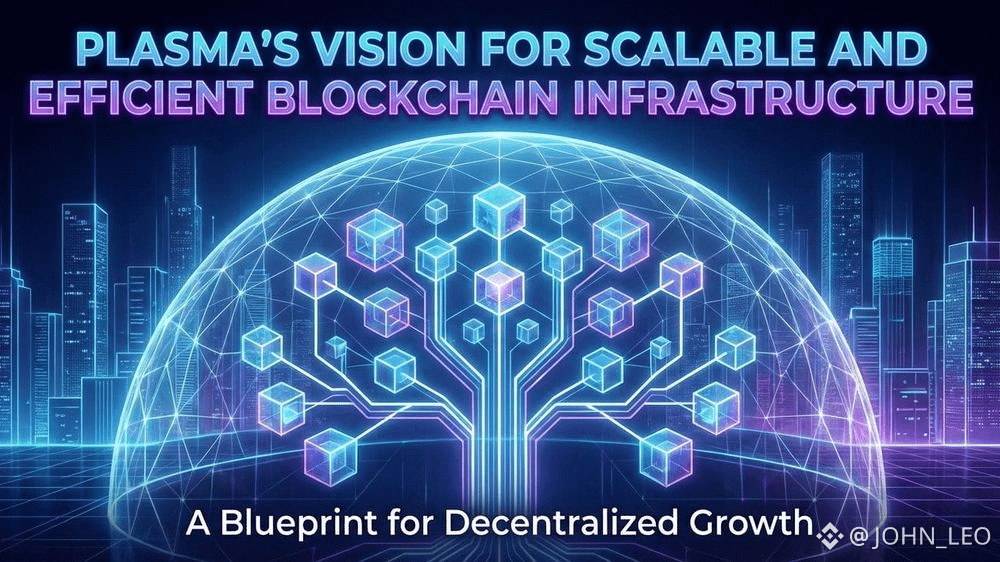
Plasma reimagines storage as a neutral, blockchain-agnostic layer that sits beneath all networks.
Instead of competing with blockchains, Plasma complements them. It operates through a decentralized physical infrastructure where anyone can contribute storage and bandwidth by running a validator node. Validators stake the network’s native token, XPL, and are rewarded for reliably storing data.
To ensure honesty, Plasma uses proof of spacetime. Validators must continuously prove cryptographically that they still possess the data they are paid to store. If they fail, their stake is slashed. The system rewards reliability, not trust.
What truly sets Plasma apart is its chain neutrality. A developer can store user data for an Ethereum application in Plasma and later retrieve it from a smart contract on another chain without bridges, custodians, or centralized services.
In practice, this means a gamer could own items on one chain and use them in a game on another. Identity data, assets, and history move with the user not the platform.
Thoughtful Tokenomics Built for Longevity
When evaluating any crypto project, token structure matters.
Plasma’s native token, XPL, has a fixed maximum supply of 10 billion tokens, with roughly 1.8 billion currently in circulation. For the first three years, the supply remains unchanged. After that, inflation is gradual and decreases toward approximately 2% annually, with new tokens used to reward validators.
Importantly, part of the network fees are burned, helping offset inflation over time. This creates a balanced system that supports network security without aggressively diluting long-term holders.
Transparent Token Allocation
The total XPL supply is distributed transparently across several groups:
Early partners to bootstrap adoption
The core team and contributors, with long lock-ups to align incentives
Investors
Community grants to fund ecosystem development
Currently, only around 18% of the total supply is circulating, meaning the majority of tokens are still locked. This is crucial for investors to monitor, as future unlocks will increase supply over time.
Understanding the difference between circulating supply and total supply is essential when valuing XPL. The gap represents potential future issuance and opportunity, if adoption grows alongside it.
Beyond Technology: Data Sovereignty as a Human Right
Most discussions around Plasma focus on architecture or tokenomics. I want to emphasize something deeper: digital sovereignty.
Today, our data defines us our identities, histories, and economic lives. Yet big tech companies control it. Even within blockchain ecosystems, data is often trapped on a single chain, limiting user freedom.
Plasma changes this dynamic. Cross-chain storage allows users to carry their data across networks without centralized intermediaries. It becomes a kind of digital passport portable, permissionless, and owned by the individual.
You don’t belong to the platform. The platform adapts to you.
A Simpler Life for Developers
Plasma doesn’t just empower users it simplifies life for builders.
Developers no longer need to manage separate storage solutions for each chain. They write once, store once, and access data anywhere. This reduces maintenance overhead, accelerates development, and unlocks entirely new product designs.
Plasma becomes a shared data layer where applications across different chains can finally communicate. That’s where real innovation happens.
Adoption Trends Favor Cross-Chain Infrastructure
Infrastructure succeeds when demand exists and demand is growing.
Crypto adoption continues to rise globally, with hundreds of millions of users holding digital assets. As usage expands, applications increasingly need to operate across multiple chains. Fragmentation becomes a bottleneck.
Plasma sits directly at the center of this trend. As more users and applications go multi-chain, the value of a neutral, decentralized data layer increases naturally.
Use Cases Beyond Simple Storage
@Plasma ’s architecture enables far more than file storage:
Decentralized identity, where credentials move across chains without exposing sensitive data
Cross-chain gaming, with portable items and characters
DeFi metadata and collateral records stored in a neutral format
Decentralized social networks spanning multiple chains while preserving user history
These are not theoretical ideas they are natural outcomes of portable data.
Why I’m Optimistic
There are risks. Token unlocks will increase supply. Competition in decentralized storage is intense. Execution matters.
But Plasma is solving a real problem with a clear economic model and long-term relevance. As blockchain adoption grows, cross-chain infrastructure won’t be optional it will be essential.
Most importantly, Plasma aligns with a principle I deeply believe in: individuals should own their digital lives.
If Plasma delivers on its vision, it won’t just be another protocol. It will be a cornerstone of a truly decentralized internet one where people are sovereign, not siloed.
Plasma isn’t about moving faster.
It’s about moving freely.

