


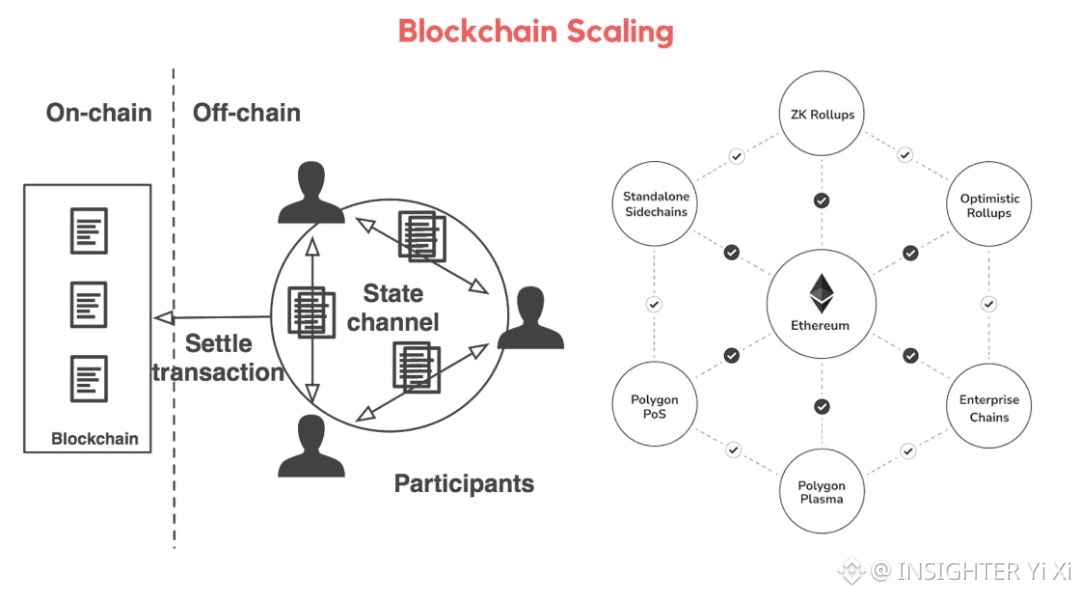
Scalability has always been one of the hardest problems in crypto. High fees, slow confirmations, and congested networks are not just technical issues they directly block real adoption. This is exactly where Plasma becomes important. Plasma was created to move transaction execution off-chain while still relying on the security guarantees of the main blockchain, offering a practical solution rather than theoretical promises.
What makes Plasma powerful is its structure. Instead of forcing every transaction onto the main chain, Plasma allows child chains to process activity independently. Only critical data and proofs are anchored back to the base layer. This dramatically reduces network load while maintaining trust and security. For users, this means faster transactions and lower fees. For developers, it means the freedom to build applications that can actually scale.
The relevance of this design is growing as more applications demand high throughput gaming, payments, and consumer-focused dApps simply cannot survive on slow and expensive execution. Plasma addresses this without compromising decentralization, which is why it continues to be referenced as a foundational scaling concept.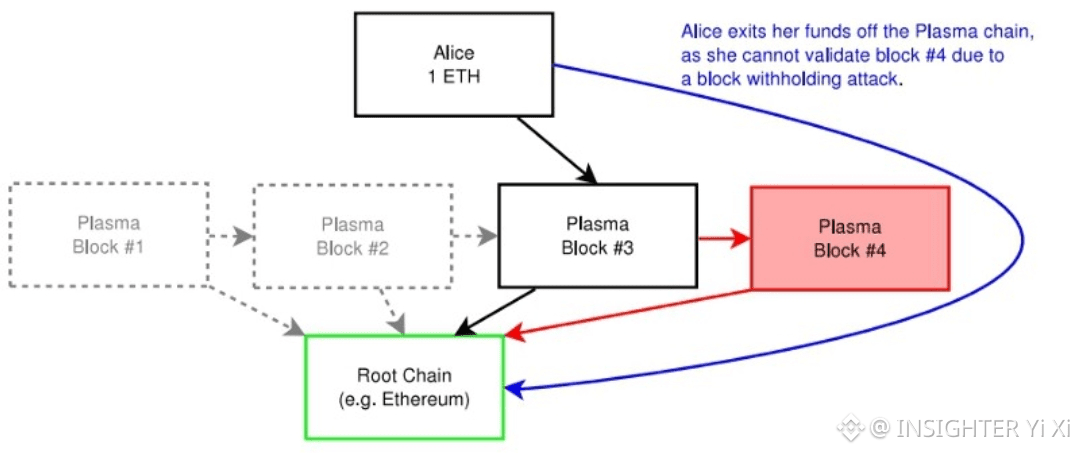
The token $XPL is closely tied to this ecosystem, supporting network incentives and long-term sustainability. As scalability becomes less of a buzzword and more of a necessity, Plasma’s approach feels increasingly aligned with where the industry is heading.
For anyone looking beyond hype cycles and focusing on real infrastructure, following updates from @Plasma is worth the time. Plasma may not always be loud, but its impact on scalable blockchain design is hard to ignore.

