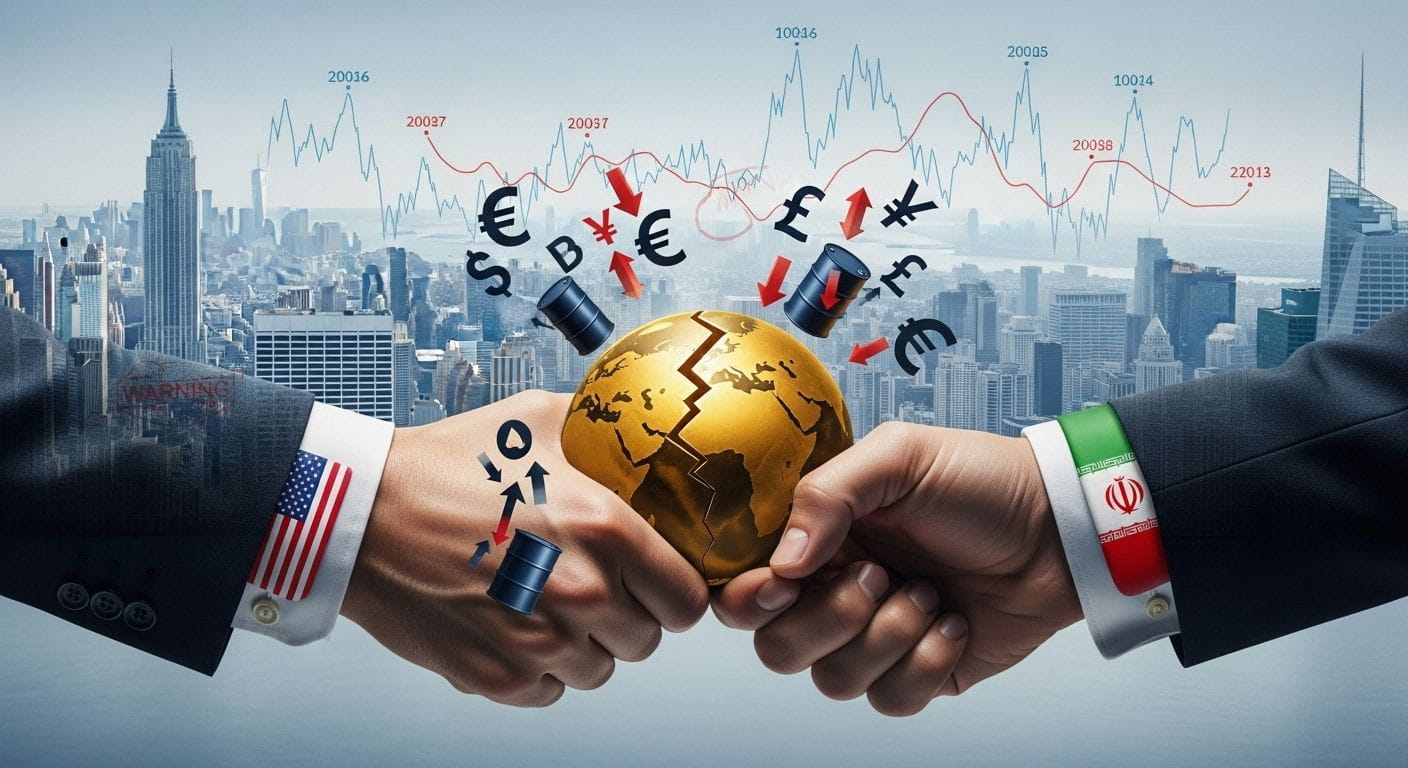
Geopolitical tensions between the United States and Iran have always been a sensitive trigger for global financial markets. Whenever headlines point toward escalation, investors quickly shift their strategies, leading to noticeable movements across multiple asset classes.
1. Oil Market: The First to React
The Middle East plays a critical role in global oil supply. Any tension involving Iran immediately raises concerns about supply disruptions, especially around key shipping routes.
As a result:
Crude oil prices often spike
Energy stocks may see short-term gains
Inflation expectations can rise due to higher energy costs
2. Gold: The Classic Safe Haven
During geopolitical uncertainty, investors usually look for safety. Gold benefits the most from this behavior.
Increased demand pushes gold prices upward
Long-term investors use gold as a hedge against instability
Volatility-driven rallies are common.
3. Stock Markets: Risk-Off Mode
Equity markets generally dislike uncertainty.
Global indices may face selling pressure
Emerging markets can be hit harder
Defense and energy sectors sometimes outperform the broader market
Investor sentiment becomes cautious, and volume is driven more by news than fundamentals.
4. Cryptocurrency Market: Volatile but Watchful
Bitcoin and the broader crypto market show mixed reactions:
Short-term high volatility is common
Some investors treat Bitcoin as “digital gold”
Others reduce exposure due to risk-off sentiment
Crypto movements during such events are often sharp but short-lived.
5. US Dollar and Bonds
The US Dollar may strengthen as a safe-haven currency
US Treasury bonds usually see increased demand
This reflects a broader move toward capital preservation.
Key Takeaway
The #USIranMarketImpact is largely news-driven and short-term focused. Markets react fast, sometimes emotionally, and then stabilize once clarity improves. For traders and investors, this period highlights the importance of:
Strong risk management
Avoiding over-leverage
Waiting for confirmation instead of chasing headlines
In times of geopolitical tension, protecting capital matters more than predicting the next big move.