
Data is the lifeblood of AI, but old-school storage just can’t keep up. Walrus protocol on Sui flips the script, offering decentralized blob storage that actually scales—useful for both developers and big companies. It chops up huge files with erasure coding, scattering pieces across different nodes. Even if some nodes go down, your data stays put and accessible. That’s why Walrus is quickly becoming the backbone for anyone who needs reliable, verifiable AI datasets.
Here’s how it works. Walrus acts as a decentralized storage layer right on top of the Sui blockchain. Thanks to Sui’s object-centric design, these data blobs turn into digital objects you can move around. Developers upload their stuff, and Walrus takes care of encoding, storing, and fetching it—no middlemen involved. The real magic is in erasure coding. Walrus slices your data into fragments, mixes in some redundancy, and spreads everything across the network. When it’s time to recover a file, you only need a portion of those pieces—not every single one—so it’s way more resilient to failures.
Let’s break down that erasure coding a bit. You feed in a blob of data. Walrus chops it into k data shards and m parity shards. Altogether, you have k + m shards, which get stored on different nodes. To get your data back, you only need any k of those shards, and some clever math puts everything back together. This uses less storage and bandwidth than just making lots of copies of your data, so it’s perfect for handling the huge datasets needed for AI training.
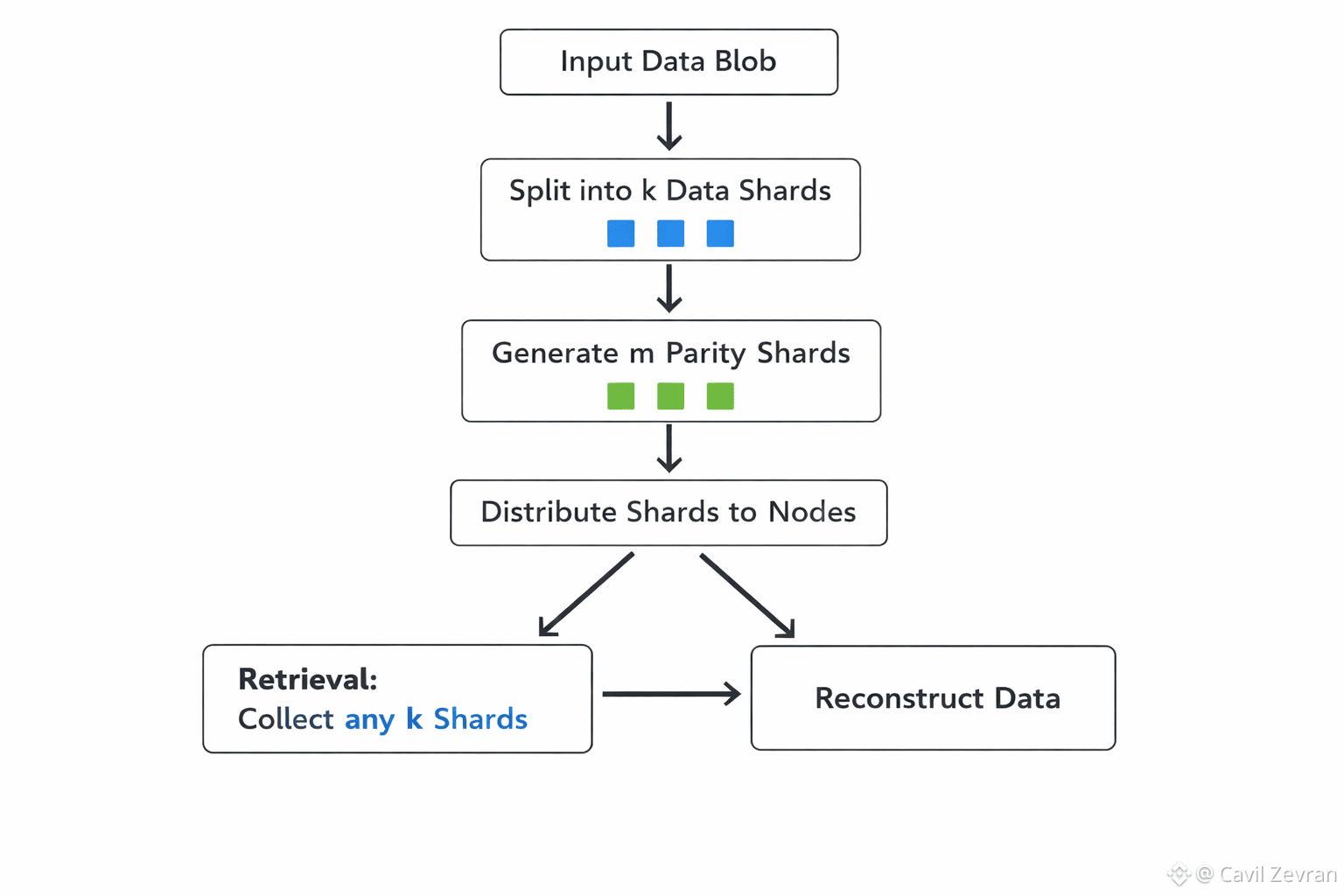
Walrus targets unstructured data—think images, videos, big messy datasets. The blobs themselves live off-chain, but each gets anchored on Sui for easy verification. Every blob gets a unique ID for on-chain reference. This hybrid setup keeps Sui lean and fast, while cryptographic proofs guarantee your data’s integrity. Anyone can run a node and help store data—they’re rewarded for keeping things available.
Privacy’s a big deal, too. Walrus supports private transactions and access controls. With Seal technology, access gets gated in a decentralized way. Data owners set the rules, and smart contracts on Sui enforce them. No one can peek at your data without permission, which is critical for sensitive AI models or enterprise documents.
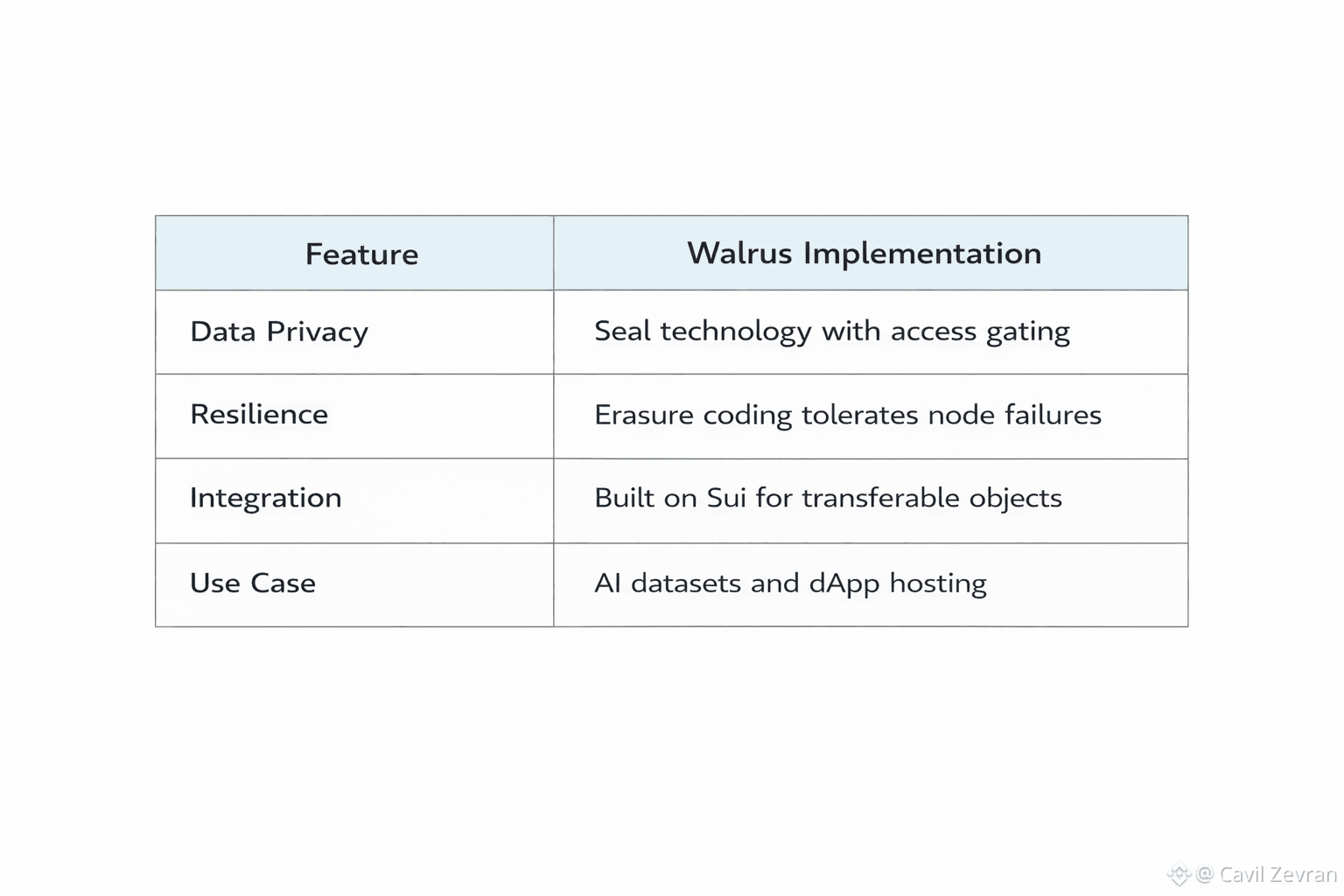
For real-world use, Walrus Sites show what’s possible. Developers build web apps just like they’re used to, publish to Walrus, and get a permanent URL. These sites run completely decentralized. If nodes drop out, the system just redistributes the shards and keeps running. Flatland brings interactive experiences, Snowreads handles content sharing—these are just a couple of examples.
The Sui integration is a game-changer for speed. Sui processes stuff in parallel, so combined with Walrus, storage and access are fast. Blobs slide right into Sui dApps for things like NFT storage or DeFi collateral—no need for clunky off-chain systems. This low latency is key for real-time AI applications.
Walrus is building momentum through partnerships. Talus uses it for decentralized AI agent data—models, outputs, the works. Itheum tokenizes datasets, creating markets where data trades as an asset. These partnerships aren’t just buzz—they prove Walrus’s value for anyone who cares about verified data.
And there’s real backing here. Walrus Foundation landed $140 million from big names like Standard Crypto and a16z. That money’s building a fast, reliable network with AI-scale performance.
The ecosystem keeps growing. Walrus runs an RFP program, inviting developers to pitch ideas and get resources. This sparks fresh projects, from AI training tools to new decentralized social platforms.
So, why does any of this matter? Centralized clouds fall short—they’re expensive, can get censored, and sometimes just go offline. Walrus dodges those issues, distributing data worldwide for real censorship resistance. For AI, this means training data you can actually trust, not stuff that’s been tampered with. Enterprises get privacy and reliability, minus the single point of failure.
There’s a big DeFi angle, too. Walrus enables private transactions, on-chain governance, and staking—users back assets with stored data, and all decisions reference verifiable blobs. It all happens securely right on Sui.
Under the hood, Walrus is built for tough conditions. Even if nodes churn or drop out, its coding system recovers data without breaking a sweat. That’s huge if you’re storing health data or financial records for AI analytics.
Tech-wise, Walrus takes cues from classic erasure codes like Reed-Solomon but tweaks them for blockchain. On-chain certificates prove storage, and Sui validators keep everyone honest.
Access is easy, too. The wal.app aggregator pulls everything together—a portal to the decentralized web. No wallet needed, just browse. It’s Web3 for everyone, not just crypto geeks.
And let’s not forget data monetization. Upload a dataset, set your price, verify it as a blob. Buyers pay, get access, and it all runs on Sui. Simple, secure, and ready for the new data economy.


