

Picture a group of people gathered around a table in a sunlit office, not in some flashy high-rise, but a practical space where ideas flow over coffee and scribbled notes. That’s how I imagine the early days for the folks behind Vanar Chain, piecing together a blockchain that doesn’t just run transactions but thinks a little, adapts over time. It’s a project rooted in making Web3 smarter, especially as AI creeps into everything we do online, turning static code into something more alive.
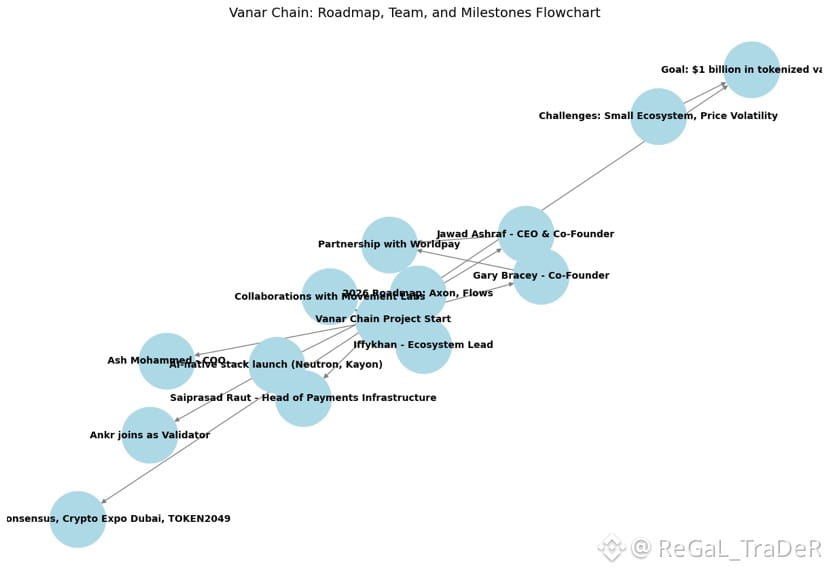
At the helm is Jawad Ashraf, the CEO and co-founder, someone who’s spent over three decades navigating tech and starting ventures. He brings that steady hand from his work with Virtua, a metaverse platform he helped build, blending gaming and digital worlds in ways that feel natural rather than forced. Then there’s Gary Bracey, another co-founder, whose experience in founding companies adds a layer of strategic depth, ensuring the project stays grounded in real applications like entertainment and brand experiences. Ash Mohammed, the COO, often speaks about the limits of old systems—how they hit walls when agents take over, needing memory and context to keep going without breaking. He’s the one pushing for coherence in a space that’s all too often fragmented. More recently, they brought on Saiprasad Raut as head of payments infrastructure, a move that bridges traditional finance with crypto and AI, drawing from his background in connecting these worlds smoothly. And there’s Iffykhan leading the ecosystem side, focusing on developer tools and partnerships that make building on Vanar feel intuitive. Together, this team isn’t about grand gestures; they’re builders with histories in games, finance, and tech, aiming to create infrastructure that supports intelligent apps without the usual headaches.
Looking back at what they’ve accomplished so far, it’s clear they’ve been methodical. Late last year, they partnered with Worldpay to explore agentic payments—think automated transactions that check compliance in real time, like a quiet guardian ensuring everything runs clean during a busy market day. They launched their AI-native stack earlier this month, layering in tools like Neutron for semantic memory, which compresses data into usable “seeds” on-chain, and Kayon for reasoning that pulls insights without pulling in external help. Ankr joining as a validator strengthened the network’s reliability, and collaborations like the one with Movement Labs have opened doors for more developers to experiment. These steps feel like setting up a workshop where tools are ready, waiting for creators to step in and make something useful.
As we move through 2026, their roadmap unfolds with a focus on expansion that’s deliberate, not rushed. They’re set to roll out Axon for intelligent automations and Flows for industry-specific apps, building on the base layers to handle more complex tasks—like turning raw data into programmable logic for finance or gaming. Events line up too: AIBC Eurasia in Dubai next month, Consensus in Hong Kong around the same time, then Crypto Expo Dubai in March, and TOKEN2049 in April. These aren’t just appearances; they’re chances to demo real progress, like scaling for high-throughput needs or integrating AI tools that developers can plug into existing workflows. The aim seems to be hitting $1 billion in tokenized value by year’s end, through partnerships in gaming and finance that bring in actual users, not just speculators. It’s like planting seeds in fertile ground, watching them grow into a network that’s EVM-compatible, low-cost, and ready for the AI wave.
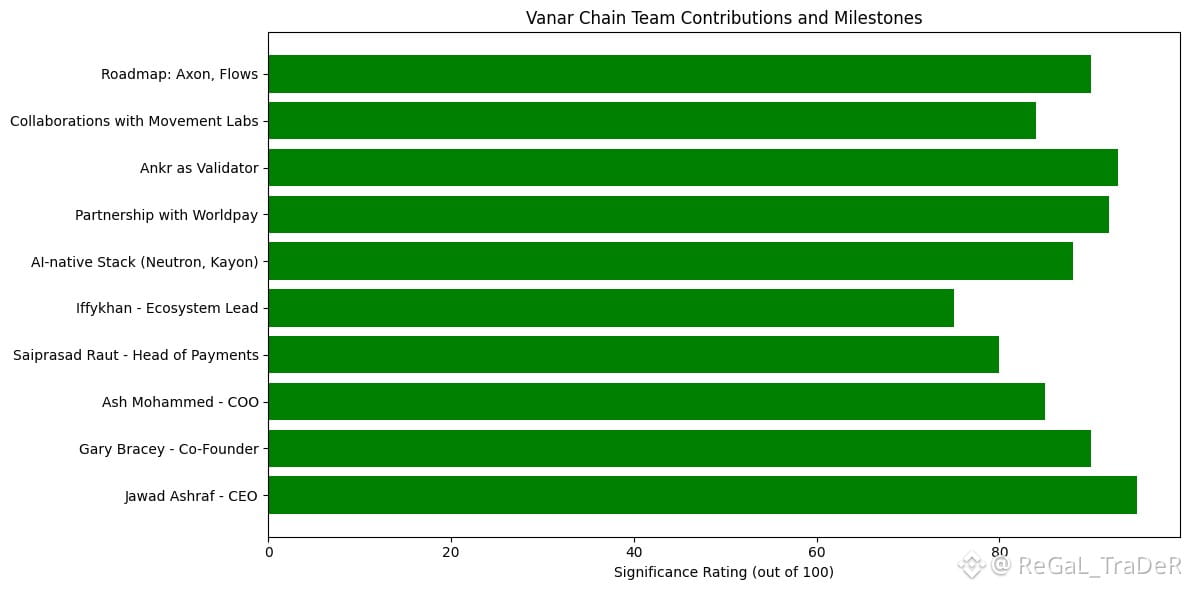
Of course, no path is without its bumps. Vanar faces the same challenges as many in this space: a still-small ecosystem means apps and users take time to build up, and without quick traction, momentum can stall. The AI-blockchain field is crowded, with rivals vying for the same developers and integrations, making it tough to stand out. Price volatility has been rough—down sharply over the past year—and that can shake confidence, especially in a market prone to swings. There’s also the risk of relying on external infrastructure; remember how an AWS outage last fall disrupted major platforms, exposing vulnerabilities in systems that aren’t fully self-reliant. Adoption isn’t guaranteed, and if the broader crypto sentiment stays cautious, even solid tech might struggle to gain footing. These aren’t deal-breakers, but they’re real factors, like weather patterns you account for when planning a long journey.
In the end, Vanar Chain’s story is one of quiet persistence, where intelligence becomes the quiet force driving what’s next, leaving room for what emerges naturally.
