

Let me say this upfront: I am not writing this to promote any specific project, nor to support anyone. I just recently scrolled through the plaza until my eyes hurt and found that many people are still trying to apply the template of 'TPS, ecology, GameFi' to Plasma. Brothers, this is a bit like trying to use a barbecue skewer to screw in a bolt—it's not that it can't be done, but it feels particularly awkward.
In the past two days, I specifically reviewed all the data I could look at: observing the market trends while checking the official documentation, then comparing it with the trading volume and circulation information on the exchange's page, and finally returning to the fundamental question of 'what problem does it actually solve.' The conclusion may not be correct, but at least it reflects my genuine judgment at this moment: Plasma is more like a 'settlement highway created for the large-scale circulation of stablecoins,' and the value anchor point of $XPL should be calculated based on 'channel + security + incentives,' rather than 'the short-term popularity of ecological tokens.'
Let's first talk about the 'latest hotspots':
Hotspot 1: The Plasma activity on Binance Square's CreatorPad is running—from January 16, 2026, to February 12, 2026 (UTC), with a reward pool of 3,500,000 XPL token vouchers, and it explicitly states the gameplay of 'posting content, earning points, and getting on the leaderboard'.
Don't underestimate this kind of activity; its real effect is not 'how much airdrop you get', but: letting this chain, Plasma, continuously appear in the information flow of the plaza. Being visible means two things: first, new users will come and ask 'what exactly is Plasma', and second, old players will start to nitpick 'is this data really true?'. And nitpicking is actually a good thing—it shows that this project has begun to enter a stage of being 'taken seriously'.
Hotspot 2: Short-term supply-side pressure has been raised again: unlocking, releasing, and circulation will affect the trend.
TradingView's unlock reminder is very straightforward: 88.89M XPL will be unlocked on January 25, 2026 (it says this accounts for about 4.33% of the 'released supply').
I have never panicked about 'unlocking', but I use it to calibrate expectations: **When the market is telling the long-term story of the 'stablecoin highway', short-term prices will still be interrupted by the supply rhythm.** If you only focus on the narrative without watching the release, you are likely to be awakened by a cold splash of reality when everything seems to be going smoothly.
Next, speaking of 'real data', I will use the three most intuitive dimensions to hold Plasma down: price/circulation, positioning, and token structure.
1) Price and circulation: it currently feels more like 'driven by trading' rather than 'driven by use'
I see the real-time data provided by CoinMarketCap: the price is around $0.14, the 24-hour trading volume is at the level of $180 million, the circulating supply is about 1.8 billion, and the market cap is around $250 million.
What does this magnitude indicate? It indicates that it is no longer considered air in 'tradable assets'; the size is large enough, and the attention is high enough; but it also means: its volatility will honestly reflect market sentiment—when sentiment rises, it goes up, when sentiment recedes, it pulls back. No one will 'not dump because your vision is great'.
What I care more about is: with such a large transaction volume, how much comes from real usage (stablecoin transfers, payments, settlements), and how much is just short-term capital flipping?
This matter does not rely on words; it can only rely on on-chain data to continuously verify: the number of stablecoin transfers, active addresses, bridge ins and outs, Gas consumption structure... These are the evidences of 'usage-driven'. At this stage, I am willing to define it as: 'trading heat leads usage scale', but this is also normal in the early stages, don't deify or deny it.
2) Project positioning: Plasma is very clear—it is built for stablecoins
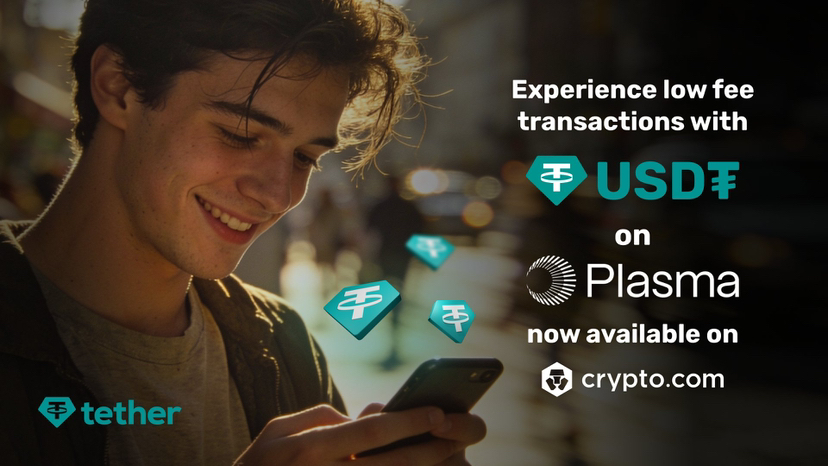
The expression on the official website is actually quite 'hard': it emphasizes that it is a high-performance Layer 1, focused on stablecoin payments, emphasizing near-instantaneous, low fees (even close to no transaction fees), and EVM compatibility.
My first reaction when I read this is not 'so impressive', but 'so risky'. Because by staking your flag on 'stablecoin payments', you are putting yourself in a more realistic track:
• What you need to face is not 'other public chains', but centralized payment networks, card organizations, bank channels, and even various local transfer systems;
• What you need to prove is not 'how prosperous the ecosystem is', but **'fast turnover, stable turnover, low cost, controllable risk'**.
In other words: this is not a chain that survives on stories; it is a chain that needs to rely on throughput and stability to survive. If you do well, others will consider you as infrastructure; if you do poorly, the market will feel that you have 'nothing but narrative'. It is very cruel, but also very clear.
3) Token structure: the supply is large, don't pretend you can't see it
I saw in the official documentation that the initial supply is: the initial supply when the mainnet beta launches is 10,000,000,000 (1 billion) XPL.
Many people see '1 billion' and directly frown, then conclude 'too many coins = no value'. I don't fully agree with this one-size-fits-all approach, but I also won't wash it away: a large supply is just a large supply; it inherently requires a stronger demand side to hedge.

The key is: Plasma is not trying to be a chain that makes money from 'high Gas fees'; it is more like trying to create a 'stablecoin highway'. The business logic of highways is: the more traffic there is, the more valuable it is, rather than 'charging exorbitant tolls for every car'.
So if the value capture of $XPL is to be established, it usually has to rely on three legs to stand firm:
1. Security and consensus demand (validator/staking demand)
2. Network participation cost (to participate in the network, you need XPL as some kind of ticket or collateral)
3. The long-term 'network effects' brought by stablecoin flow (the more people treat it as a settlement layer, the harder it is to replace)
And among these, the first leg is the most realistic: the staking mechanism. The official FAQ mentions: validators stake XPL to earn rewards, and it emphasizes a type of 'reward slashing (punishing yields without cutting the principal)'.
When I see 'only cutting returns and not cutting the principal', I actually feel a bit complex: the benefit is lowering the participation threshold and reducing the 'anxiety of participation'; but the downside is also very intuitive—if the punishment is not severe enough, what will ensure safety?
This is what I mean by 'allowing hesitation': I don't want to write it as a standard answer for advantages or disadvantages; I prefer to treat it as a point that needs to be observed further—subsequently looking at how the validator ecosystem operates, how delegation opens up, how reward rates adjust, and how to design the cost of malfeasance, only then can we know whether this trade-off is actually smart.
Next, I will say something 'more like human language': I think the most difficult and likely winning aspect of the Plasma project lies precisely in its lack of sexiness.
What does the market love most? It loves 'new narratives + new ecosystems + new applications + new airdrops'. But what Plasma talks about is 'stablecoin payments and settlements'. This sounds more like a finance department, not like a casino.
The problem is: stablecoins are the real 'on-chain cash flow'. Many chains' TVL is as lively as a temple fair, but the most stable daily use case is still USDT/USDC being moved around. If you take 'transportation' to the extreme, you are essentially competing for a very specific and huge channel.
So I will use a very down-to-earth metaphor:
• Most public chains are like 'commercial complexes', where any store can open;
• Plasma is more like 'a logistics hub next to a high-speed toll station'; you may not necessarily love to browse, but you can't do without it.
And once you become a 'hub', you don't need to trend every day—you just need to keep the cars passing, passing. The market will eventually do the math itself.
How will I track $XPL (for someone like me who prioritizes 'survival')
I don't pretend to be an expert; I only provide a checklist of 'actionable' observations:
1) First, keep an eye on supply events: unlocking, releasing, and changes in circulation
For unlocking nodes like January 25, I will treat them as 'volatility amplifiers'. It's not to say it will definitely drop, but rather: if you want to do short-term trading, don't pretend it doesn't exist.
2) Keep an eye on the hard indicators of 'stablecoin flow'
What I want to see more is: the number of on-chain stablecoin transfers, total transfer amount, active wallets, and the real connections at the merchant/application end. Because the business logic of Plasma should not rely solely on exchange trading volume.
3) Lastly, keep an eye on staking and validator structure
An increase in the staking rate at least represents a part of the chips willing to lock up; a healthy distribution of validators represents that security is not just 'written on a PPT'.
If in these three, only the 'trading volume' looks good, while the others are empty, then I will be very cautious;
If one day I see 'stablecoin flow' starting to rise continuously, and the staking structure becomes solid, then I will admit: this road may really be feasible.
Writing this, I give a not perfect but real judgment
The key to Plasma's victory or defeat is not in 'how large the ecosystem is', but in 'whether stablecoin flow can become its moat'.
And the difficulty of $XPL is also very real: large supply, release rhythm exists, and the market will judge you in the shortest cycle. To make long-term logic valid, you must accomplish 'usage' before the release pressure arrives, and accomplish 'locking/pledging/security demand'.
I'm not afraid of writing a bit rough; I'm afraid of writing like a report—reports never hesitate, but every step in reality requires tuition.
My current attitude towards $XPL is: you can follow it, but don't worship it; you can lay out positions, but you must leave yourself a way out. Wait until it uses data to prove that 'traffic' has really picked up, and then it won't be too late to discuss more aggressive expectations.

