
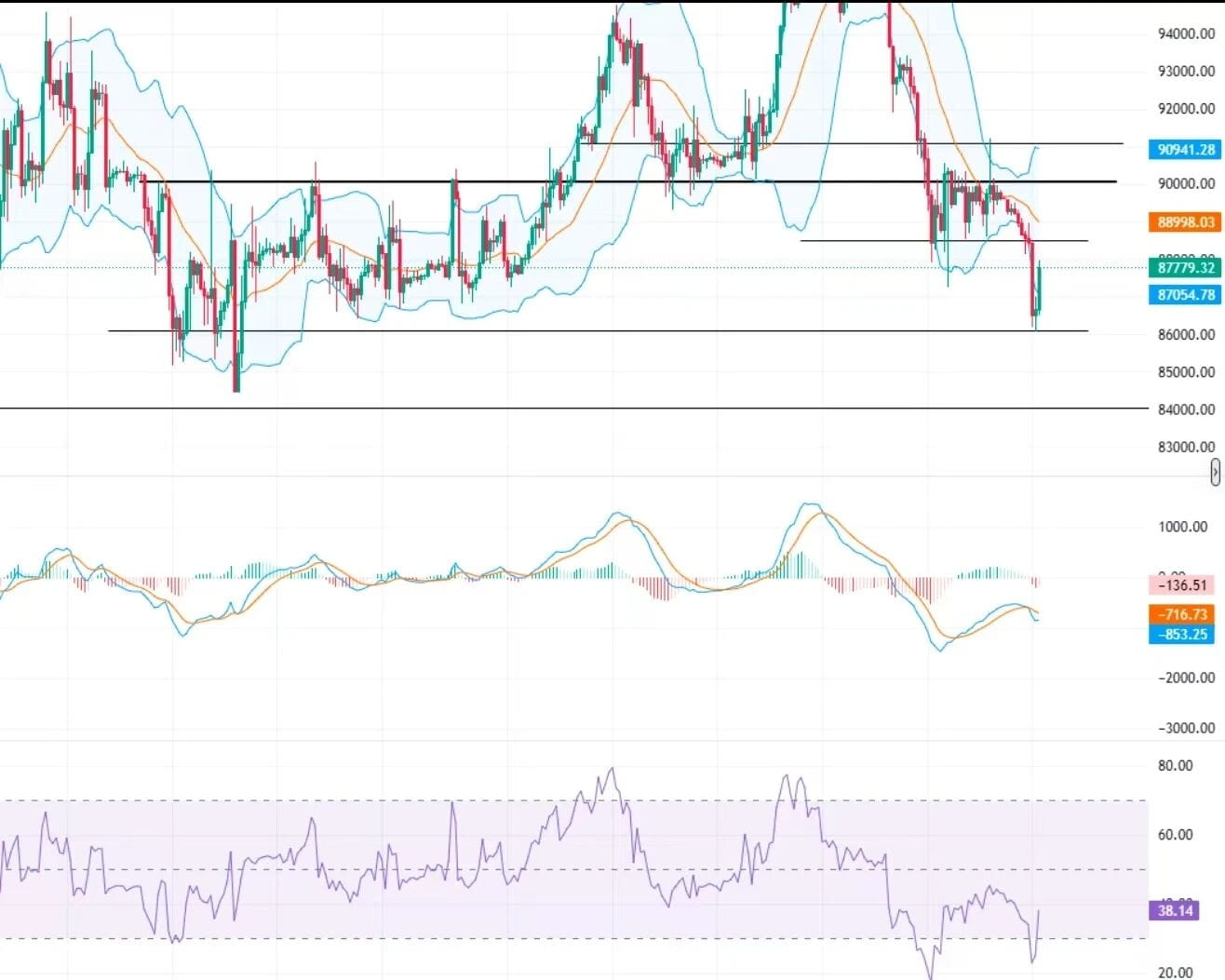
Bitcoin maintained a sideways consolidation in the 90000–89000 range over the weekend, with price fluctuations relatively converging and market trading sentiment being cautious. However, last night the bearish forces significantly strengthened, and the price broke down through the key position of 88000, and at one point quickly dipped to around 86000 before stabilizing. Subsequently, low-level buying entered, and the price rebounded, having already returned above 87000 in the early session.

The trend of Ethereum is basically synchronized with Bitcoin but relatively weaker. During the weekend, ETH fluctuated around the 2950 line, failing to form an effective upward attack. Last night, the price broke below the 2900 support, and the downward pace accelerated, reaching a low of around 2780, followed by a technical rebound, and currently rebounding to around 2870.
Macroeconomic level: Risk events are heating up, with sentiment dominating the market.
From a macro environment perspective, the weekend's US-Iran geopolitical situation continues to ferment, with evident risk aversion sentiment rising; meanwhile, the risk of a US government shutdown has re-entered the market's view, further amplifying overall uncertainty. Against the backdrop of multiple risks, capital risk preference has significantly declined, with the cryptocurrency market taking the lead in being under pressure, and the short-term decline of Bitcoin and Ethereum is a direct manifestation of this sentiment.
Technical structure: After downward release, there is a short-term demand for repair.
From a technical perspective, both Bitcoin and Ethereum have shown signs of the Bollinger Bands' lower track opening up on the daily level, and the MACD maintains a bearish expansion structure, indicating that selling pressure in the medium to short term has not been fully released. At the 4-hour level, the previously long-term contraction of the Bollinger Bands has been broken downwards, and the price fluctuation range has begun to expand again, with the market direction choice still being cautious.
However, from a shorter cycle observation, the hourly RSI has entered the oversold zone and shows signs of turning, while the MACD bearish momentum is beginning to weaken, indicating that short-term selling pressure has eased somewhat, technically providing certain conditions for a rebound and repair. Moving forward, whether the rebound can continue depends on whether the repair effort can be recognized by capital.
Short-term focus: Key price levels determine direction choices.
Regarding Bitcoin, the short-term rebound focuses on the resistance situation in the 88000–89000 range. If the price can effectively recover this range, it is expected to return to last week's oscillating structure and test the 90000 level again; conversely, if the rebound is hindered, one must be cautious of weak oscillation or even a second retest risk. The core support below remains at 86000, and if this is lost, further declines to the 84000 range cannot be ruled out.
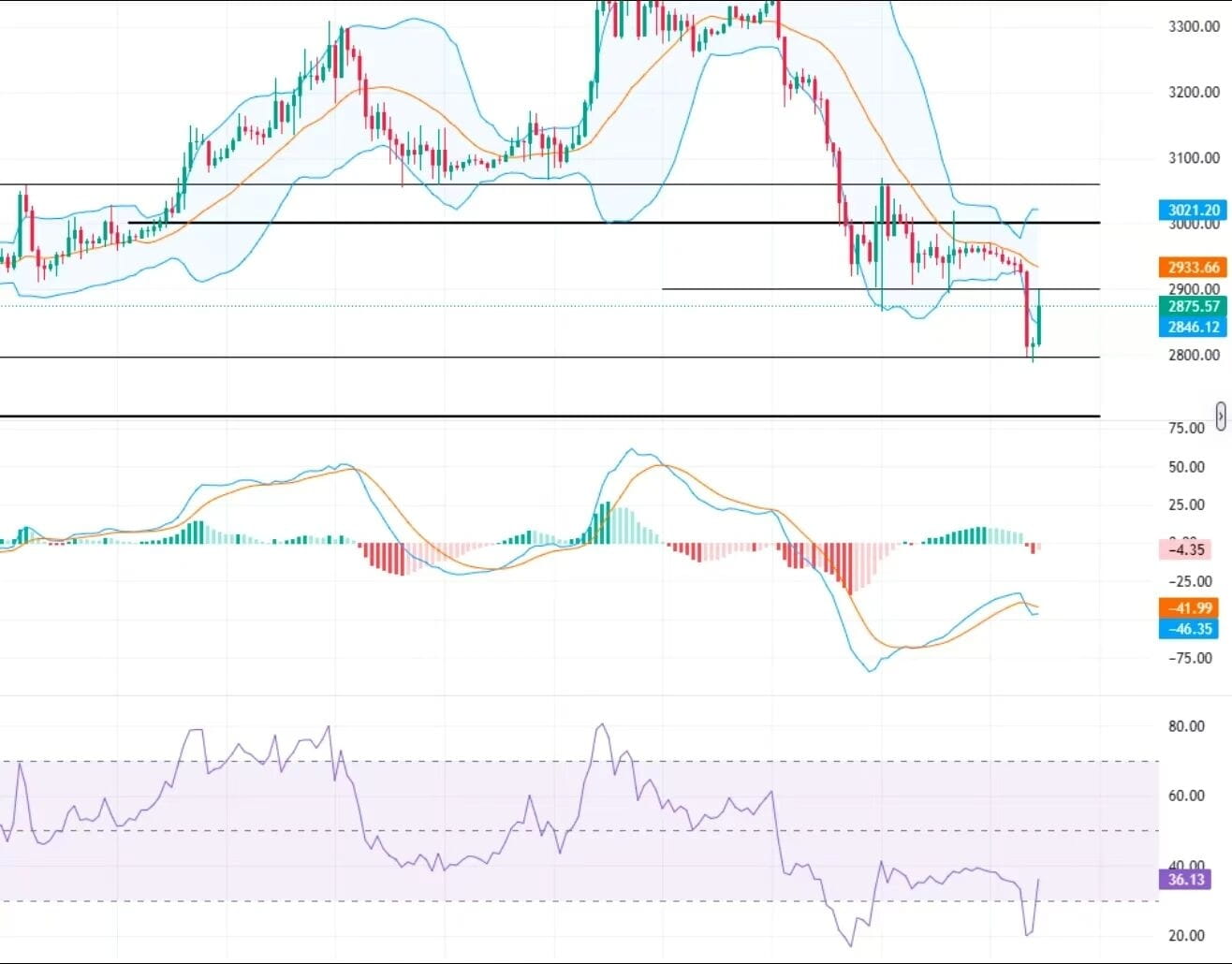
Regarding Ethereum, short-term pressure is concentrated in the 2900–2930 range, which corresponds to the lower edge of the previous oscillating range. Once stabilized again, the market is expected to gradually repair. The key support below focuses on the 2800–2700 range, which is a dense area of lows formed during the decline phase last November, representing an important defense level in the medium to short term. If this area is effectively broken, the price space below may be further opened, significantly increasing the risk of testing 2600 or even lower areas.
Reminder:
Overall, the cryptocurrency market remains in a phase of high uncertainty and weak fluctuations coexisting, with Bitcoin and Ethereum yet to establish a clear direction in the short term. From an operational perspective, the core focus is still on observing the defense of key support levels, especially BTC's 86000 and ETH's 2800. If the support holds, the market is expected to initiate a technical recovery; if it breaks again, sufficient caution regarding downward risks must be maintained.
During the day, it is more likely to remain focused on oscillating repairs, with particular attention to the changes in capital during the evening US trading session, especially how Trump's related remarks may disturb market sentiment, and short-term fluctuations may further amplify.

