

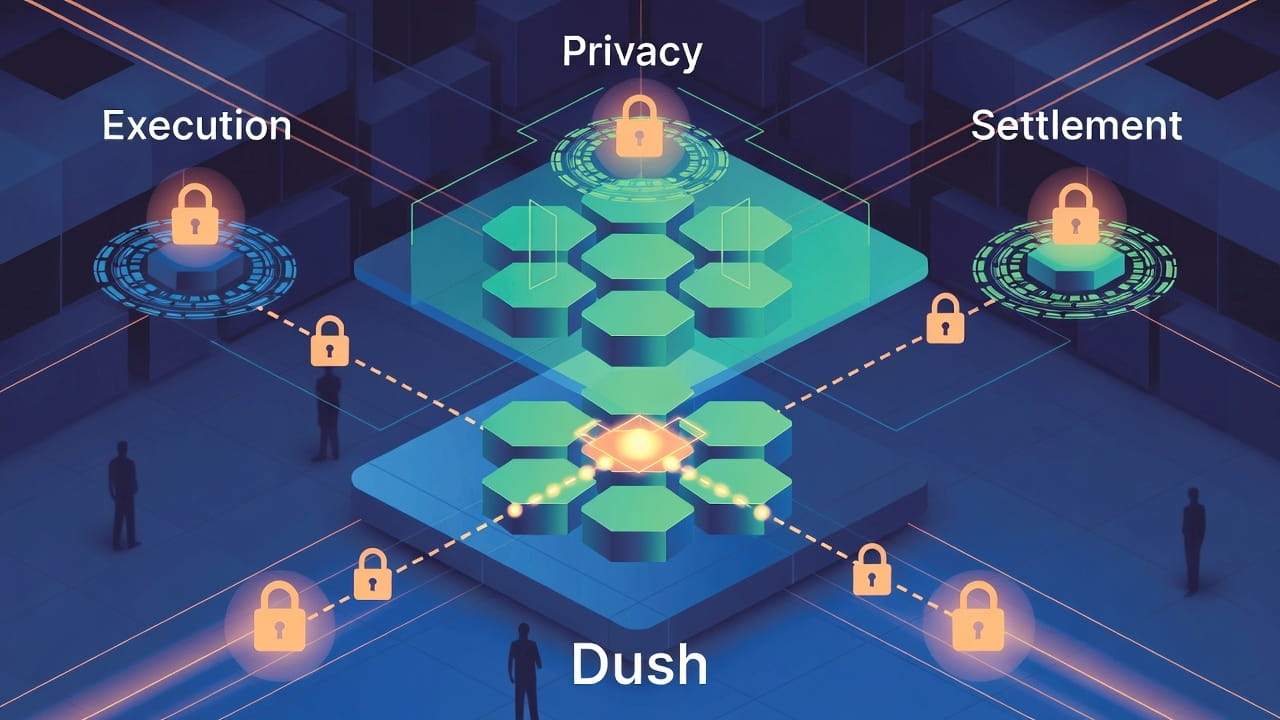
Flexibility is often seen as being at odds with control. In many systems, the more flexible a platform is, the harder it is to keep it orderly. Dusk tries to break this dichotomy with a modular architecture that separates roles without severing interconnections. DuskEVM serves as a flexible application layer, while layer 1 Dusk maintains control through privacy and auditability.
EVM compatibility allows various DeFi and RWA applications to be built without starting from scratch. However, the crucial difference lies in how those transactions are treated after execution. Settlement in Dusk does not ignore the legal context. The hedger ensures that transactions can be executed privately, but still leaves a verifiable trail that can be accessed as needed.
On a global scale, this approach allows various rules of life to coexist. Different assets can have different treatments, different jurisdictions can apply different standards, without forcing the system to become uniform. Dusk does not sell flexibility as limitless freedom, but rather as the ability to adapt without losing control.
