

There’s a thought I can’t quite shake as I watch @Walrus 🦭/acc activity unfold on-chain storage isn’t meant to feel ideological. And yet, here it does. Each blob written, every epoch renewed, reads less like routine infrastructure usage and more like a long-term stance. That alone is strange. Most market participants optimize for speed and turnover. Walrus, by contrast, seems to magnetize commitment. And patience is something markets historically struggle to price.
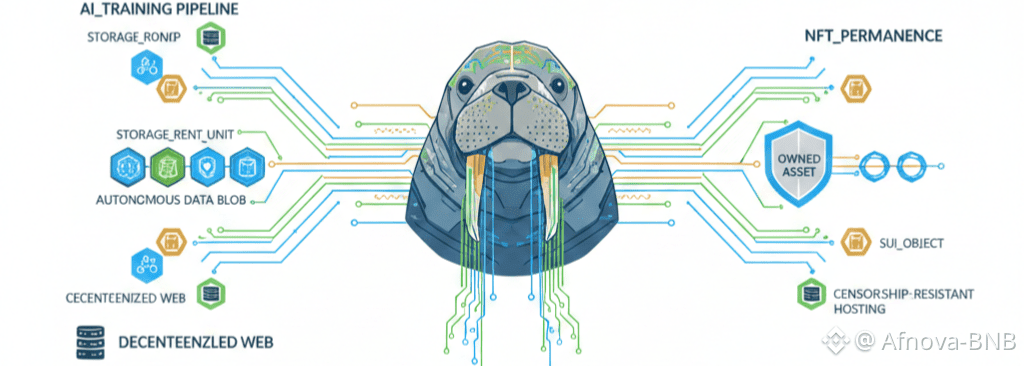
Artificial intelligence is where the tension first becomes visible. The common refrain is that AI runs on data, but that’s obvious and uninteresting. The real issue is ownership. Centralized storage platforms mastered scale, but not autonomy. When I mentally sketch out AI training pipelines, one cost refuses to compress storage rent. AWS isn’t pricey because it’s sloppy it’s expensive because it controls the chokepoint. Walrus inverts that dynamic. Not through aggressive subsidies, but through incentives that pay for duration instead of throughput. That subtle shift reshapes who actually owns a model, in ways the market hasn’t fully processed.
What stands out even more is what Walrus doesn’t do. It doesn’t pitch itself loudly to AI labs. No glossy decks, no train your LLM here messaging. That restraint feels intentional. It signals an understanding many traders overlook inevitable demand doesn’t need marketing. High-value datasets don’t move quickly. They harden in place. Once established, they rarely migrate. Walrus seems built for that phase the point where experimentation ends and the dataset becomes fixed, protected, and non-negotiable.
NFTs reveal the same logic from another direction. Most people still value NFTs as cultural artifacts images with sentiment attached. I see them instead as containers for risk. If the underlying data disappears, the token survives legally but collapses economically. Walrus removes that long-tail fragility, not by pinning files, but by turning data into an owned asset. When an NFT on Sui directly owns its Walrus blob, it stops pointing outward and starts holding inward. That shift isn’t flashy, but it is definitive. And finality tends to be underpriced early precisely because it lacks spectacle.
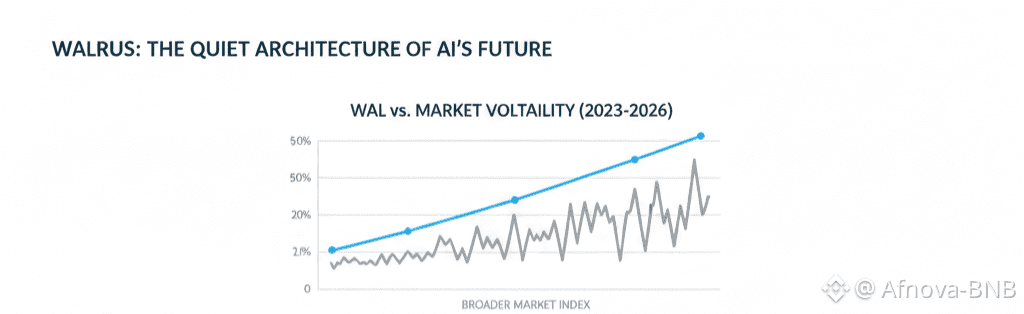
I have asked myself why this hasn’t already surfaced in WAL’s liquidity profile. The answer becomes obvious storage doesn’t generate reflexive hype. There’s no daily usage chart to juice social feeds. What exists instead is renewal behavior. Renewals don’t trend, but they do something more important they establish recurring, predictable cash flows. In crypto, predictability is uncomfortable. Most participants don’t know how to trade it. That discomfort is often where mispricing lives.
Decentralized websites are another quietly dismissed vector. Censorship-resistant hosting sounds ideological until you translate it into risk math. When a protocol’s frontend is hosted on Walrus, its failure modes collapse. No DNS seizures. No cloud-provider policy shocks. Fewer kill switches mean lower existential risk, which in turn lowers required returns. I have watched funds adjust position sizing based on this alone never publicly, just internally. The market doesn’t announce these shifts it expresses them through allocation.
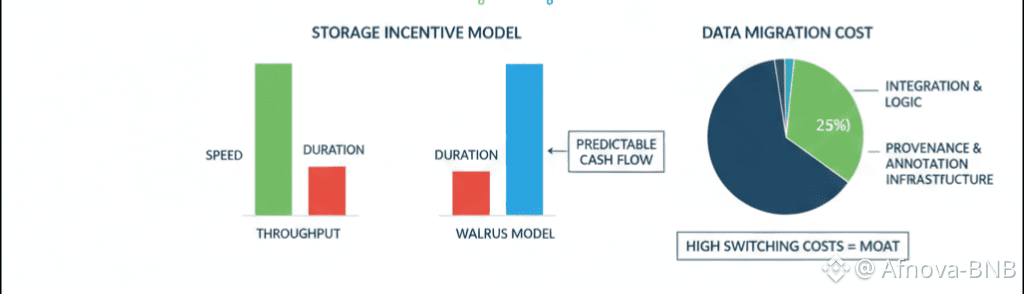
Node incentives reinforce the same philosophy. Walrus doesn’t chase peak performance metrics. It rewards reliability over time. That’s dull by design. Dull systems attract steady operators, sticky data, and tokens that aren’t constantly dumped for velocity. Paying epochs upfront feels less like speculation and more like locked belief. In a market optimized for gambling, Walrus is structurally anti-casino.
I run the bearish thesis through my head anyway. What if storage becomes commoditized? It probably will. But commoditization only erodes value when switching costs are trivial. Walrus blobs are tightly interwoven with Sui objects. Moving them isn’t frictionless it’s a full migration involving ownership, state, and application logic. That friction isn’t an accident it’s a moat formed by integration rather than branding.
The AI narrative loops back here. Curated training data is among the hardest assets to relocate. Once provenance, annotations, and legal clarity are layered in, moving datasets becomes an organizational nightmare. Walrus positions itself as the destination where movement stops. That may not excite growth hackers, but it appeals to anyone thinking in balance-sheet terms. Eventually, markets pay attention to balance sheets.
Even token behavior tells the same story. WAL doesn’t explode on news cycles it inches forward on renewals. That slow grind repels momentum traders but attracts anyone modeling long-term value. Assets that refuse to entertain speculators are often signaling something important: they weren’t built for them.
The idea I keep circling back to is this: Walrus doesn’t aim to be the ecosystem’s centerpiece. It aims to be the component no one can remove without breaking everything else. AI cognition, NFT permanence, unstoppable frontends all optional until the moment they aren’t. When something crosses that threshold, markets almost always lag. That lag is where boredom turns into profit.
I remain cautious. That’s my default state. But skepticism isn’t one-directional. Right now, the market is deeply unsure about storage systems that reward memory and duration. And that tells me something important this trade is not crowded. It isn’t loud. It’s simply quiet.

