

In the crypto world, we have heard too much about the narrative of all-purpose public chains, which attempt to tackle DeFi, NFTs, blockchain games, and social aspects simultaneously, like a cumbersome universal machine, hoping developers can create wonders on this machine.
But Plasma has taken a completely different path. It did not choose to be a jack of all trades, but instead precisely targeted a core area that all blockchains view as a supporting role, yet is actually the engine of the entire network—stablecoin settlement.
1️⃣ Pain of Misalignment: Stablecoins Should Not Just Be Another Smart Contract
If you observe today's on-chain data, you will discover a neglected truth: the main driving force behind the trillion-dollar crypto empire's economic activities is not those volatile speculative tokens, but the stablecoins circulating among exchanges, market makers, and cross-border transfers.
Mismatch of the current situation: on most chains, stablecoins are treated like ordinary smart contracts. When the network is congested and gas fees soar, your USD₮ transfer will compete with tens of thousands of people trying to pay for the 土狗币.
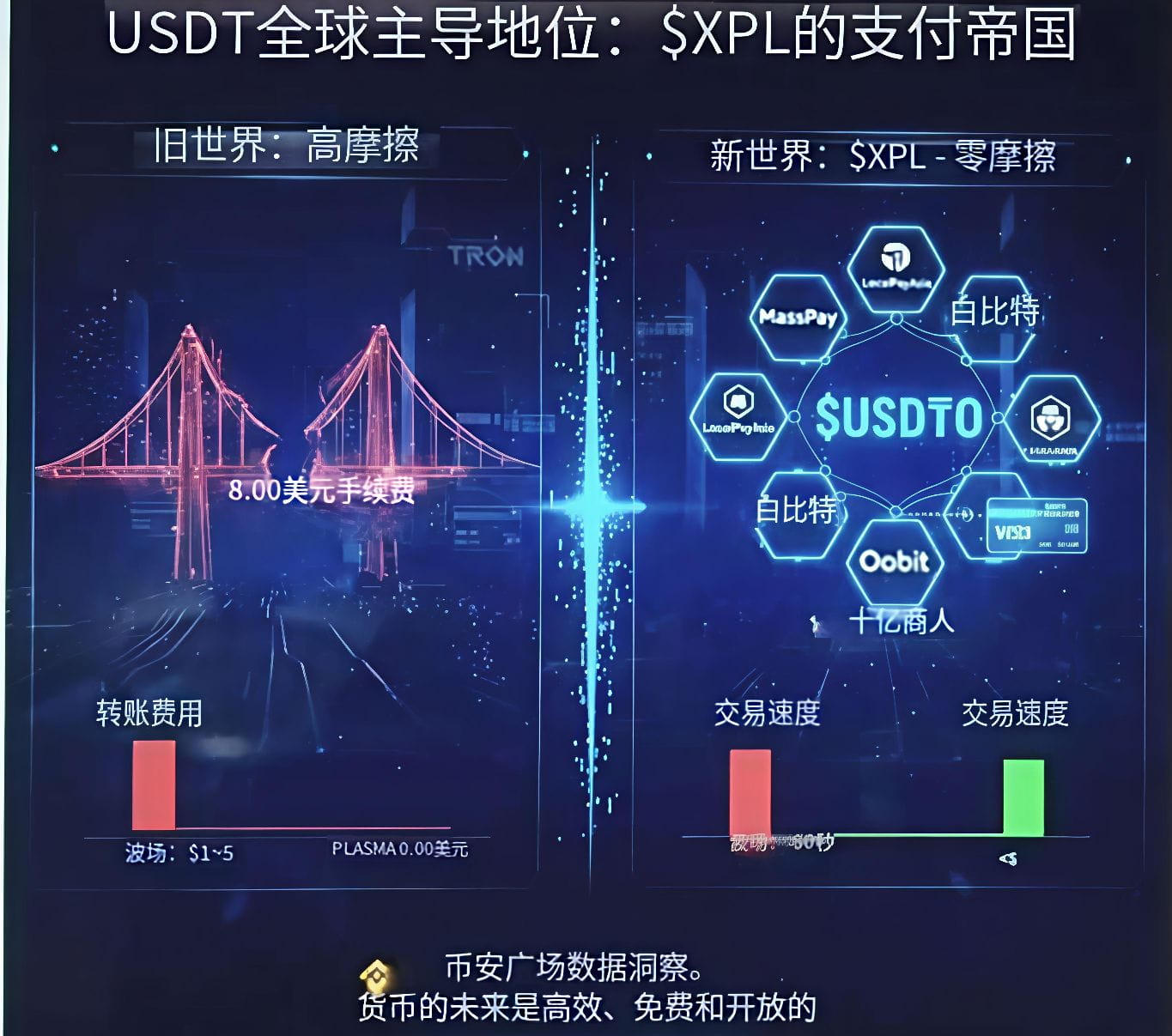
What would happen if Plasma's disruptive logic is designed around stable value flows? Plasma abandons the chaos of general-purpose public chains and focuses on building a high-speed dedicated lane for stablecoins.
2️⃣ Real market behavior, the essential demand behind the data
Why can Plasma's TVL quickly break through 4.5 billion dollars, with a stablecoin utilization rate as high as 98%? Because in real transactions, traders need it to be the most stable base, and funds need it to be the most efficient settlement layer.
Businesses need it to be a zero-wear cash equivalent. When Plasma achieves zero-fee stablecoin transfers through the Paymaster system, it is actually declaring to all general public chains that professional matters should be handled by specialized chains.
3️⃣ The future has arrived, a leap from speculation to infrastructure
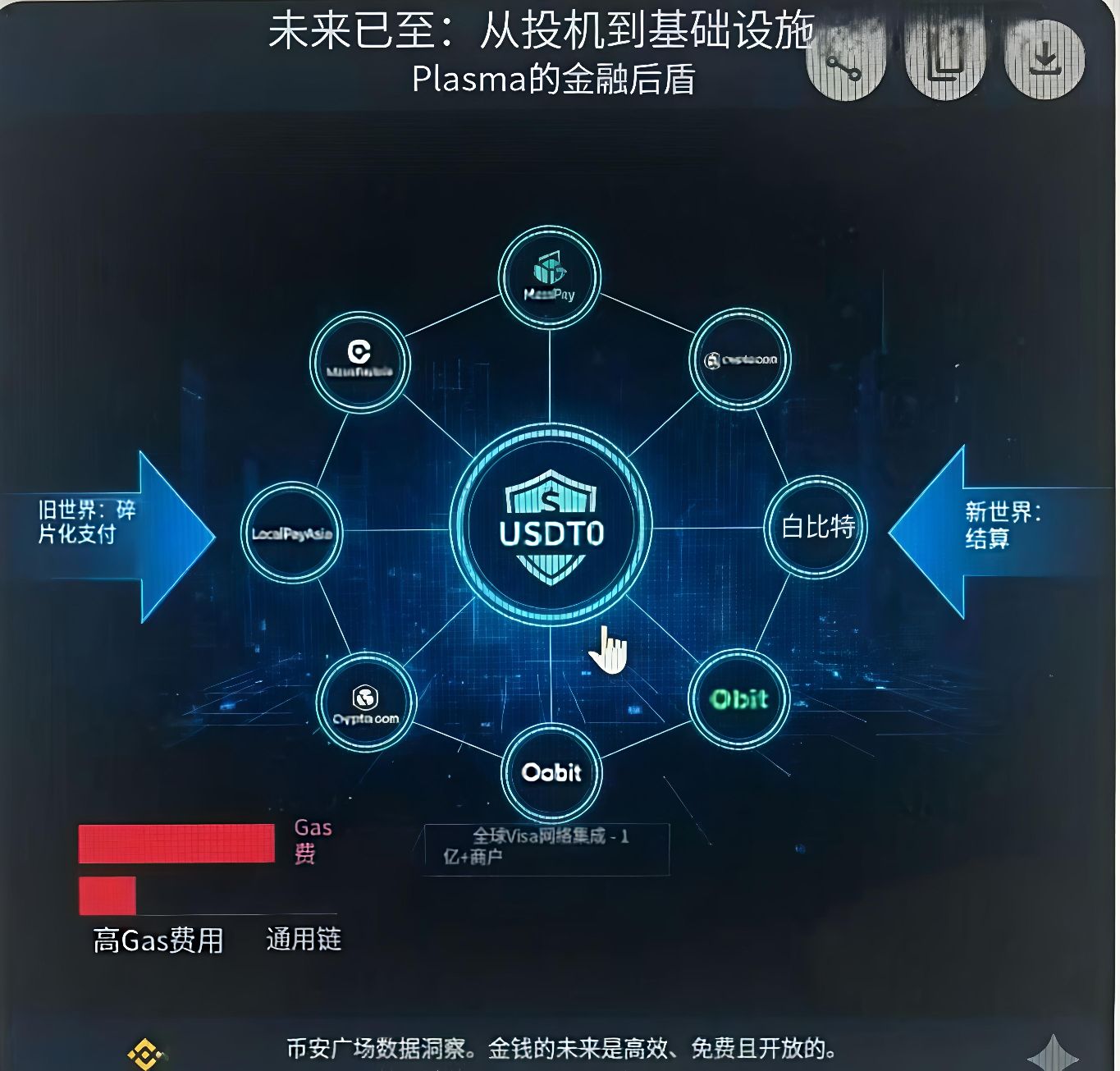
Recently, USD₮ has been intensively integrated with platforms like MassPay, Oobit, Crypto.com on Plasma, which essentially acknowledges this 'single point of explosion' strategy by payment giants. This is no longer a technical exercise in the lab, but a replacement project for the financial backbone that is happening.
In-depth discussion, do you think the future of public chains is to be large and comprehensive, or specialized and precise?
Do you all think that Plasma, which specializes in settlements, has a better future, or do you believe that general-purpose public chains are still the future?
I’m waiting for you in the comments section to break down the logic of wealth in 2026 together!

