


Plasma introduces a novel approach to enabling “zero-fee” USDT transfers through its decentralized network of Payment Agent Nodes. While the experience for the end user feels free and frictionless, the underlying system is powered by a carefully engineered economic model designed to remain sustainable over the long term. Rather than eliminating costs entirely, Plasma redistributes them in a way that prioritizes adoption, liquidity, and network growth.
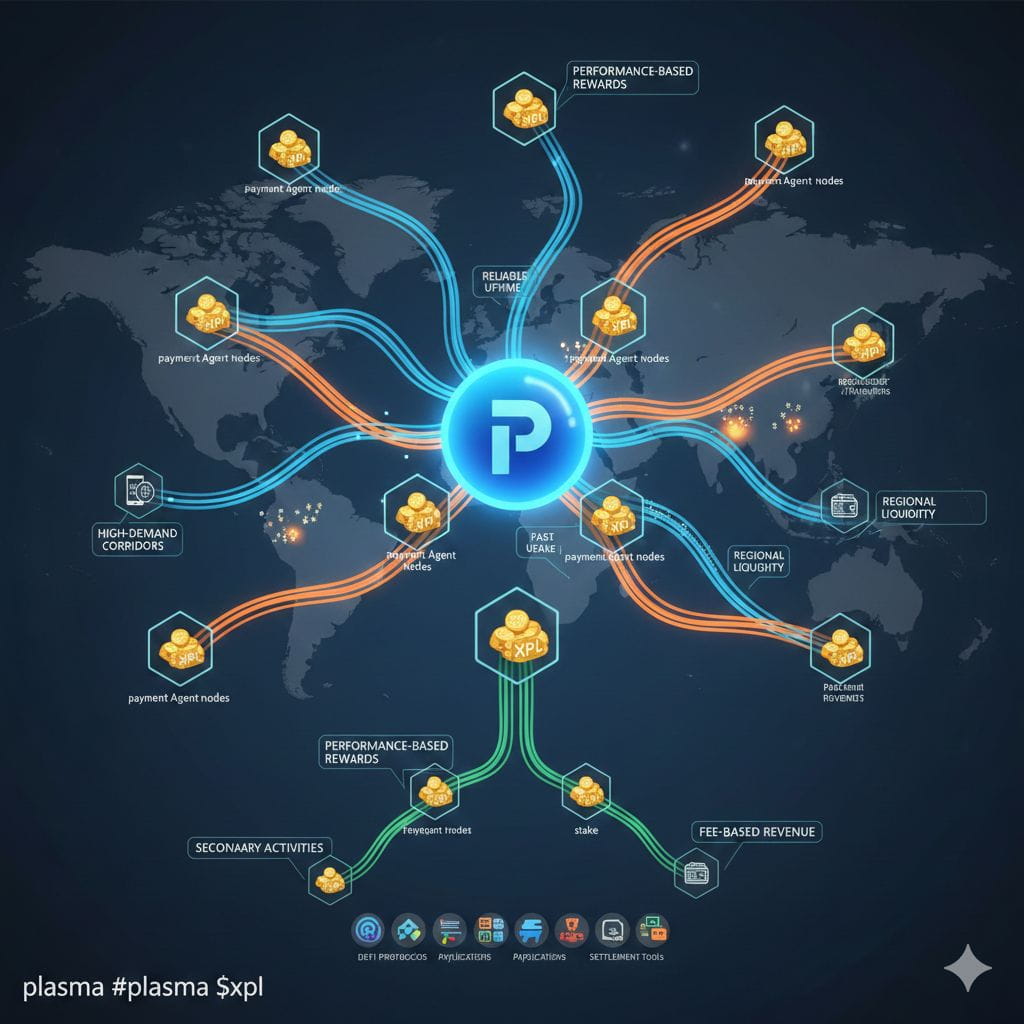
At the core of this system are the Payment Agents themselves. These agents act as service providers that facilitate stablecoin transfers across the Plasma network. To participate, each agent must stake XPL tokens as a form of economic bond. This staking requirement performs two critical functions. First, it secures the network by ensuring that agents have capital at risk, discouraging malicious behavior and incentivizing honest participation. Second, it creates structural demand for XPL, as more agents joining the network directly increases the amount of XPL locked into staking contracts.
In return for their role, Payment Agents receive rewards funded by protocol-level inflation and ecosystem incentives. However, these rewards are not simply handed out equally. Plasma’s design allows for performance-based distribution, meaning agents that provide reliable uptime, fast processing, and strong regional liquidity can earn higher rewards. This introduces a market-driven layer of competition where efficiency and service quality become economically valuable traits. Over time, this encourages the emergence of a professional class of infrastructure operators rather than passive participants.

The true sustainability of this model depends on transaction volume and ecosystem activity. Free stablecoin transfers are not meant to be an isolated service, but rather a gateway into Plasma’s broader financial and application layer. As more users adopt Plasma for USDT transfers, they are more likely to interact with DeFi protocols, payment applications, and settlement tools built on top of the network. These secondary activities can generate fee-based revenue streams that help balance the inflation used to reward Payment Agents.
In this sense, Plasma’s approach mirrors a growth investment strategy. The network subsidizes user acquisition by removing transaction fees at the most basic level—payments—while expecting that long-term economic activity will emerge around lending, liquidity provision, and smart contract usage. This shifts the blockchain’s focus from extracting value from users to cultivating a high-volume payment economy that benefits all participants.
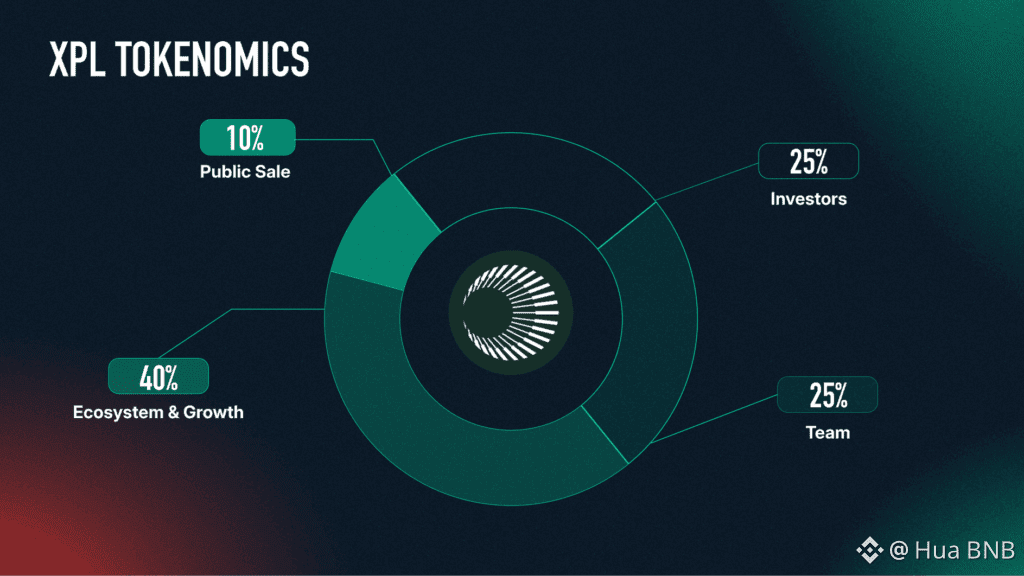
Another key element of sustainability lies in regional efficiency. Payment Agents can specialize in high-demand corridors, such as remittance-heavy regions or areas with limited access to traditional banking. By optimizing service where stablecoin usage is naturally strongest, Plasma ensures that rewards are aligned with real-world demand rather than speculative behavior. This regional optimization strengthens Plasma’s position as an infrastructure layer for cross-border payments rather than just another experimental blockchain.
Risk management is also embedded in the model. Because agents stake XPL, any attempt to manipulate transactions or disrupt service threatens their own capital. This creates a self-policing environment where economic incentives replace centralized enforcement. Over time, this can produce a network that is both resilient and decentralized, relying on aligned incentives rather than external authority.
From a macro perspective, Plasma’s Payment Agent system reflects a shift in blockchain economics. Instead of charging every user directly for transactions, the network internalizes costs and redistributes them strategically to grow usage. If adoption reaches critical mass the value generated by increased liquidity, institutional interest, and application development can exceed the inflation spent on rewards. At that point, the system transitions from subsidy-driven growth to organic sustainability.
In conclusion, Plasma’s Payment Agent model is not about offering something for nothing. It is about restructuring how value flows through a payment-focused blockchain. By staking XPL, rewarding performance, and tying long-term viability to real transaction volume, Plasma attempts to build a payment infrastructure that can scale without collapsing under its own costs. Its success will ultimately depend on whether free stablecoin transfers can ignite a broader ecosystem economy strong enough to sustain the incentives that power it.

