


Imagine standing on the edge of a bustling remittance corridor in New York, watching families wire money home from distant jobs, each transfer nibbling away 7% in fees and days in delays. Now picture stablecoins flipping that script—near-instant, pennies for cost—powering a quiet revolution in global finance. But what if regulators worldwide clamp down, demanding ironclad reserves and compliance? That is the shadow hanging over networks like Plasma, a Layer 1 blockchain laser-focused on stablecoin supremacy.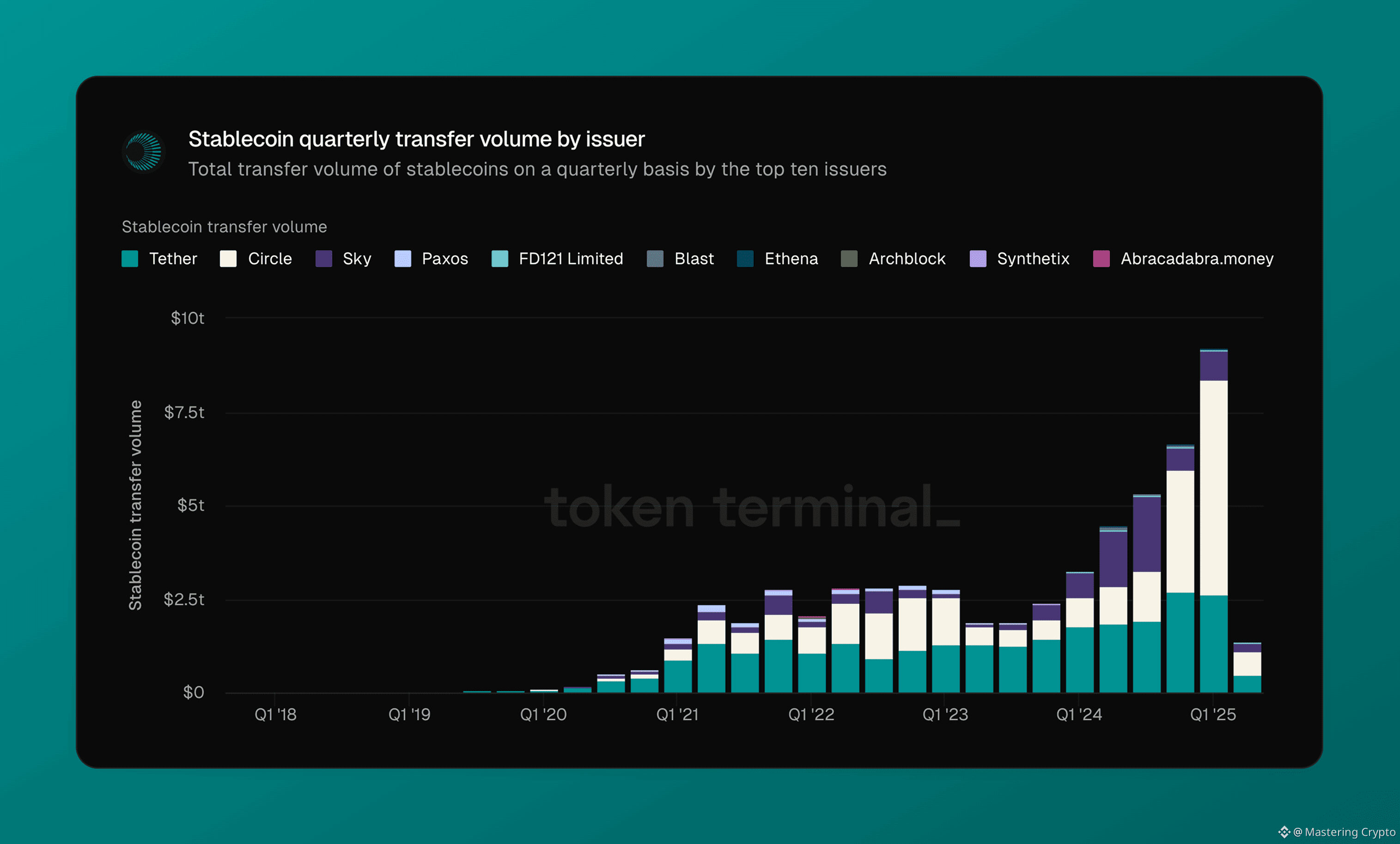
This leads us straight to Plasma's beating heart. Born as high-performance infrastructure, Plasma runs on PlasmaBFT consensus, a HotStuff-based engine churning thousands of transactions per second with sub-second finality. It anchors state roots to Bitcoin for that unshakeable security, while full EVM compatibility lets devs port Ethereum dApps effortlessly. The killer feature is zero-fee USDT transfers via a protocol-level paymaster, where simple sends skip gas entirely, subsidized to lure everyday users, while DeFi stays paid in native XPL token. Native Bitcoin bridging pulls BTC liquidity into stablecoin pools, and over $1 billion in day-one TVL sets it up for payments, remittances, and yield farming. Backed by Tether, Bitfinex, and Founders Fund, Plasma is not a side project—it is vertical integration betting big on USD₮ dominance.
Tightening regulations do not hit Plasma like a sledgehammer—they test its foundations. Global frameworks like the EU’s MiCA and the US GENIUS Act mandate 1:1 reserves in Treasuries or equivalents, monthly audits, and redemption rights for issuers. Tether, Plasma’s USDT lifeline, must freeze assets on law enforcement nods—something Plasma’s modular design enables at protocol speed, slashing illicit escape windows from 44 minutes on other chains. In Europe, MiCA booted non-compliant USDT from exchanges, but Plasma’s Italian VASP license and 60% EU reserves position it for MiCA plays, potentially pivoting to USDC. On the US side, the GENIUS Act greenlights permitted issuers without SEC shackles, aligning Plasma’s freeze tools and audits as compliance superpowers. Short-term, volume may dip if USDT liquidity fragments, but Plasma’s architecture absorbs shocks by swapping gas for stables or routing through multichain bridges.
These regulatory shifts ripple across the industry. Stablecoins now sit at roughly $225 billion in market cap, driving remittances that are 60% cheaper than wires, powering treasury operations, and underpinning DeFi collateral. Chains like Tron and Solana already host the majority of USDT flows, but Plasma enters as a specialized contender, one shaped by convergence rather than chaos. Passporting rules let compliant issuers operate globally, boosting interoperability instead of fragmentation. Broader trends reinforce this direction: Bitcoin-secured Layer 1s for payments, yield-bearing stablecoins, and CBDC-adjacent hybrids. Plasma thrives here, with its Bitcoin anchoring and EVM flexibility drawing developers away from congested Layer 2s, while regulation quietly weeds out weaker rails.
From where I sit, knee-deep in DeFi protocols and RWA tokenization, Plasma feels built for the long game. I have watched Layer 2s like Polygon and zkSync struggle to balance scale and cost; Plasma sidesteps that battle by niching directly into stablecoins, where regulation paradoxically sharpens its edge. The ties to Tether raise centralization concerns, but those same links unlock institutional inflows already chasing on-chain yield. It is pragmatic evolution rather than ideological purity—flexibility beats dogma when the rules tighten.
Peering ahead, Plasma does not merely survive—it refines itself. Expect native issuance of compliant USDT variants, deeper Bitcoin-DeFi fusion, and the scaling of Plasma One into a neobank-grade payments layer. As regulations standardize globally, adoption accelerates—from remittances stretching across South Asia to corporate treasuries parking billions on-chain. Plasma emerges not weakened by scrutiny, but shaped by it, positioning itself as a compliant backbone for stablecoins in a trillion-dollar era, proving that blockchain can bend without breaking when the spotlight turns on.


