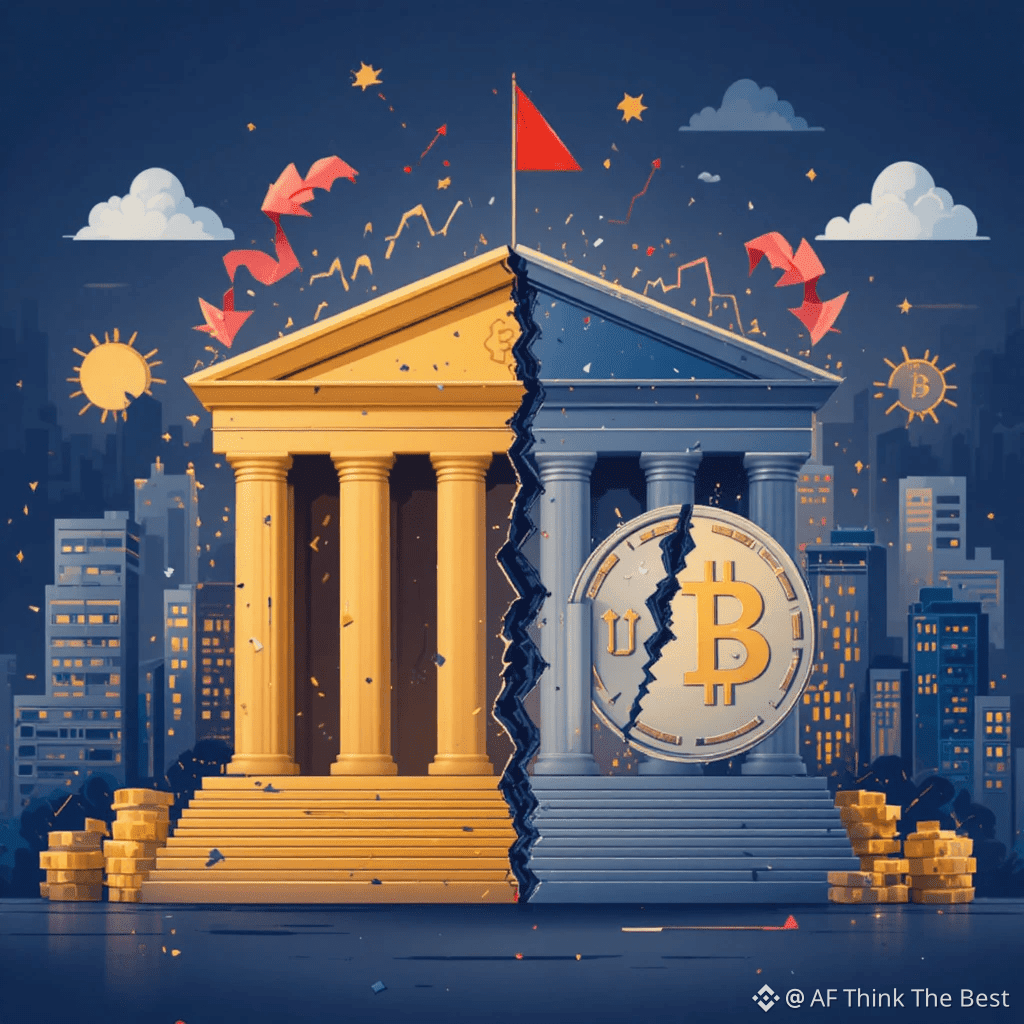
Central Banks Warn of Stablecoin Risks Amid Crypto’s Rise
Stablecoins – cryptocurrencies pegged to assets like the U.S. dollar – have exploded in popularity, but global policymakers are sounding the alarm. The Bank for International Settlements (BIS) warned in June 2025 that “stablecoins as a form of sound money fall short, and without regulation pose a risk to financial stability and monetary sovereignty”. Other central banks echo this concern. In November 2025, the European Central Bank cautioned that rapid growth of stablecoins “could cause retail deposit outflows, diminishing an important source of funding for banks” and warned that a run could “trigger a fire sale” of assets and ripple through U.S. Treasury markets. And the Bank of England’s deputy governor Sarah Breeden warned that diluting stablecoin rules “risked endangering financial stability and causing a credit crunch”.
Key Risks Highlighted by Central Banks: Analysts summarize the risks into several categories:
Financial Stability & Monetary Sovereignty: BIS noted stablecoins could undercut central bank money. Because stablecoins vary by issuer and lack a “no-questions-asked” guarantee, they may fragment the global payment system. The BIS warned that in a crisis, a stablecoin collapse could force asset fire sales (as seen with TerraUSD in 2022). ECB economists similarly warned that if large stablecoins failed, their holders’ rush for redemptions could force sales of U.S. Treasuries and disrupt markets. This could weaken central banks’ control over currency, especially in emerging markets (currency substitution).
Bank Funding & Credit: The ECB pointed out that stablecoins are widely used to trade crypto, so big growth could siphon deposits out of banks, leaving banks more reliant on volatile funding. The Bank of England proposed limits (e.g. capping personal holdings and requiring 40% reserves at the BoE) to “halve the stress” on banks if depositors flee for stablecoins.
Regulatory Gaps & Legal Uncertainty: Many stablecoins operate in a patchwork of rules. U.S. regulators recently told Paxos (issuer of Binance’s BUSD) that Binance USD should have been registered as a security. New York’s financial regulator ordered Paxos to stop minting BUSD. This underscores concerns that some stablecoins exploit regulatory gaps. The BIS urged swift creation of clear rules or safe digital currency rails: it even proposed that central banks develop tokenized currencies to maintain monetary sovereignty.
Consumer Protection & Illicit Finance: Central banks also warn of consumer and crime risks. China’s central bank (PBOC) recently vowed to crack down on virtual currency, noting that “stablecoins fail to meet requirements for customer identification and anti-money-laundering controls” and risk fueling money laundering, fraud or unauthorized transfers. Past episodes (like the collapse of algorithmic stablecoins or the USDC peg loss) have shown that consumers can lose value if reserves are weak.
Binance and Square (Block) in the Stablecoin Spotlight: Regulators’ warnings gain context from recent industry moves. Binance issues one of the largest dollar-pegged coins, Binance USD (BUSD). US regulators have zeroed in on it – the SEC recently told Paxos (BUSD’s issuer) to register it as a security, and New York’s financial regulator halted its new issuance. That scrutiny aligns with concerns that incentives around Binance’s stablecoin (like fee waivers) blur it with securitie.
Meanwhile, Block (formerly Square) – led by Bitcoin advocate Jack Dorsey – is embracing stablecoins on its platforms. In late 2025, Block announced that Cash App users will soon be able to send and receive major stablecoins (e.g. USDC). Miles Suter, Block’s Bitcoin product lead, said the company aims to be “chain and coin-agnostic” and will initially support USDC and Solana. Suter even quipped, “If I were founding Cash App today, I would build it on stablecoin rails natively”. These moves illustrate how mainstream fintech is adopting stablecoins, raising the stakes for regulators to ensure consumer safeguards.
Implications for Regulation: Central bank warnings have already spurred action. The U.S. Senate passed a bill in mid-2025 (the GENIUS Act) to regulate dollar-backed stablecoin issuers, and the EU’s MiCA regime is slated to impose strict reserve and governance rules. The BoE has proposed requiring reserves to be held at the central bank and limits on coin issues. The BIS’s call for a common “tokenized” framework suggests central banks themselves may accelerate development of digital currencies (CBDCs) to offer safe alternatives. In short, stablecoins are likely to face tighter oversight worldwide. As Breeden warned, policymakers must carefully balance innovation with safeguards or risk the “different set of risks” from uncontrolled crypto money.
Outlook: Stablecoins promise faster, cheaper cross-border payments, but without robust frameworks they remain a potential destabilizer. Central banks’ recent statements underline that the industry’s big players – from Binance’s exchanges to Square’s Cash App – are on regulators’ radar. These warnings and ensuing rules may reshape how stablecoins operate, pushing issuers toward transparency and perhaps integrating them into regulated financial plumbing. For consumers and investors, the message is clear: this evolving space will not be exempt from traditional financial safeguards.
Sources: Central bank and regulatory speeches and reports, including BIS and IMF analyses, as well as industry news.#stablecoin