
Decentralized applications are transforming the way we interact with technology finance and digital assets.
Yet, as the Web3 ecosystem grows infrastructure challenges have emerged, limiting adoption and innovation. At the forefront of solving these challenges is Walrus Protocol, a high-performance decentralized storage network designed for real-world applications. It offers speed, privacy, scalability, and reliability—the key ingredients needed to unlock the next generation of decentralized finance, NFTs and enterprise solutions.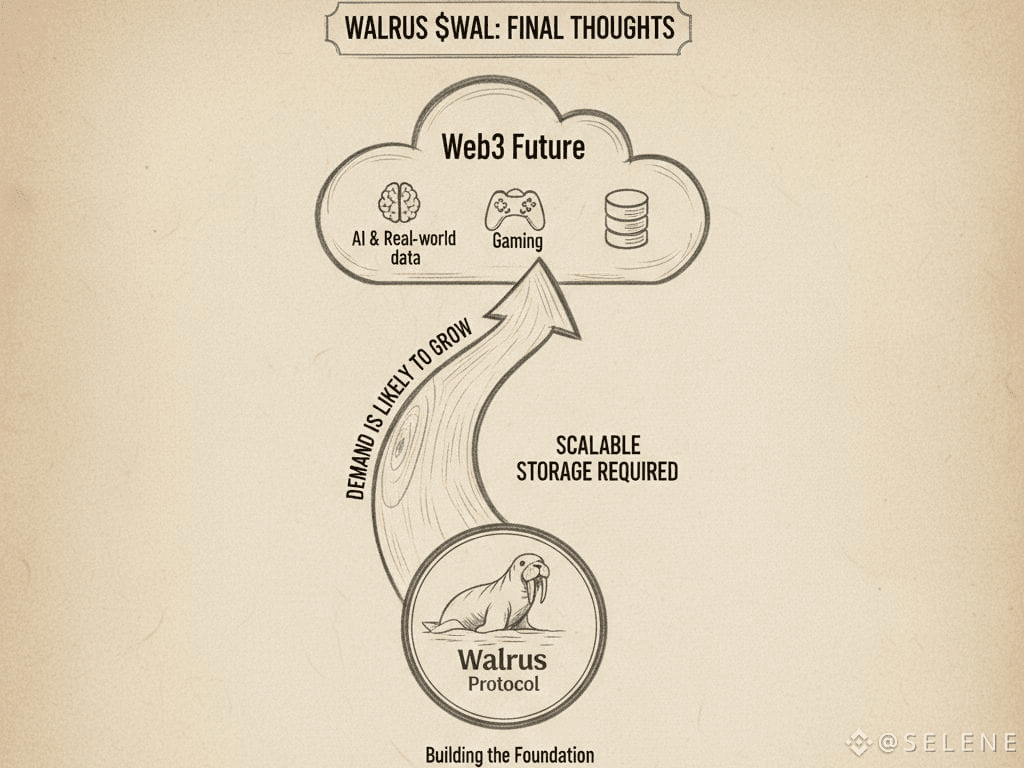
The Challenge of Modern Digital Storage
Traditional storage methods, whether centralized cloud servers or early decentralized networks, have always struggled to meet the demands of modern applications. Centralized solutions face risks such as downtime, censorship, and data breaches. Early decentralized networks introduced alternatives but often failed to deliver speed, scalability, and privacy simultaneously.
For developers, this meant difficult trade-offs. Should they prioritize decentralization but accept slower performance? Or rely on centralized services and compromise on the principles of blockchain? The answer was neither ideal, leaving a gap for a new solution that could bridge these needs.
Introducing Walrus Protocol
Walrus Protocol was created to address these gaps. It is designed to handle large-scale data efficiently while maintaining the benefits of decentralization. By offering low-latency access, predictable costs, and a privacy-first approach, Walrus enables developers to focus on building applications rather than managing infrastructure.
The protocol integrates storage as an active component rather than a passive service, allowing applications to scale without compromise. This approach ensures that platforms can operate smoothly under heavy usage while maintaining security and reliability.
Privacy Meets Decentralized Finance
One of the most notable innovations of Walrus is its ability to combine privacy with blockchain verification. DeFi platforms and tokenized applications require secure handling of sensitive data, such as user balances, trading histories, and personal identifiers. Public blockchains make transparency easy but often expose private data.
Walrus enables secure off-chain storage while maintaining verifiable interactions on-chain. This approach benefits multiple sectors:
DeFi platforms can protect user data without compromising transaction verification.
NFT projects can host dynamic, interactive assets while keeping ownership details private.
Enterprises can tokenize real-world assets and store confidential documents securely while meeting regulatory requirements.
By merging privacy with transparency, Walrus establishes trust while supporting compliance and innovation.
Real-World Applications of Walrus
Walrus is not just a theoretical solution—it is designed for practical use. Its flexibility makes it suitable for various applications:
DeFi Platforms
Decentralized exchanges, lending protocols, and liquidity pools generate massive volumes of data. Real-time access is crucial to maintain accurate balances, process trades, and calculate rewards. Walrus ensures that these operations remain fast, reliable, and secure.
NFT Ecosystems
NFTs have evolved beyond static images into dynamic, interactive experiences. Gaming, art, and collectibles increasingly rely on responsive metadata and media storage. Walrus allows these assets to operate at scale, keeping them fast, private, and accessible.
Enterprise Solutions
Companies digitizing assets, documents, and workflows require private and verifiable storage. Walrus enables secure off-chain management of sensitive information while interacting with blockchain networks for compliance and auditability.
AI and Analytics
Data-heavy AI applications require high-throughput access to massive datasets. Walrus supports rapid reads and writes, enabling real-time analytics and insights that would be difficult with slower storage solutions.
Developer-Friendly Infrastructure
Walrus emphasizes usability alongside performance. Developers benefit from:
Simple integration through standard APIs and SDKs
Predictable cost structures for easier planning
Scalable architecture that grows with application demands
By reducing complexity and infrastructure overhead, Walrus empowers developers to focus on creating innovative solutions, accelerating the adoption of Web3 technologies across industries.
A Platform Built for the Future
The growth of DeFi, NFTs, and tokenized assets underscores the need for robust infrastructure. Users demand seamless experiences, fast access, and reliable performance. Any failure in storage can erode trust and slow adoption. Walrus addresses this challenge by providing a stable, scalable, and secure foundation for decentralized applications.
Its architecture anticipates the needs of tomorrow’s Web3 ecosystem. Rather than treating storage as a background service, Walrus integrates it as a critical part of the system. This approach enables more ambitious applications and supports rapid innovation.
Bridging Technology and Practicality
Walrus represents a convergence of technological innovation and practical usability. It allows developers to build applications that are private, fast, and scalable, while providing users with secure and efficient experiences. By addressing both technical and operational challenges, Walrus strengthens the blockchain ecosystem and paves the way for the next wave of digital finance and digital assets.
Looking Ahead
As Web3 continues to evolve, infrastructure will define success. Projects that can handle high-volume transactions and complex data efficiently will thrive. Walrus provides the tools necessary for developers and businesses to succeed in this environment, enabling new models of finance, entertainment, and enterprise solutions.
By supporting privacy, speed, and usability simultaneously, Walrus ensures that the decentralized applications of tomorrow are practical, secure, and scalable. It is more than storage; it is the backbone of a new era of blockchain innovation.
Conclusion
Walrus Protocol is leading a revolution in how digital finance and decentralized applications manage data. It combines high-speed performance, privacy, and scalability in a way that enables developers to build innovative applications while keeping user data secure.
From DeFi to NFTs and enterprise solutions, Walrus provides the infrastructure necessary for modern applications to thrive. Its design reflects a deep understanding of both technical requirements and real-world needs, making it an essential foundation for the next generation of Web3.
The story of Walrus is only beginning. It marks the emergence of a platform where privacy, performance, and usability coexist, allowing decentralized applications to grow without compromise. In the rapidly evolving digital landscape, Walrus is setting the standard for the infrastructure of the future.

