
The integration of blockchain technology and traditional finance is giving rise to an increasing number of innovative practices rooted in the real economy. As the global real-world asset digitalization (RWA) track experiences an explosive growth of 224%, how to break out of homogeneous competition and ensure that digital innovation truly serves the value preservation of physical assets becomes the core proposition of industry exploration.
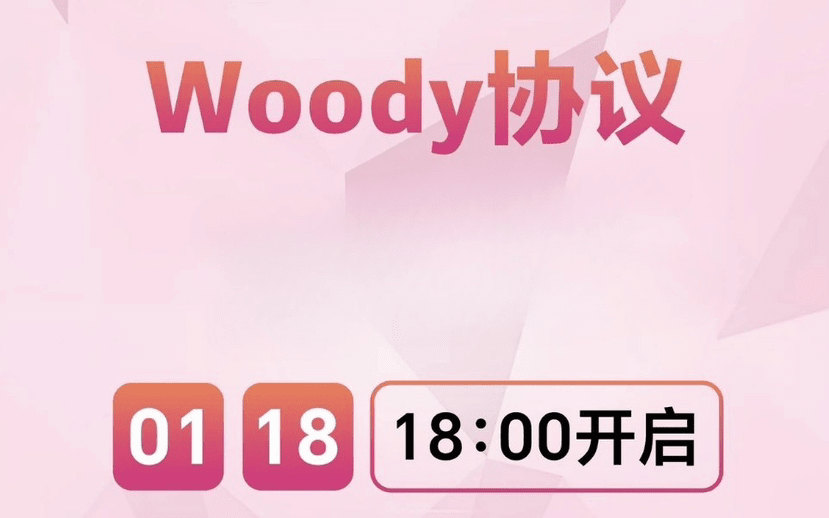
On January 18, the WOODY protocol, focusing on the "Hong Kong Hub + Global Digital Wealth Management," officially landed in the secondary market. With the core of digitalizing green consumption assets and an added value-preserving economic model, it has carved out a differentiated path of integration between digital and physical in a series of innovative practices. It deeply binds Hong Kong's compliance advantages, cash flow from physical assets, and on-chain transparency technology, providing not only a new model for the deep development of the RWA track but also introducing new ways for the integration of green consumption and digital wealth management.
Core Mechanism: Reverse breaking the game, bi-directional empowerment of real assets and value accumulation
In the current RWA track, which has reached a scale of 300 billion dollars, most innovations focus on the digitization of financial assets. The core logic of the WOODY protocol is to work closely with licensed institutions in Hong Kong to delve into the scarce track of green consumer assets. These assets are directly rooted in real economic consumption scenarios, supported by stable cash flows, thus riding the fast growth of the RWA track and becoming an important vehicle connecting digital wealth management with real consumption, filling the gap in the digitization of real consumption assets within the track.
To deeply match the appreciation of digital value with underlying real assets, the WOODY protocol has designed a refined value accumulation model: through value recovery in transactions and ecological feedback, it realizes the concentration of asset rights value, allowing the density of rights value to increase with the cash flow growth of underlying green consumer assets, forming a dual positive cycle of 'appreciation of real assets + increase in value density'.
At the same time, a reasonable profit distribution mechanism in the trading process will continuously feed back part of the funds into liquidity construction and ecological development, fundamentally ensuring the stable operation of the ecosystem and avoiding developmental risks brought about by short-term speculation, allowing the value accumulation to truly serve long-term development rather than short-term fluctuations. This is also a core highlight that distinguishes it from traditional innovation models.
Earnings System: Multi-layer incentives that truly convert traffic into ecological hard power
The earnings system of the WOODY protocol is a catalyst designed for the cold start and long-term development of the ecosystem. The wealth management side sets multiple cycle choices and compound interest calculation models, covering different user groups with varying risk preferences, satisfying the diversified needs of the public for digital wealth management. Meanwhile, the market-oriented dynamic incentive mechanism also uses reasonable profit distribution to leverage community participation, quickly accumulating a user base to build momentum for the digitalization of underlying assets.
The current RWA track is welcoming dual participation from institutional funds and ordinary investors, with the penetration of grassroots users becoming key to the sustainable development of the ecosystem. As evidenced by the explosive short-term growth of retail accounts of similar innovative products from leading institutions, only by unblocking the participation chain of ordinary users can the ecosystem have sustainable development momentum. The incentive system of the WOODY protocol captures this trend, converting early user traffic into the core power for validating asset digitalization and building the ecosystem, achieving a true conversion of traffic into value.
Market Launch: Precise layout, ensuring that marketing always revolves around ecological implementation
True quality innovation has never been about 'aggressively marketing but poorly landing', but rather ensuring that every brand voice becomes part of ecological construction. The series of actions taken before the launch of the WOODY protocol is precisely a set of precise punches to reach core users and solidify ecological trust: collaborating with hundreds of industry communities to spread ecological concepts, launching special events on leading platforms, quickly reaching core participants in the digital wealth management field, and leveraging platform endorsements to solidify user trust.
The choice to start trading on January 18 at 18:00 further reflects a deep understanding of the Chinese market, achieving a win-win of emotional resonance and user retention while aligning with user cultural psychology. Unlike some operations in the industry that target short-term heat, the WOODY protocol converts all the traffic accumulated in the early stage into actual power for building liquidity systems and validating asset digitalization, creating a positive cycle of 'marketing-ecosystem-value', allowing heat to become the endogenous driving force for ecological growth rather than a fleeting short-term effect.
Track Advantage: Anchoring in Hong Kong, seizing the dual benefits of compliance and regional resources
The development of the global RWA track is ushering in a golden window period with gradually clarified regulations. As an important explorer of virtual asset compliance globally, Hong Kong has continuously improved its regulatory framework in recent years, defining clear development boundaries for various compliance innovations and becoming a core hub connecting global digital wealth management funds with real resources in the Greater Bay Area.
The WOODY protocol anchors in Hong Kong and the Greater Bay Area's asset strength and deeply collaborates with licensed institutions in Hong Kong, not only breaking out of the development dilemma of some innovations within the industry that are 'compliance-blurred', but also leveraging Hong Kong's regional advantages to achieve precise docking between global institutional funds and the green consumer resources of the Greater Bay Area. Currently, the RWA track is shifting from low-yield financial assets to high cash flow real assets. The focus on green consumer assets by WOODY not only aligns with the global green finance development trend but also relies on the mature consumer market of the Greater Bay Area for stable cash flow support.
This triple advantage of 'Hong Kong compliance endorsement + Greater Bay Area real resources + green consumer asset attributes' allows it to stand out in the RWA track crowded with leading institutions, becoming a scarce target for the digitalization of green consumer assets.
Technical Support: On-chain transparency, reconstructing the trust foundation of digital wealth management
The core of digital wealth management is trust, and the establishment of trust cannot be separated from technological transparency and controllability. The WOODY protocol is deployed based on a smart contract public chain, inheriting the efficient characteristics of distributed technology while achieving on-chain transparency and traceability throughout the processes of asset allocation, profit distribution, and value accumulation through 'smart interactive contracts'. Users can verify relevant information in real-time through blockchain browsers, technically addressing the two core pain points of asset authenticity and fairness of profit distribution in the RWA track.
To further strengthen technical barriers, the WOODY protocol achieves automated operation of core operations through preset contract rules, eliminating potential risks of human intervention, while ensuring that every operation has traceable evidence through on-chain transparency that can be supervised by the entire market. This dual guarantee of 'technology + transparency' not only establishes a solid trust foundation for user participation but also clears the key obstacles for institutional fund participation, solidifying the technological foundation for the long-term development of the ecosystem.
Market Outlook: Behind the controversies lies the opportunity for value recognition in the integration of digital and real assets
The emergence of any innovative practice inevitably comes with different market voices, and the WOODY protocol is no exception. The differing opinions in the market post-launch essentially reflect a misalignment between short-term development perspectives and long-term value recognition, and this misalignment precisely provides value opportunities for participants who truly understand the core logic of digital and real asset integration.
Some discussions around its development model often overlook the core logic of the RWA track—'assets are king'—the core value of the WOODY protocol lies not in the innovative design of the model, but in the stable cash flow support brought by underlying green consumer assets and the hard power of implementation under Hong Kong's compliance framework. As the market's understanding of the RWA track matures, the flow of funds will inevitably shift from 'chasing concepts' to 'valuing assets'. The WOODY protocol, which lays out the digitization of green consumer assets in advance and achieves full-process on-chain transparency, is expected to release more long-term development potential in the repair of value recognition.
Long-term Value: Multiple advantages combined to seize the compound effect of digital and real asset integration
The development of the global digital economy is accelerating the process of digitalizing real assets. The gradual clarification of regulations and the continuous improvement of institutions' acceptance of digital wealth management have opened up huge growth space for the RWA track. Against this industry backdrop, the multiple advantages of the WOODY protocol are forming a compound effect, becoming its core competitiveness in track competition.
The tangible attributes of underlying green consumer assets give them greater counter-cyclical capability compared to financial asset digitization; Hong Kong's compliance layout and collaboration with licensed institutions have opened up channels for connecting global resources; on-chain transparency in technical support and the economic model of value accumulation have built a sustainable ecological consensus. The combination of these advantages enables the WOODY protocol to possess core driving force for sustainable development amid the wave of digital and real asset integration.
The development challenges mentioned by external parties are actually directions for long-term optimization of the ecosystem: the quality of underlying assets can be continuously verified on-chain, and institutional audits can be continuously strengthened; compliance development can dynamically adapt to the improvement of Hong Kong's regulatory framework; ecological sustainability can be achieved through continuous injections of asset cash flow and the continuous expansion of ecological scenarios; track competition can establish core barriers through the differentiated positioning of green consumer assets.
These directions awaiting optimization are not fatal shortcomings in development but rather steps for the ecosystem to continuously refine and enhance value in long-term development.
From the launch and exploration of the WOODY protocol, we can see that the development of the RWA track is shifting from 'concept hype' to 'value landing', and we can also see that the integration of blockchain technology and the real economy is advancing towards a more compliant, pragmatic, and closer alignment with real demands. When green consumption meets digital wealth management, and when Hong Kong's regional advantages meet the global wave of digital and real asset integration, such innovative practices rooted in reality and compliant development will ultimately become an important force in promoting the deep integration of the digital economy and the real economy.
In the future, as the digitalization of underlying assets continues to land and ecological scenarios continue to expand, the WOODY protocol is expected to become a benchmark for the digitalization of green consumer assets, also providing referable and implementable development ideas for more innovative practices of digital and real asset integration. In the future landscape of digital wealth management, only by rooting in reality, adhering to compliance, and solidifying trust can we truly carve out a sustainable path to value.
How do you view the integrated development of green consumer assets and digital wealth management? Feel free to leave your thoughts in the comments section, let's discuss the new possibilities of digital and real asset integration together~