


What is the main theme for 2025-2026? There is no doubt it is RWA (Real World Assets on the blockchain).
BlackRock is making moves, banks are testing the waters, and everyone says a trillion dollars is knocking at the door. But there is an awkward fact that is rarely mentioned: traditional financial institutions simply cannot use the current public chains.
Imagine if a bank wanted to issue national debt tokens on the blockchain, could it accept transaction fees randomly fluctuating between $2 and $50 each time it distributes dividends to customers? Could it accept that its high-end clients need to remember 12 mnemonic words and buy ETH on an exchange to pay for gas just to receive an interest payment?
Impossible. Absolutely impossible.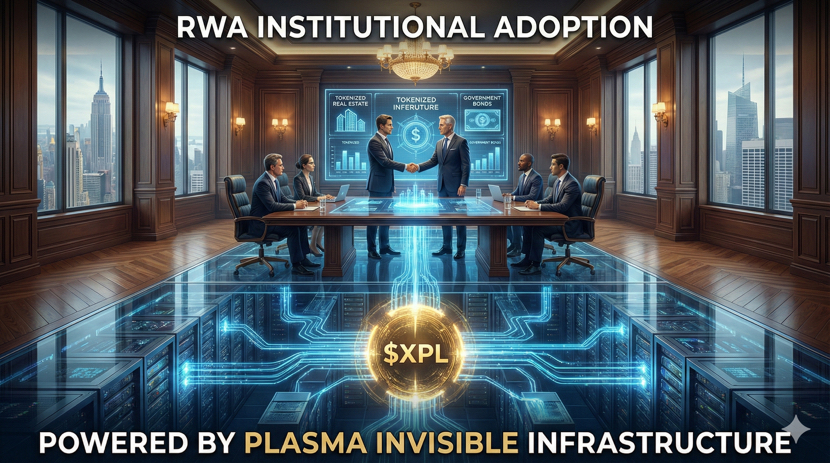
This kind of 'uncertainty' and 'operational hurdle' is the biggest roadblock for compliant funds entering Web3. To institutions, unpredictable costs equate to risk.
I. Plasma: A 'deterministic' network customized for institutions
This is the moment I understand the strategic intent. It is not just about making transfers smoother for retail investors; it is essentially laying down a blockchain track for institutional funds that resembles a 'bank-like experience.'
Through the Paymaster function, Plasma allows asset issuers (such as banks or RWA projects) to solve the Gas problem uniformly in the background. For front-end users, operating on-chain bonds is as simple as buying financial products online; just click 'confirm' to finish. No Gas anxiety, no native token thresholds.
Only this kind of 'de-blockchainized' experience can support a Wall Street-level capital volume.
II. $XPL : The 'invisible anchor' of institutional-level settlement
In this grand B-end narrative, the valuation logic of $XPL has also changed.
It is no longer the small change used by retail investors to pay a few cents in miner fees; it is the 'bandwidth resource' that the RWA protocol must hold and stake in large quantities to maintain smooth network operation.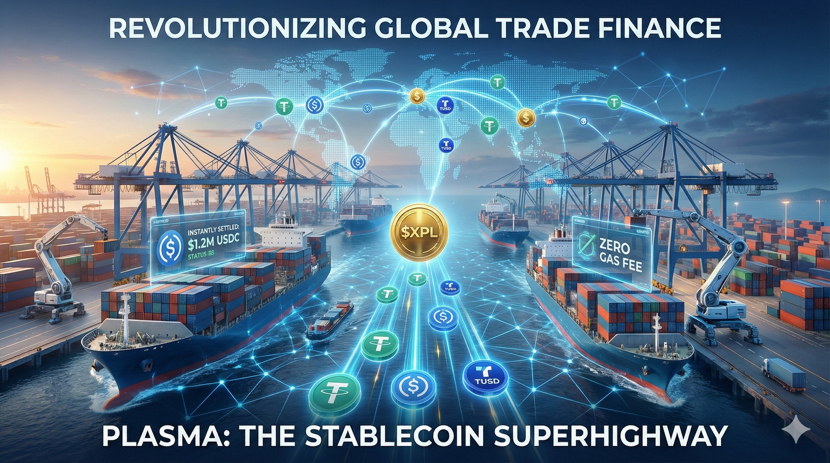
When tens of billions or hundreds of billions of national bonds, real estate, and stocks circulate on Plasma, each confirmation and each dividend burns $XPL. This burning is not paid by retail wallets but covered by institutional operating costs. This is the healthiest token economic model—making the wealthiest pay for network security.
Conclusion
Retail investors watch the excitement, while institutions look for the subtleties. While everyone is still hyping memes, smart capital is already looking for highways that can truly support the landing of RWA. In the most hardcore track of payment and asset on-chain, Plasma may currently be the most underestimated one.
(Personal opinion, not investment advice)


