
1️⃣ What is a stop and what is it for
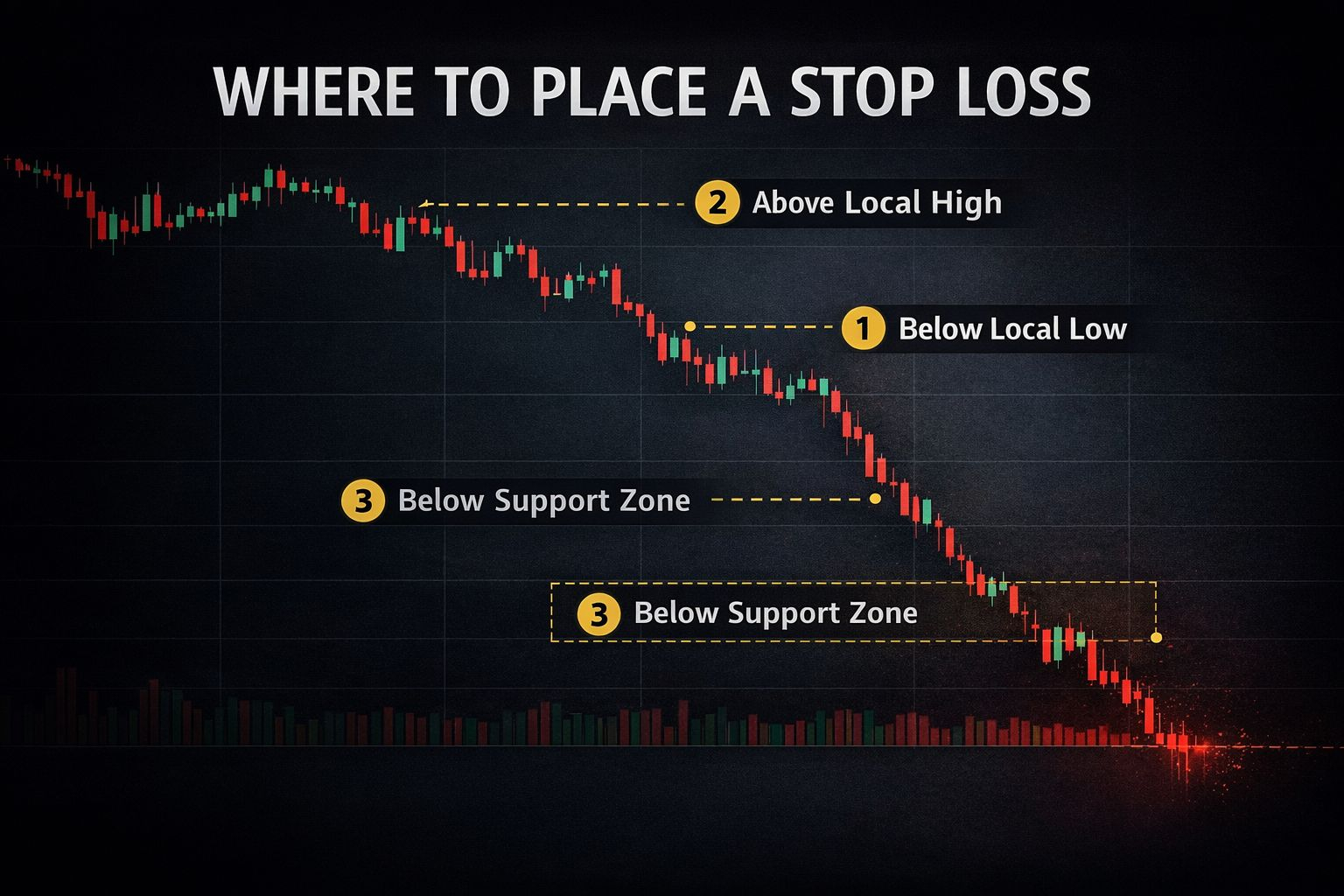
Stop-loss = an automatic level that limits losses in a position
Not about fear, not about emotions, but about survival in the market
The main rule: one mistake should not destroy the deposit
2️⃣ Defining key levels on the chart
Key points for the stop:
Under the local minimum (for longs)
Above the local maximum (for shorts)
Close to important support/resistance zones
💡 Why:
the market often tests these levels
stop at a logical level does not trigger on noise, but protects against large drawdowns
3️⃣ We consider volatility
We use ATR (Average True Range)
Formula for stop:
Copy code
Stop = entry price ± (ATR × coefficient)
Coefficient: 1.5–2 for a moderate approach
Result:
the market can fluctuate → stop will not close the position on random noise
the market goes against → loss is limited
4️⃣ Calculation of position size
Need to know the maximum risk per trade
Formula:
Copy code
Position size = risk per trade / (entry price − stop)
Example:
Risk = $50
Stop = $10 from entry price
Position size = 50 ÷ 10 = 5 contracts/lots
💡 The calculation allows controlling the deposit even with several consecutive losing trades
5️⃣ Adherence to psychological comfort
Stop must be set at the time of entry, not 'by eye' during the process
Clear stop → discipline → fewer emotional decisions
You know your risk and do not worry during market movements
6️⃣ Risk control and strategy
Logical stop = part of the overall risk management strategy
Each trade should have:
entry point
stop point
potential profit target
🎯 Conclusion:
Stops protect the deposit and discipline the trader.
Without them, even a series of successful trades can turn into a disaster.