
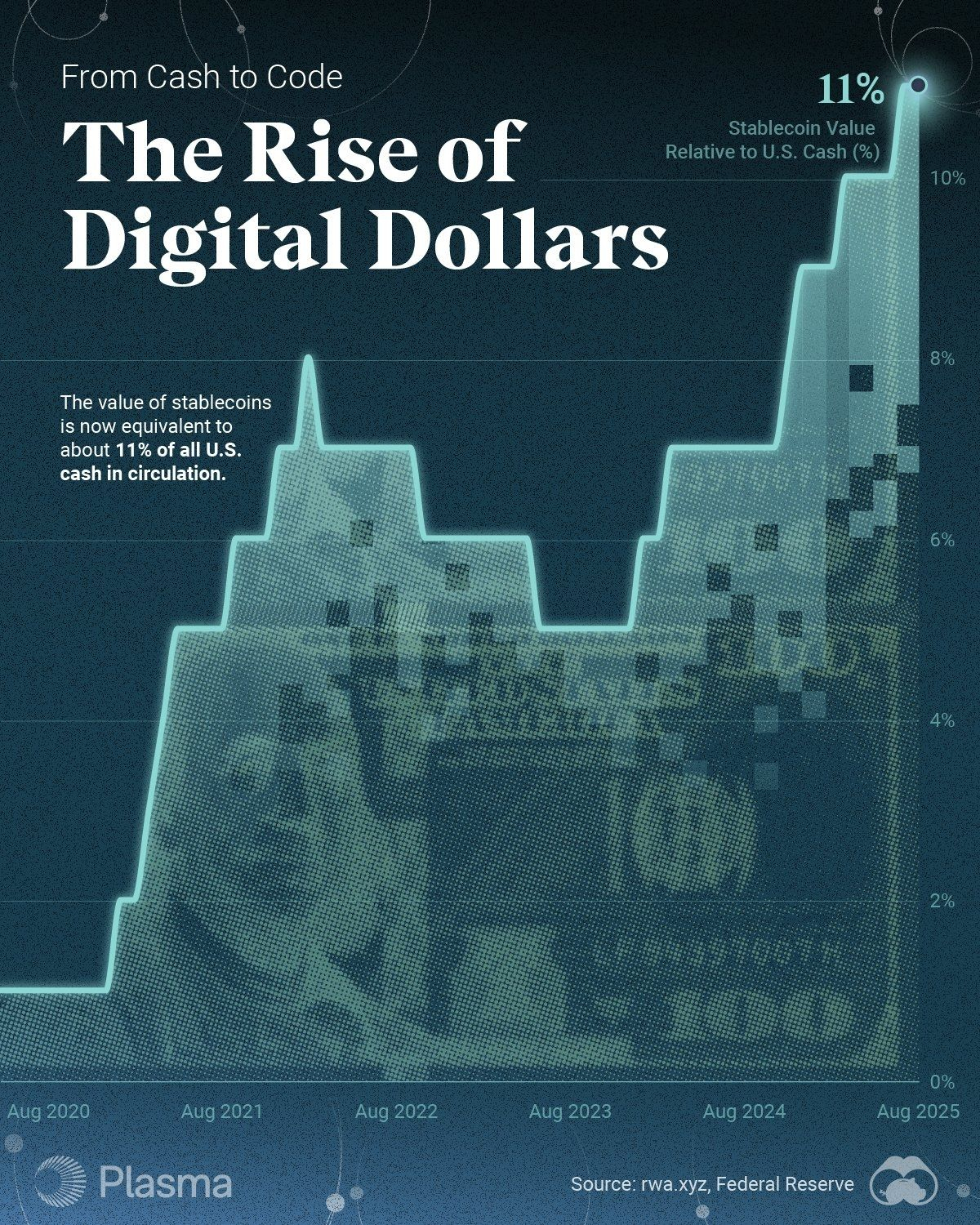
Plasma is not just a random public chain name; it clearly focuses on the stablecoin payment scenario as its core product.
It proposes the idea of allowing users to use USDT, BTC, etc., as customizable gas fees, instead of only being able to use XPL.
This is a real benefit for users who do not want to hold native tokens but wish to transfer at a low cost.
Plasma's design includes a hybrid Bitcoin bridging solution that can bring BTC into a more active payment and DeFi environment.
This bridge is not a simple chain transfer, but a decentralized verification set that minimizes trust.
It is equivalent to opening a cross-asset financial entry for Bitcoin assets.
The token economic model of XPL is very sophisticated, reserving 40% of the total supply for ecological incentives.
This means the project wants to exchange a portion of tokens for activity, rather than allowing early investors to walk away.
The publicly sold tokens are priced at approximately $0.05 in July 2025, allowing many early participants to enter at a low cost.
However, these XPL are not all freely circulating; there is also a clear unlocking schedule and lock-up mechanism.
Therefore, short-term price fluctuations do not represent the actual ecological value itself.
Slow asset unlocking also reduces the probability of market shocks in the early stages.
The project officially launched an equitable airdrop mechanism: each pre-stored user can receive a fixed amount of XPL, regardless of how much they buy.
This design lowers the participation threshold further, rather than following the typical rich-get-richer model.
More importantly, Plasma's payment thinking goes beyond just the surface value of 'no fees'.
Its paymaster system is about gas fee subsidies and flexible payment methods.
This architecture can greatly reduce barriers in actual payment scenarios.
There is also a less talked about but very critical aspect: Plasma is developing a privacy payment module.
This module aims to hide transaction details, including transfer amounts and recipient information, while complying with regulatory requirements.
Such features are important for commercial-grade payments and salary, settlement scenarios.
Currently, many user experience feedback indicates that hardware wallets like Tangem have started to support Plasma asset management.
This shows that its ecological entry is not limited to exchanges but is also moving towards connections at the physical wallet level.
On some platforms, like Nexo, it has also started supporting the transfer of stablecoins through the Plasma network to earn annual yields.
This means that XPL and stablecoins can create liquidity value among different financial products.
Plasma's strategy is not to simply compete with other high TPS chains but to position itself in the practical space of dollar payments and asset circulation.
Behind it are heavyweight supports like Tether and Bitfinex; such resources are not available to all projects.
Short-term price fluctuations may cause market sentiment to swing up and down.
But from the perspectives of token distribution, payment mechanisms, cross-asset bridging, and privacy modules, its design logic is clear.
The path of Plasma seems more like paving a 'universal settlement road for stablecoins'.
It’s not just a hollow shout of 'no fees' but truly building the infrastructure.
If this system becomes routine in real payments, global cross-border transfers, and asset combinations, its value may far exceed the hype cycle.
Plasma does not just build chains; it aims to create a multi-dimensional circulation layer for stablecoin assets.
This is the 'infrastructure position' it truly wants to compete for.


