

Privacy is a pillar of blockchain, but for institutional applications, absolute privacy can become a problem. It is at this point that selective privacy comes in, a central concept in the architecture of the Dusk Network. Instead of being completely transparent or completely 'closed', Dusk allows defining who can see what, maintaining regulatory compliance without compromising data protection.
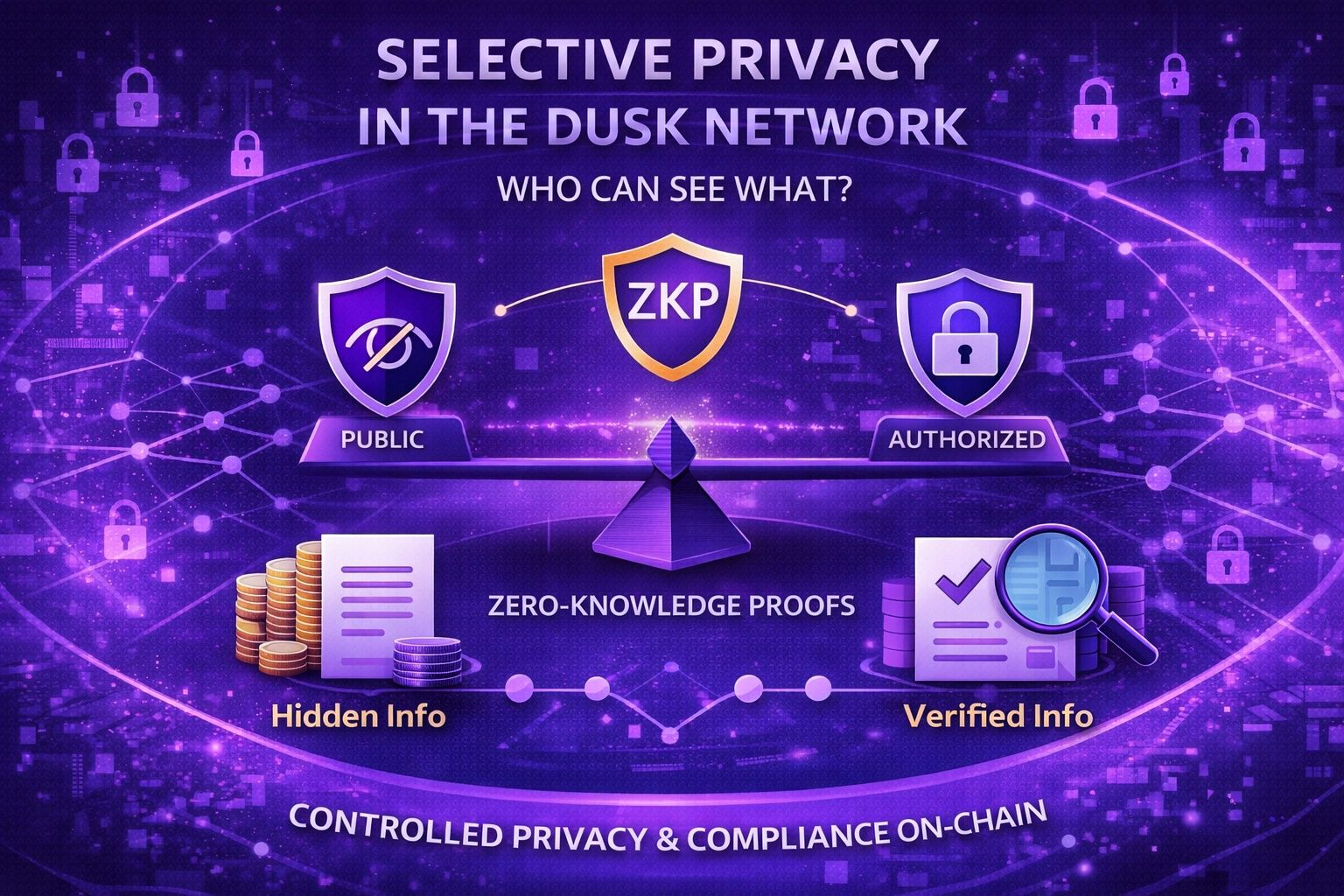
In practice, selective privacy works with the use of Zero-Knowledge Proofs (ZKPs): cryptographic proofs that validate transactions and rules without exposing sensitive information. Thus, data such as values, identity, and internal logic can remain hidden from the public, while authorized entities (such as auditors or specific participants) can verify parts of the process when necessary.
This is essential for regulated markets, where requirements such as auditing, KYC, and compliance cannot be ignored. Dusk was designed for this scenario, offering an infrastructure where privacy and regulation do not conflict: they complement each other.
With this model, Dusk paves the way for the tokenization of assets, financial products, and on-chain business applications with legal security, efficiency, and real privacy.
$DUSK
