

Money only works when people trust it. In the decentralized world, that trust has to be earned through design, transparency, and real utility.
Plasma Coin has emerged as a response to one of the most pressing challenges in crypto today: making decentralized payments fast, affordable, and practical for everyday use. While many blockchain projects focus on ideology or technical complexity, Plasma Coin is positioned around a simpler goal—helping decentralized payment systems function smoothly at scale, without sacrificing security or user control.
At its core, Plasma Coin is designed to operate within a Plasma-based framework, a Layer 2 structure that enhances blockchain performance by moving frequent transactions off the main chain while still relying on it for final settlement. This approach directly addresses the congestion and high fees that have historically limited decentralized payments. Instead of forcing every transaction to compete for block space, Plasma enables a more efficient flow of value, making digital payments feel closer to traditional systems in speed and cost.
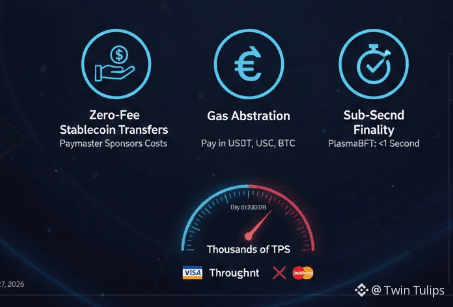
Decentralized payment systems rely on three essential pillars: speed, cost efficiency, and trustlessness. Plasma Coin contributes to all three. By enabling rapid transaction processing on child chains, payments can be confirmed almost instantly. This is especially important for real-world use cases such as peer-to-peer transfers, merchant payments, subscriptions, and microtransactions. Users don’t want to wait minutes—or longer—just to send or receive funds, and Plasma Coin’s structure helps remove that friction.
Cost efficiency is another area where Plasma Coin plays a crucial role. High transaction fees have been one of the biggest barriers to crypto payments gaining mainstream adoption. Plasma-based transactions cost significantly less than main-chain transactions, allowing Plasma Coin to be used for small-value transfers without the fear of fees outweighing the payment itself. This makes decentralized payments more inclusive, opening access to users in regions where even a few dollars in fees can be prohibitive.
Security, however, remains the foundation of any decentralized payment system. Plasma Coin benefits from the security model of Plasma architecture, where users retain the ability to exit funds back to the main chain if something goes wrong. This exit mechanism protects users from malicious actors or system failures, reinforcing trust without relying on centralized intermediaries. In decentralized finance, trust doesn’t come from institutions—it comes from verifiable rules and user-controlled safeguards.
Another important aspect of Plasma Coin’s role is scalability. Payment systems must be able to handle high transaction volumes, especially if they aim to compete with traditional networks like card processors or mobile payment apps. Plasma enables thousands of transactions to be processed off-chain while periodically anchoring results on the main blockchain. Plasma Coin, operating within this environment, can support growing user bases without degrading performance or driving costs higher.
Plasma Coin also fits naturally into the broader decentralized finance ecosystem. It can be integrated into wallets, payment gateways, and decentralized applications that require frequent value transfers. Whether used for settling trades, paying for digital services, or facilitating cross-border payments, Plasma Coin functions as a utility asset rather than a speculative tool. This practical orientation strengthens its role within decentralized payment infrastructure.
From a user experience perspective, Plasma Coin helps bridge the gap between Web2 convenience and Web3 principles. Users often judge payment systems not by their underlying technology, but by how easy they are to use. Faster confirmations, predictable fees, and smoother interactions make Plasma Coin-powered payments feel intuitive, even for users who may not fully understand the underlying blockchain mechanics. This usability is essential for adoption beyond crypto-native communities.
Merchants and service providers also benefit from Plasma Coin’s role in decentralized payments. Lower fees mean higher margins, and faster settlement reduces cash flow uncertainty. Because payments are peer-to-peer and censorship-resistant, businesses gain greater autonomy over how they receive and manage funds. In markets where traditional banking infrastructure is limited or restrictive, Plasma Coin-powered systems offer a compelling alternative.

Importantly, Plasma Coin reflects a broader shift in blockchain development—from experimentation toward real-world utility. Early crypto payment systems proved that decentralized money was possible. Plasma Coin represents the next step: making decentralized payments efficient enough to be usable at scale. This evolution is critical if blockchain-based finance is to move beyond niche use cases and into everyday economic activity.
In the long term, Plasma Coin’s success will depend on adoption, integration, and continued network reliability. But its role in decentralized payment systems is already clear. By combining scalability, affordability, and security, it addresses the practical issues that have slowed crypto payments for years. Rather than replacing existing systems overnight, Plasma Coin strengthens the foundation needed for decentralized payments to coexist with—and gradually challenge—traditional financial rails.
Decentralized payments are not just about removing intermediaries; they are about giving users real control without forcing them to compromise on convenience. Plasma Coin contributes to that vision by making decentralized transactions feel less like a technical process and more like a natural exchange of value.
As decentralized payment systems continue to evolve, do you see Layer 2 solutions like Plasma Coin becoming the standard for everyday crypto transactions, or will users still prefer traditional payment rails for convenience?@Plasma #Plasma $XPL

