
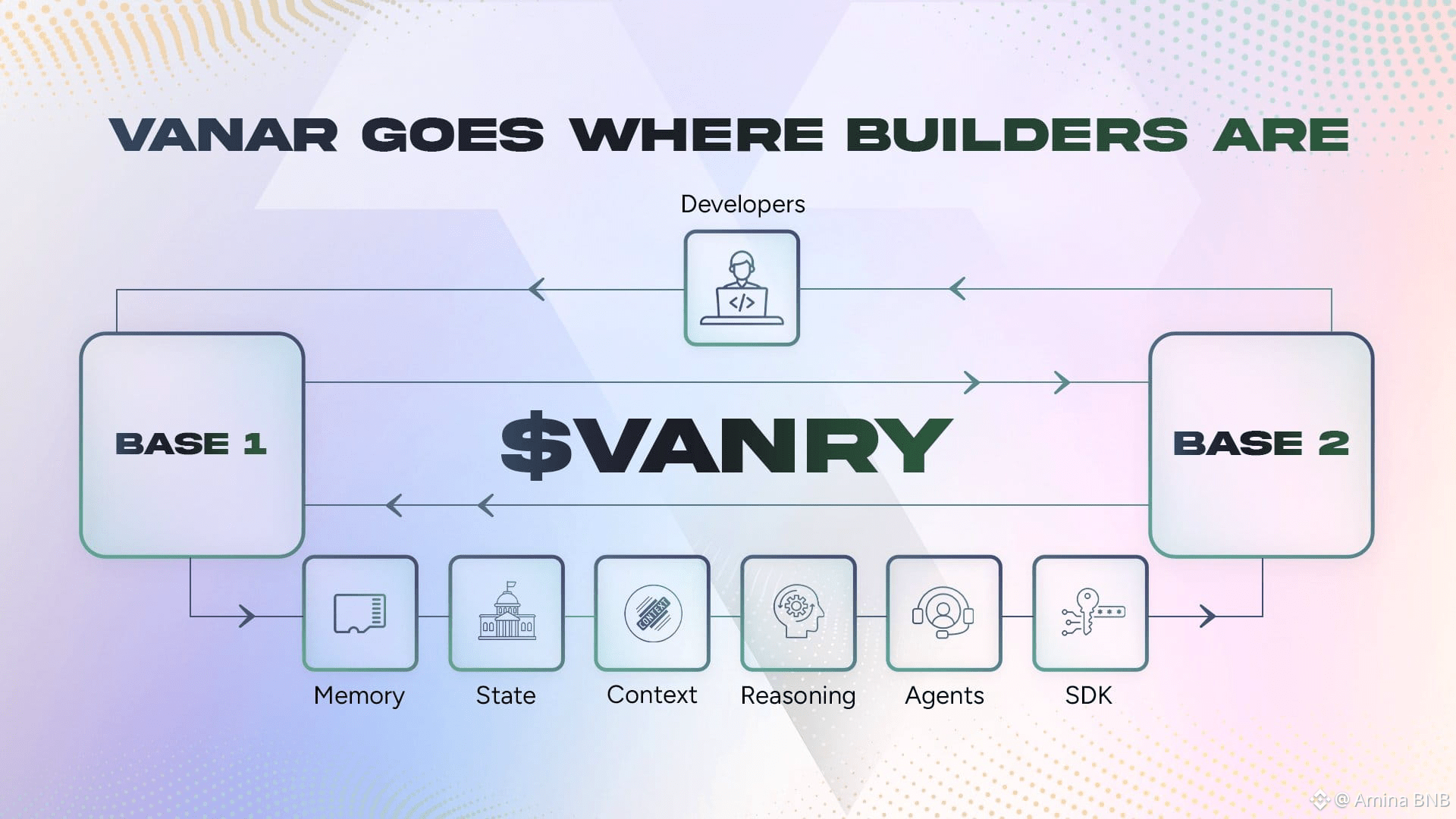
@Vanarchain Vanar Chain's native token, Vanar Chain positions itself as the world's first 'AI-native' Layer-1 public chain. Starting in 2025, it will undergo a significant transformation from a focus on gaming/entertainment/NFT (originally Terra Virtua) to AI + blockchain infrastructure. On January 19, 2026, AI integration will officially launch, including the decentralized inference engine Kayon and the Neutron semantic memory layer, achieving 'intelligent defaults' for Web3 applications—applications that can learn, adapt, and make automated decisions. The core 5-layer architecture (modular L1 + AI layer) is compatible with EVM, high throughput, and low fees, featuring high TPS and low gas, specifically designed for PayFi (payment finance), tokenized RWA, and AI workloads. VANRY serves as a gas fee, staking, governance, and AI subscription payment tool, introducing a 'buy-back and burn' mechanism: starting Q1 2026, users can subscribe to Neutron/Kayon premium AI tools using VANRY, creating a burning pressure and enhancing deflationary potential.
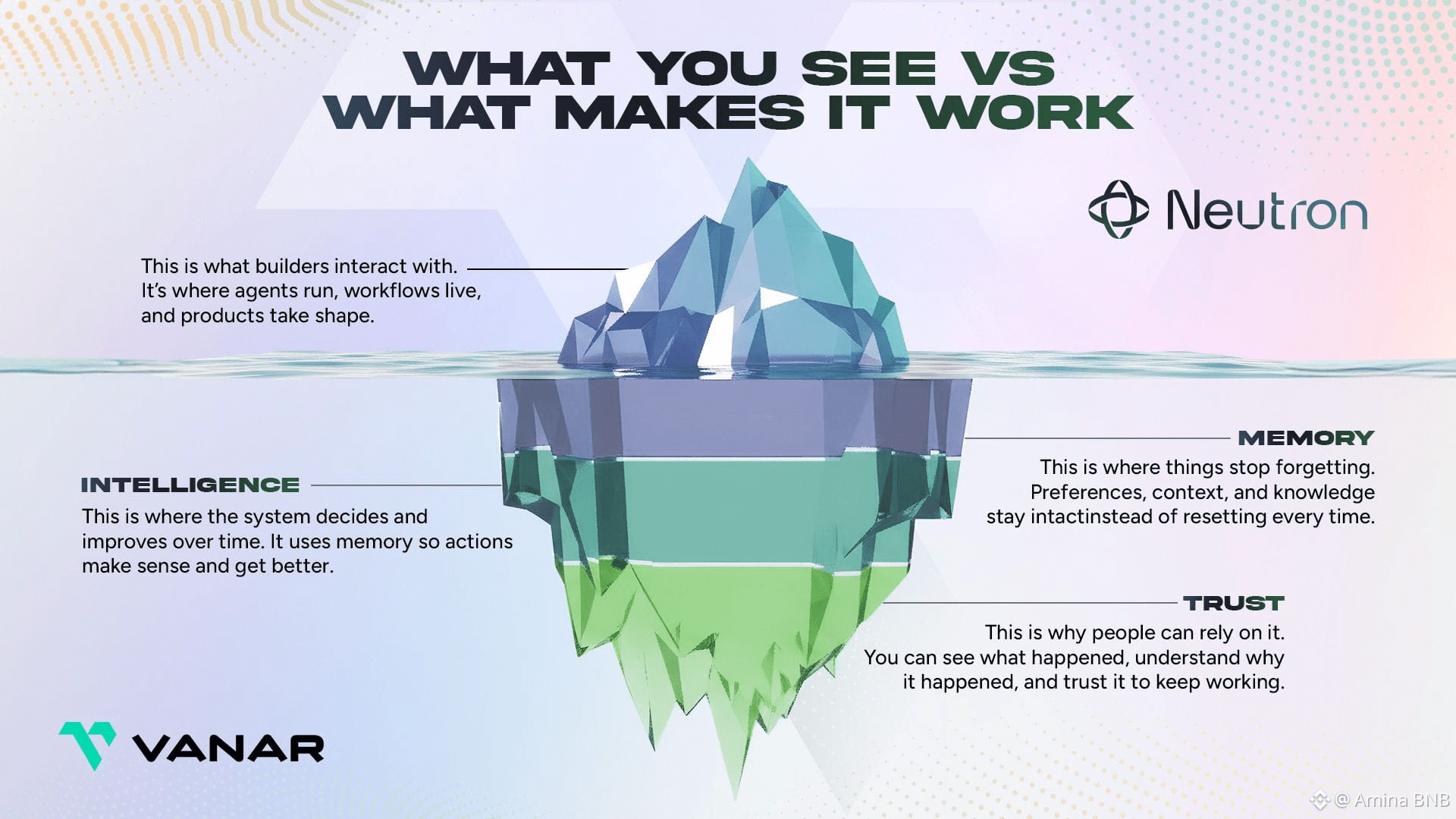
The highlights of the project lie in the deep integration of AI and blockchain: traditional chain data is fragmented, and inference delays are high. Vanar embeds intelligence at the foundational level, allowing developers to build "smart dApps," such as natural language queries for on-chain data and automated decision-making. The partner ecosystem is strong: NVIDIA provides AI tool support, Worldpay collaborates to promote "Agentic Payments," and Plena Alliance brings AI wallet technology, with Saiprasad Raut (former executive) joining to lead payment infrastructure. Recent activities include presentations at Abu Dhabi Finance Week, listings on Crypto.com, etc., and the EU/Middle East layout enhances compliance. Vanar aims to capture the next wave of 300 million mainstream consumers, starting from gaming/metaverse and expanding to corporate brands and real economic applications.
In terms of market performance, VANRY has significantly retraced from its 2025 peak (around $0.13) to the current price of $0.008-$0.009, with a market capitalization of about $17 million and an FDV of approximately $19 million. The circulating supply is about 2 billion, with gradual unlocks, and the 24h trading volume is moderate (supported by major exchanges like Binance, OKX, Kraken, etc.). Price predictions for 2026 show divergence: conservative estimates average $0.013-$0.016 (ROI about 80%), while optimists anticipate $0.20+ if AI subscriptions and RWA adoption explode. The current bear market dominates (Fear & Greed at low levels), but the AI boom plus the Web3 transformation narrative provides a basis for rebound.
Clear advantages: AI-native positioning is strongly differentiated, addressing the pain points of traditional chain AI integration; the dual drive of PayFi and RWA aligns with the trend of stablecoin/asset on-chain in 2026; ecosystem partners and corporate adoption (such as NVIDIA, Worldpay) enhance credibility. Challenges include: testing community stickiness after reshaping from gaming projects, fierce competition (other AI chains like Bittensor, Fetch.ai), low market capitalization leading to easy volatility, and the need to prove real adoption rather than speculation.
Overall, Vanry represents a potential stock in the AI+blockchain crossover track for 2026. If Q1 AI subscriptions land, TVL rebounds, and more mainstream integrations occur, VANRY may leap from a "small-cap narrative coin" to a representative of AI infrastructure, with long-term value anchored in the "smart economy" rather than pure speculation. Investors need to pay attention to roadmap execution, AI tool utilization rates, and burn data; short-term volatility is high, but the probability of successful transformation is significant.#vanar $VANRY
