
Last Friday night, Azu experienced another classic scene of 'AI speaks eloquently, but I still have to personally serve the plates.'
During the day, I had several large models help me sort out a company's financial statements, public sentiment, and supply chain dynamics over the past year. The analyses they provided were simply stunning: risk points were highlighted, cash flow gaps were calculated, and even management consulting-style suggestions like 'optimize inventory turnover' and 'shorten payment terms' were listed on a whole page.
The problem is, when it actually comes time to take action at night, I still have to go one by one to modify the Excel templates, log into online banking, adjust payment batches, and confirm with the warehouse whether the goods have arrived. AI has clearly figured out 'what needs to be done,' but the actual 'doing' hand is still human.
At that moment, I suddenly realized that most of the so-called AI today are actually stuck at the 'understanding' stage and rarely really 'do.' You can have it help you write emails, draft plans, chat with you, or even design a financial management or risk control strategy, but as soon as it involves real cash flow, real inventory, and real settlements, it immediately responds with, 'Please log in to the system to complete the operation.'
This is even more evident in the on-chain world.
On one hand, we keep shouting that the era of AI Agents is coming, while on the other hand, the vast majority of chains and applications still treat Agents as 'smart users,' letting them press buttons and call APIs, but do not dare to hand over real execution power. Because once an Agent makes random orders, random allocations, or random adjustments on the chain for twenty-four consecutive hours, who will be responsible? Who will roll back? Who will ensure it does not clear out your inventory at midnight?
From this perspective, looking at many 'AI × blockchain' projects, you will find a rather awkward fact:
They either only run models off-chain and record results on-chain or do things like 'AI-assisted trading' or 'AI-generated NFTs,' which are one-off clever tasks. The infrastructure that truly enables AI to execute tasks on-chain in a long-term, automated, and safe manner is almost blank.
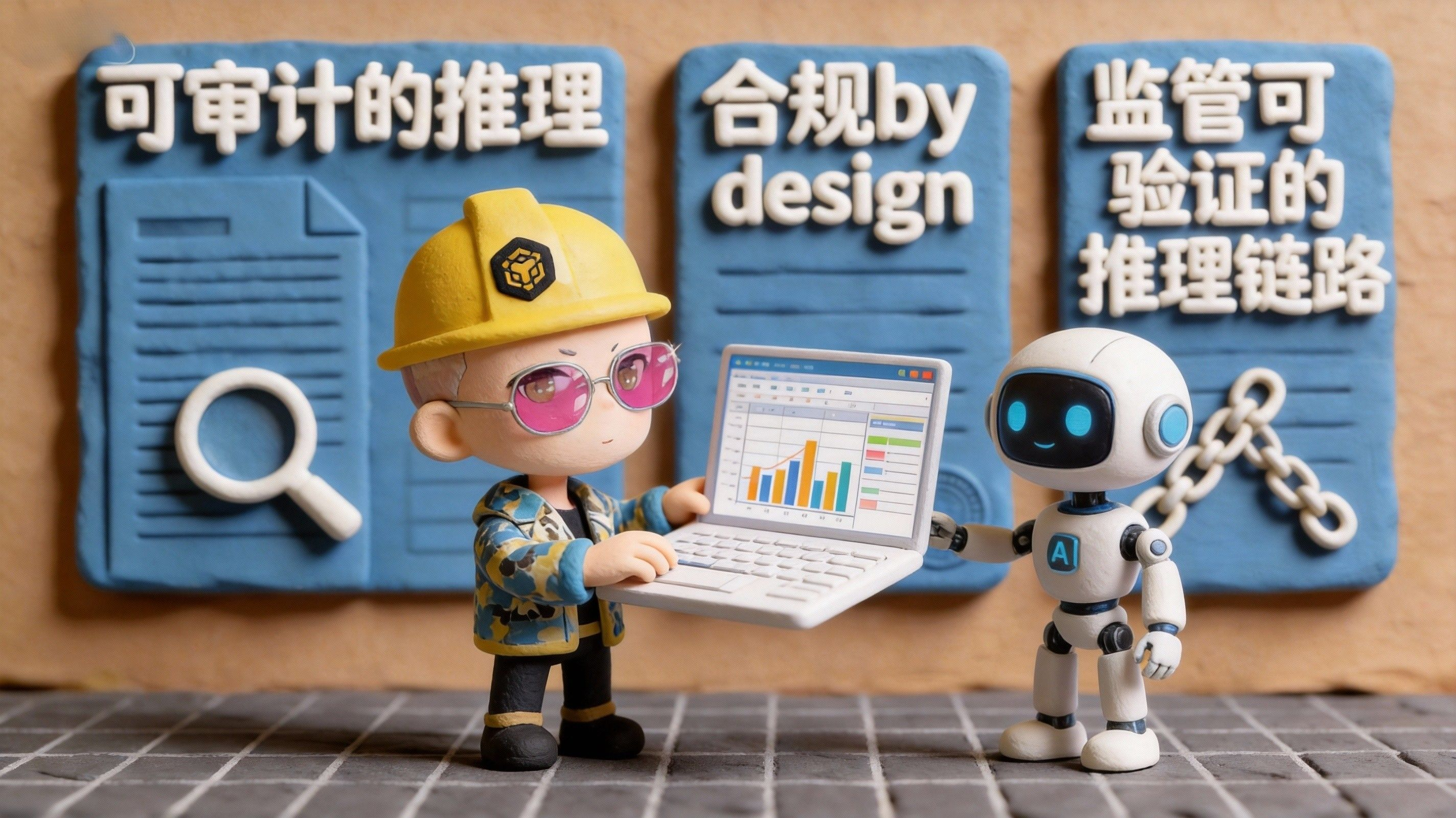
This is also why I am particularly focused on the Axon and Flows layers when researching the 5-layer stack of Vanar Chain. The Vanar team positions this chain as an 'AI-native L1 redesigned for AI workloads, PayFi, and RWA.' Below it is the Vanar Chain, which can compress and verify data. On top of that is the semantic memory Neutron and the inference layer Kayon, and above that, we have the two layers I want to talk about today: Axon is responsible for intelligent automation, while Flows is responsible for industry applications, representing the transition from 'understanding' to 'automatically doing' in the entire stack.
You can think of it as the 'hand' and 'workflow' in a complete Agent system. Neutron is responsible for remembering who you are and what you have done in the past, Kayon helps you understand the context and make judgments, while Axon and Flows are responsible for turning those judgments into actionable compliance payments, automatic settlements, inventory management, and reconciliation notifications, which are 'assembly line-level' executions. An analysis in the community put it very plainly: myNeutron gives AI chain-level memory, Kayon brings reasoning and explainability onto the chain, while Flows 'transitions intelligence from thought to safe automated actions,' no longer requiring manual operations.
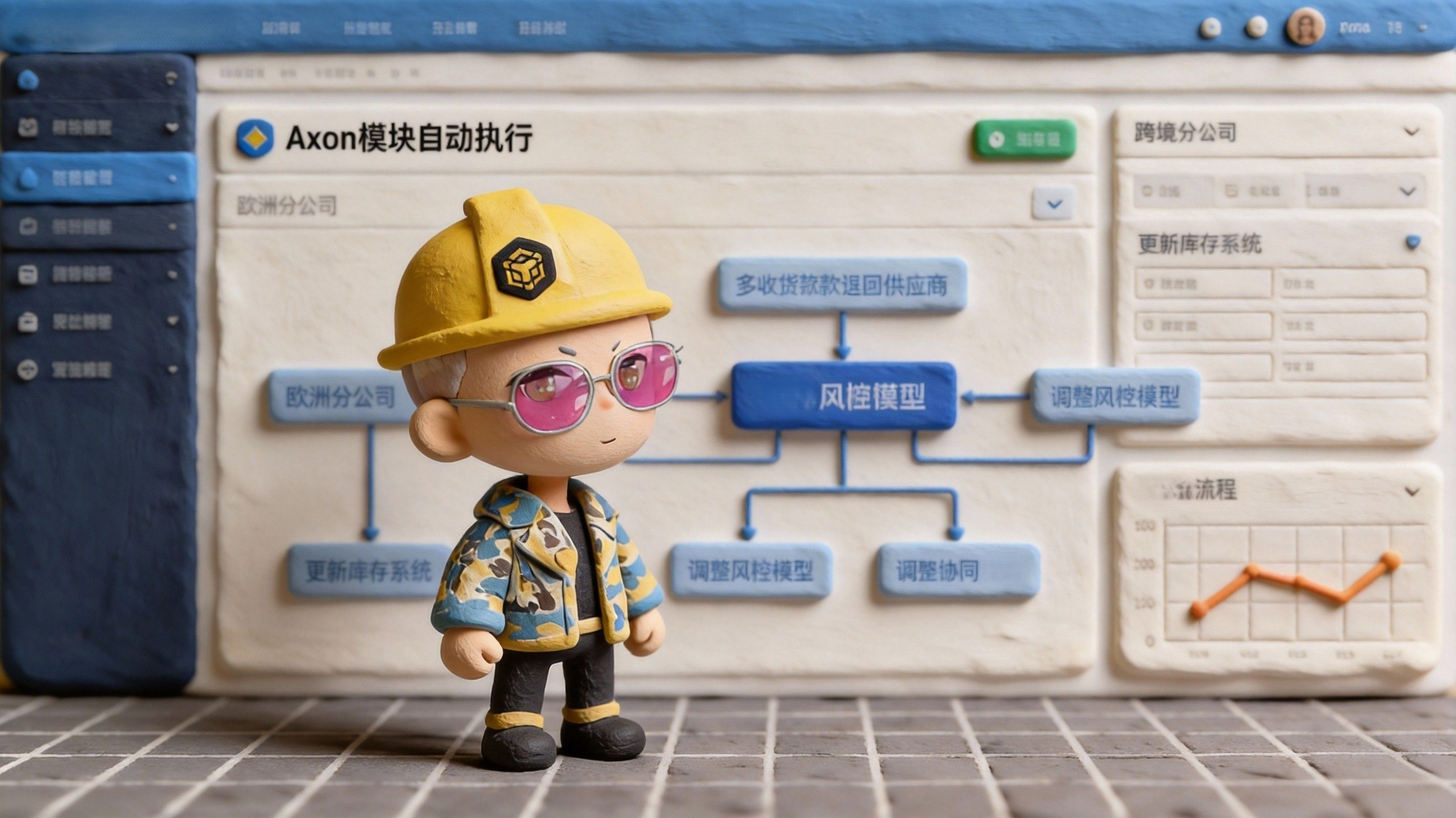
Let's start with Axon.
For someone like me who deals with processes daily, Axon feels more like an 'intelligent control plane.' In Vanar's 5-layer architecture, Axon is marked as Intelligent Automations, which means not simply 'helping you reduce a few buttons' but rather: on a chain designed for AI, who is responsible for translating 'a particular inference conclusion' into a series of securely executable multi-step operations? For example, what a cross-border AI Agent might want to do could be 'help me refund part of the over-collected payments from the European subsidiary to the supplier, while recording it in the inventory system and updating the parameters of the risk control model.' This involves at least four systems: payment, accounting entries, inventory ledger, and risk control thresholds. Without a unified automation layer, the Agent either cannot initiate the process at all or will find the statuses of various systems mismatched as it progresses.
In traditional enterprises, this type of work is usually hardcoded with RPA and a bunch of scripts, and there is no verifiability; when things go wrong, everyone can only flip through logs. What Vanar wants to do is something else: to create a 'multi-system, multi-step' automated process that is directly verifiable on the chain, writing the triggering conditions, execution logic, and rollback paths into the chain's logic while also utilizing the inference results from the Kayon layer to dynamically adjust based on context. Both official and community articles have mentioned: Vanar does not just want the chain to execute transactions but to 'understand why transactions happen,' and only then execute it to be considered true intelligent automation.
But having Axon alone is just 'having a hand that obeys.' Flows is what allows this hand to truly work across different industries, providing the safety gear.
In recent analyses, Flows has been described as 'the place where intelligence becomes safely automated execution,' a layer that packages inference results into concrete business processes, and inherently brings along constraints, rollback, restrictions, and safety logic. This sounds a bit abstract; in more everyday terms, it means: Flows is responsible for specifying 'what AI can do, what it cannot do, and how to retract if it makes a mistake,' effectively writing a set of 'AI work rules' onto the chain.
For example, in compliance payments.
When many people hear 'AI helps you make automatic payments,' their first reaction is: what if this thing goes haywire one day and sends out an extra ten thousand payments?
The design principle of Flows is exactly the opposite: it does not put AI in front of an unrestricted payment panel but embeds each cash flow in a process with context, constraints, and audit trails. For example: only when the Kayon layer confirms that a transaction meets preset compliance rules and the risk score is within the threshold will Axon trigger the corresponding payment steps; once an anomaly is detected later, the rollback logic in Flows can automatically freeze subsequent actions and trigger manual or regulatory intervention. This design of 'automatic execution, but not losing control' is repeatedly emphasized in the official long articles—Vanar does not want to create a system that automates everything with one click and then turns into chaos; rather, it aims to achieve 'boring but safe' automation, which is the prerequisite for everyone to sleep soundly when Agents really start touching money, processes, and real assets.
Now imagine a scenario of inventory management.
Many e-commerce and supply chain companies are already using simple rule engines to make 'restocking suggestions' and 'warning reminders,' but the final decision still rests with humans. This is because if an automated order fails and wrong inventory is pressed, the losses could amount to several months’ profit.
If using Vanar's stack, myNeutron can turn historical sales, seasonality, promotional arrangements, and even social media signals into structured semantic memory, Kayon can infer 'how much stock a particular SKU needs to be replenished in the next two weeks' based on this data, Axon can take this suggestion and translate it into a series of operational steps: check current inventory, verify supplier delivery capabilities, generate purchase orders, reserve settlement funds, while Flows is responsible for specifying 'under what conditions can it automatically execute to which step.' For example: low-risk SKUs can proceed fully automatically, while high-priced SKUs can only go as far as 'creating order drafts,' and the final step must be confirmed by a human. This way, you get a 'semi-automated, auditable, and rollback-capable' smart supply chain, rather than a black-box algorithm that explodes the warehouse if it goes out of control.
What many people do not realize is that the significance of Axon and Flows does not lie in 'having added two new products' but in that they precisely fill the largest gap in current AI Agents:
AI does not lack models, does not lack computing power, and does not lack 'outputs that look very intelligent.'
What it truly lacks is a 'chain that executes,' a foundation that can reliably and safely turn decisions into actions. Without semantic memory, it forgets every day; without on-chain reasoning, its decisions are unexplainable; without Axon and Flows, it will forever remain in the stage of 'sounding right but unable to act.' Vanar has repeatedly emphasized on its website and in the community that so-called AI-ready does not refer to TPS or any model's benchmark, but whether the entire stack provides memory, reasoning, automation, and settlement.
Looking back from the investment perspective, you will find that the market has not yet given any premium to these two layers.
Most people still think of $VANRY as 'another AI L1' or 'another fast chain,' using the old metrics of L1: TPS, gas costs, and the number of ecosystem projects. But if Axon and Flows are really developed along the current path—the former becoming the automation hub for AI Agents and the latter becoming a 'smart workflow factory' for vertical industries—then its real benchmark will no longer be those public chains that shout about AI narratives, but rather the invisible infrastructure in the traditional enterprise world responsible for 'process automation + risk control.'
For those Degen who only want to chase emotions, this kind of 'tightening screws' is indeed hard to FOMO:
It does not have a story of tenfold gains overnight, nor does it have particularly explosive short-term data; it looks like the team is quietly tightening one screw after another.
But for those accustomed to looking at long-term narratives, this stage is actually the most comfortable observation window—you do not need to chase at emotional highs, just keep an eye on a few simple questions: Is Neutron really being used to store semantic memory? Is Kayon really undertaking compliance automation? Have Axon and Flows truly brought certain industry workflows on-chain? Every 'yes' signifies$VANRY the value is gradually shifting from 'story' to 'usage.'
If you believe that after 2026, AI will transition from 'chat tools' to 'working agents,' and that Agents will eventually take over some of the repetitive but critical tasks of payment, settlement, inventory, and reconciliation, then you will have difficulty avoiding one question:
Who is preparing that 'executing chain' for them?
On this path, Vanar may not be the only answer, but the design of Axon and Flows that 'pushes intelligence from understanding to automated execution, while trying not to lose control' at least gives me a more realistic version: being smart is one thing, but processes remain controllable, and automation remains auditable.

During the gold rush, those who sold shovels made a lot of money, but those who sold screws often lived longer.
If AI Agents really want to work on-chain for the long term, those layers responsible for 'tightening screws' are the most worthy of attention. Axon and Flows are likely the two most inconspicuous but indispensable screws in the Vanar stack.
