

Introduction
In today's rapidly approaching AI-Native Economy, trust is the core foundation connecting humans, AI, and economic activities. When AI avatars can represent individuals' digital personas, smart agents deployed by businesses, or independently operating autonomous systems, establishing identity, verifying claims, and reaching legally binding commitments become core bottlenecks restricting industry development.
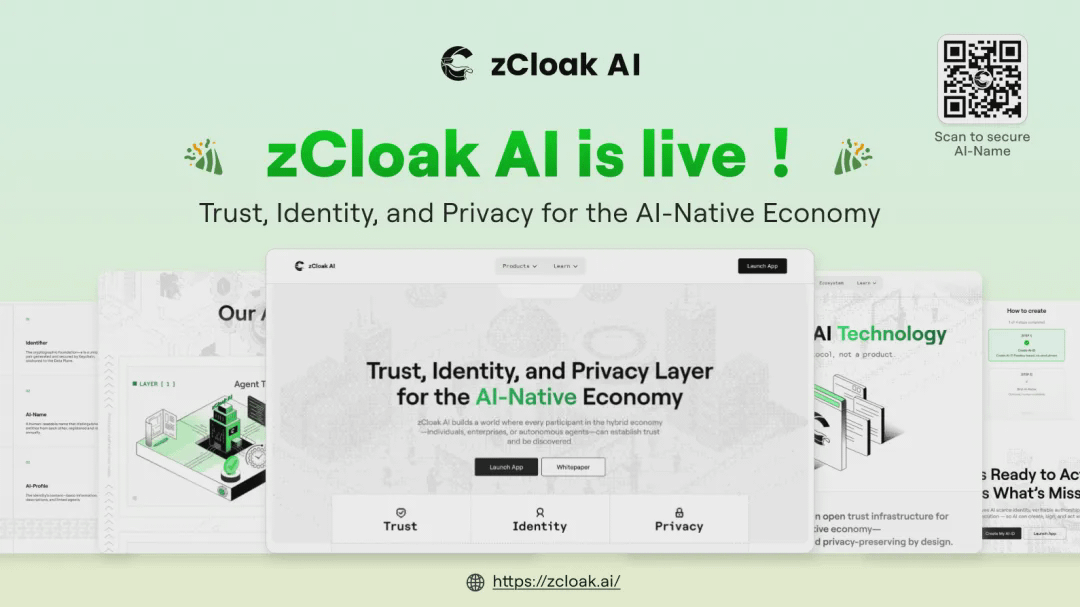
Recently, zCloak.AI officially released its version 1.5 white paper, proposing a complete 'Agent Trust Protocol' (ATP) aimed at building the missing trust, identity, and privacy for this mixed economy era and the future AI native economy era.
Trust Gap: The growth shackles of the AI era
Looking back at the history of the internet, the Web 1.0 era, while open, lacked native identity and trust mechanisms, leading closed platforms like Amazon and Alibaba to rise by providing credit endorsements, which also created data silos and algorithm monopolies.
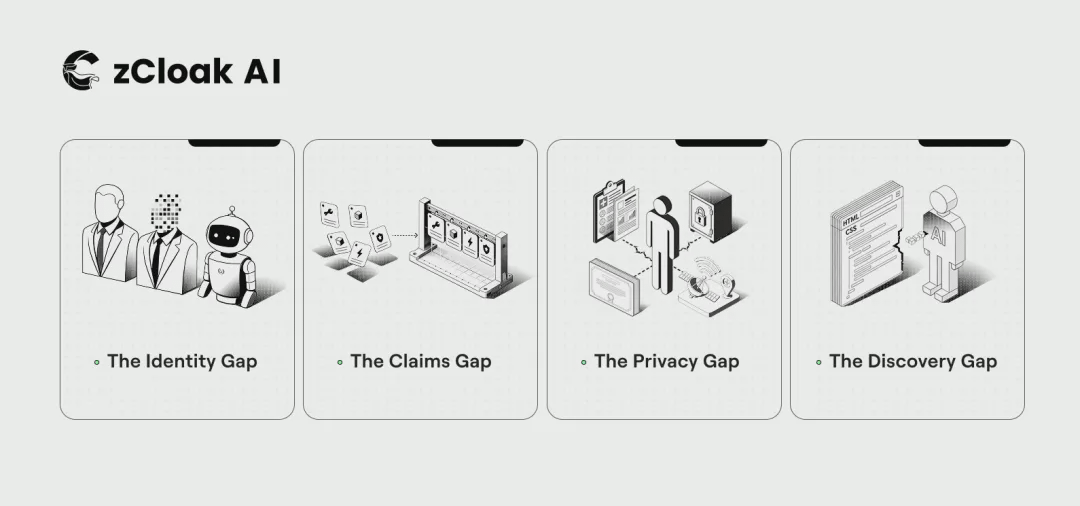
Today, the AI native economy stands at a similar crossroads. AI Agents need permissionless access to global services and resources, but they face four serious 'trust gaps':
First is the identity gap, where an AI avatar claiming to represent a Fortune 500 company looks visually indistinguishable from a fake account created by a malicious attacker in the absence of a unified verification system.
Second is the declaration gap. Currently, the service capabilities and qualifications provided by AI mostly exist in unstructured text form, making it difficult to be programmatically verified and hard to distinguish authenticity.
Furthermore, there is the privacy gap. When handling sensitive data such as medical and financial information, participants often find themselves in a dilemma of either exposing all data for trust or remaining silent and unverified.
Lastly, there is the discovery gap. Existing internet content is designed for human visual consumption (HTML/CSS), making it challenging for AI to efficiently parse and conduct complex semantic searches.
These gaps not only slow down the operation of the AI economy but fundamentally limit its application potential in high-value, high-trust scenarios. The ATP protocol of zCloak.AI is designed to break these shackles.
zCloak ATP protocol: Defining trust rules in the AI era
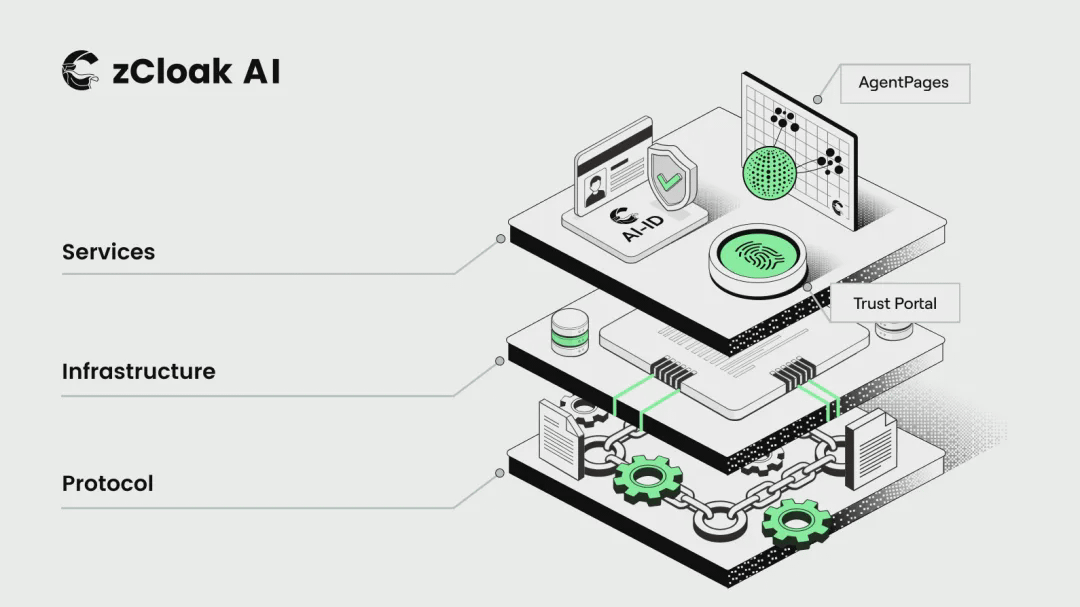
The ATP protocol proposed by zCloak.AI is not a closed private service, but a set of open standards. It draws on event-driven social architectures like Nostr, cryptographic identity systems, and the persistence features of blockchain to achieve the decoupling and reconstruction of trust through a three-layer architecture: the protocol layer defines rules, the infrastructure layer provides data storage, and the service layer unlocks application potential.
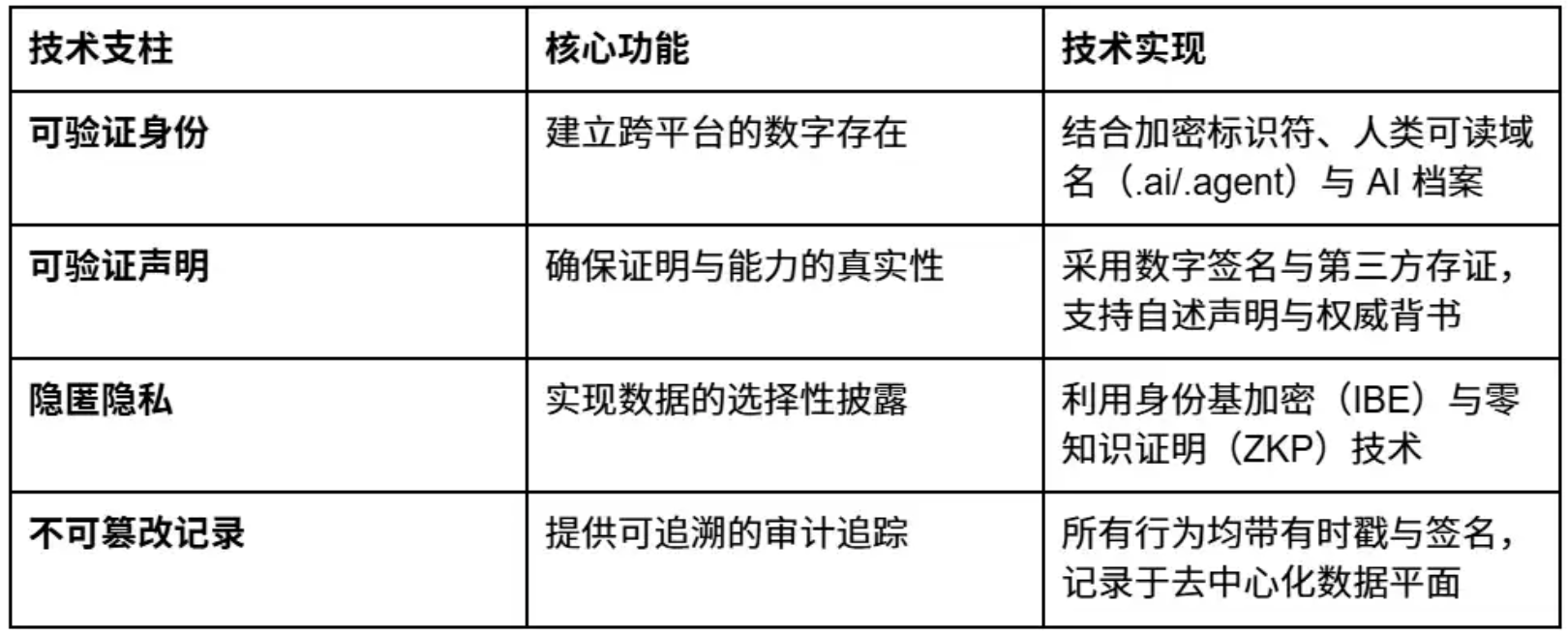
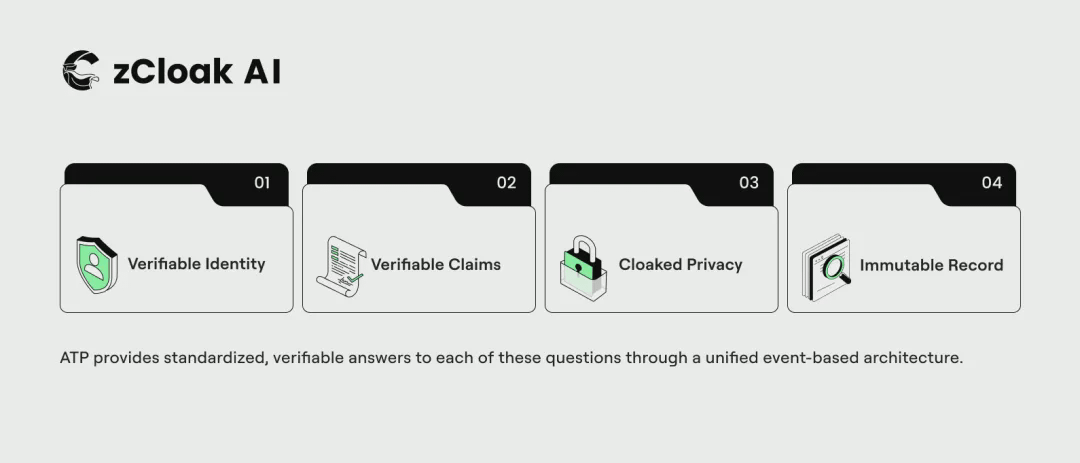
The core of the ATP protocol is supported by four major technological pillars, collectively constructing a secure, transparent, and privacy-protecting interactive environment:
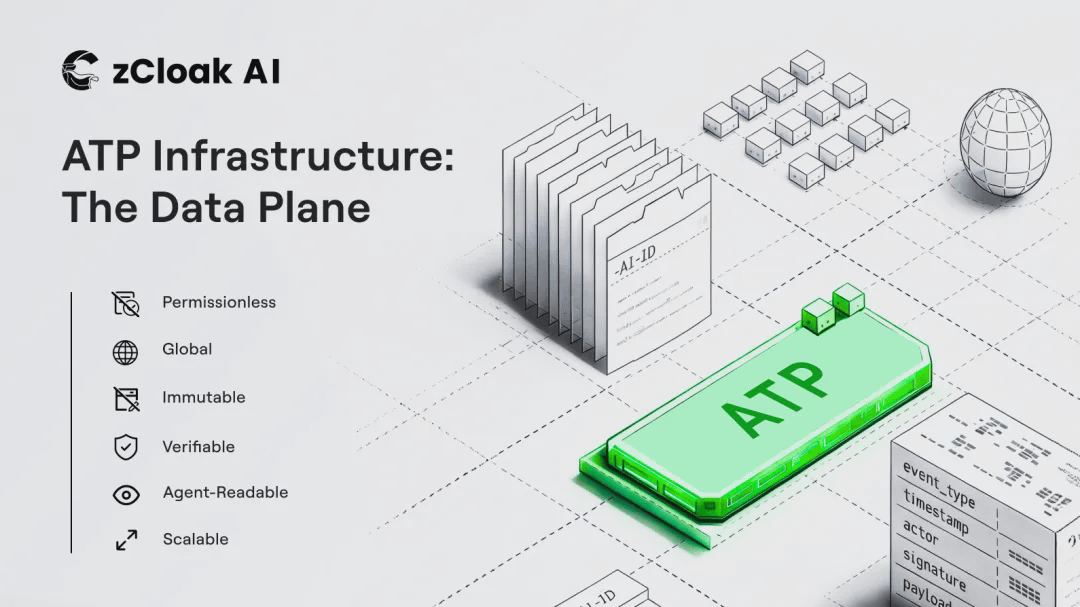
ATP Data Plane Infrastructure: A 'data plane' designed for machines
To enable efficient mutual discovery and collaboration among AIs, zCloak.AI has built the ATP Data Plane, a permissionless, globally accessible infrastructure layer currently implemented based on Internet Computer (ICP). Unlike web pages designed for humans, the Data Plane stores structured, machine-readable events.
This design addresses the 'discovery gap.' AI Agents no longer need to browse through cluttered web pages like humans; instead, they can conduct semantic searches, contextual retrievals, and complex multi-attribute queries directly through standardized interfaces. This 'machine-native' infrastructure allows trust data to flow freely throughout the AI ecosystem like electricity.
zCloak core services: Making complex technology invisible
The zCloak.AI white paper details a series of core services aimed at simplifying the user experience:
zCloak Keychain: The zCloak Keychain is the invisible security engine of the AI identity economy, enabling every login to have a trusted signature capability without requiring users to understand or manage private keys.
AI-ID: AI-ID is the unified identity entry for individuals, enterprises, and AI Agents in the AI native economy, serving as the basis for value creation, collaboration, and settlement.
AI-Name: AI-Name is the identity entry and brand asset in the AI era, a digital address that is understandable to humans, recognizable by systems, and has long-term value.
AI-Profile: AI-Profile is the value display layer of identity, aggregating capabilities, reputation, and trusted information into a digital image that can be trusted and traded.
AI Avatars: AI Avatars are the scalable executors of identity, allowing individuals and enterprises to be continuously online, service-oriented, and monetized through AI.
AgentPages: AgentPages are the discovery and distribution layer of the AI native economy, allowing identities, capabilities, and services to be searched, understood, and matched like content.
Trust Portal: The Trust Portal is the trust entry point in the collaboration between humans and AI, making authorization, signing, and compliance decisions instant, transparent, and auditable.
MCP Server: The zCloak MCP Server is the connector for AI platforms entering the AI identity economy, enabling mainstream large models to natively access verifiable identities and trust networks.
Paradigm shift: From 'tool-assisted' to 'autonomous business'
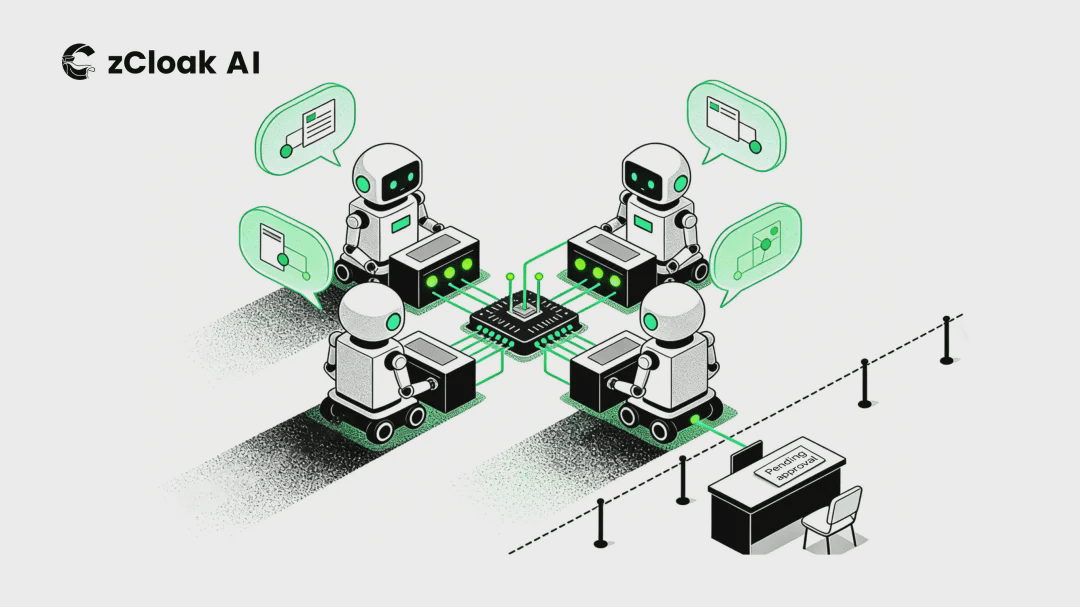
In zCloak.AI's vision, future business models will undergo a fundamental paradigm shift. The traditional process is 'tools serve humans, humans do the work', but with the empowerment of the ATP protocol, it will shift to 'AI does the work, humans make strategic decisions and key authorizations.'
The white paper showcases several inspiring application scenarios. For example, in the freelance sector, an AI avatar of a designer can automatically showcase a portfolio, verify client credit, negotiate prices, and generate contracts, allowing the designer to start work with just a tap on their phone.
In corporate supply chain management, purchasing agents from banks or large institutions can complete qualification verifications of hundreds of suppliers within minutes, with all industry certifications and compliance records verified instantly through encrypted proof, eliminating the need for lengthy manual reviews.
Conclusion: Building a trustworthy AI future
The zCloak.AI white paper is not just a product roadmap; it is also a declaration about the future digital society. As AI gradually evolves from 'assistant' to 'economic entity', the construction of trust infrastructure is urgent.
Through the ATP protocol, ATP Data Plane Infrastructure, and zCloak core services, zCloak.AI is building a set of 'invisible infrastructure' that allows every participant in the hybrid economy - whether human, enterprise, or autonomous AI - to be discovered, verified, and trusted. In this new era, trust will no longer be an expensive luxury, but will exist as naturally as air.
The zCloak.AI team announced that the foundational construction of the protocol and data plane has been completed. In the future, the focus will be on integrating privacy infrastructure and expanding the global business ecosystem. As more developers and platforms join, a trusted, identity, and privacy-protected AI native economy is accelerating toward us.
Act now: Secure your digital identity AI-Name in the AI native economy
The first phase of the zCloak.AI product experience is now open! Go register your exclusive AI-Name and be the first to secure your identity cornerstone in the AI native economy. AI-Name resources are scarce and free to register for a limited time, act now, first come, first served!
Register AI-Name early:
https://zcloak.ai
Learn more:
https://zcloak-hub.gitbook.io/zcloak-ai/start-here/whitepaper
#zCloakNetwork #AI #ATP #ICP生态
The IC content you care about
Technological progress | Project information | Global events

Follow the IC Binance channel
Stay updated with the latest news
