


In 2026, the Web3 industry officially enters a new cycle driven by the dual forces of the 'Institutional Era' and the 'AI Revolution'—top institutions such as a16z and Messari have jointly pointed out that the entry of institutional capital, the explosion of the AI agency economy, and the large-scale application of RWA are reshaping the underlying logic of the industry. The market, once dominated by retail speculation, is gradually shifting to a new paradigm centered on the creation of real value, compliant operations, and integration with the real economy. In this transformation, Ethereum adheres to a high-value RWA settlement layer positioning, Solana focuses on high-frequency trading scenarios, while Vanar Chain, leveraging the automation innovation of the V23 protocol, the native support of the AI agency economy, and the full-process compliance solutions for RWA, builds the core capabilities of institutional-level infrastructure, becoming a key hub connecting traditional finance, the real economy, and the Web3 ecosystem. From the programmable breakthroughs of dynamic contract engines to the on-chain autonomous collaboration of AI agents, and to the precise positioning in the $36 billion RWA market, Vanar is redefining the standards of Web3 institutional-level infrastructure with the core logic of 'technology adapting to institutional needs, ecosystems accommodating real assets, and value anchoring compliance trends,' becoming the most disruptive industry player in 2026.
I. Technological paradigm innovation: From "static tools" to "intelligent collaborative bodies" protocol leap
Vanar's technological moat stems from a deep insight into the institutional demands of Web3, and its V23 protocol upgrade and AI native architecture thoroughly address the three core pain points of traditional public chains: "high programmable thresholds, low process collaboration efficiency, and difficult compliance adaptation," achieving a paradigm leap from "static tools" to "intelligent collaborative bodies."
The three major technological breakthroughs of the V23 protocol construct the underlying support for institutional-level applications: the dynamic contract engine breaks the shackles of traditional smart contracts that "cannot be modified after deployment," allowing institutional users to adjust core rules such as asset pledge rates, risk control thresholds, and compliance clauses in real-time without redeploying contracts through a "rule template library + parameter dynamic configuration" mechanism, meeting the demand for dynamic changes in regulatory policies during the RWA tokenization process, reducing multi-scene adaptation costs by 60%. The cross-layer event response system constructs a global event bus covering the base layer, extension layer, and application layer, achieving a full-process automated closed loop of "event-decision-execution"—when the RWA platform detects asset price fluctuations hitting the warning line, it can automatically trigger risk hedging contracts in the extension layer and link base layer node resource scheduling, improving process execution efficiency by 400%. In scenarios with 100,000 concurrent transactions, it still maintains zero-failure operation, fully meeting the high-performance needs of institutional-level applications. The visual programming interface significantly lowers development barriers through "drag-and-drop components," allowing non-technical background institutional users to generate automated processes by stitching together modules such as "asset confirmation," "compliance review," and "cross-chain settlement," greatly shortening the launch cycle of institutional applications.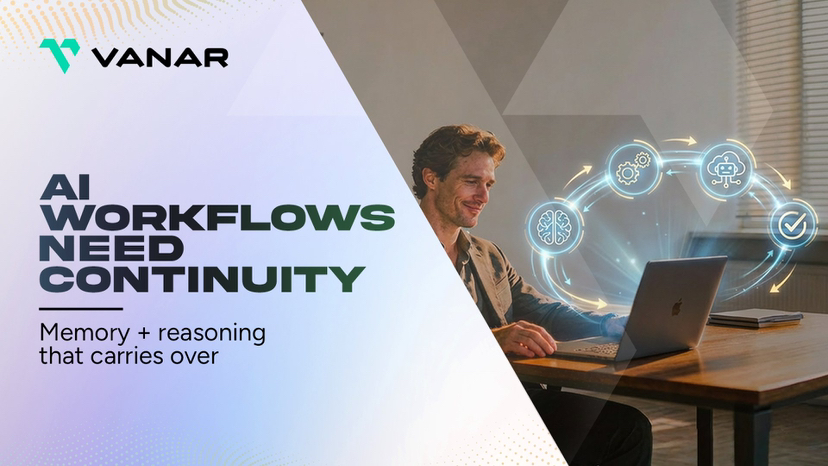
The deep integration of AI native architecture and NVIDIA computing power further strengthens institutional-level service capabilities: The Neutron semantic compression layer adopts a combination of neural and algorithmic compression methods, transforming unstructured data such as legal documents, property deeds, and financial statements into AI-readable "seeds" with a compression efficiency of 800 times, providing underlying support for semantic understanding and efficient storage of on-chain data, solving the data standardization challenges of RWA assets on-chain. The Kayon context AI inference engine, relying on the top computing power of NVIDIA's Vera Rubin platform, achieves real-time verification, risk assessment, and compliance execution of on-chain data, completely eliminating dependence on external oracles. In scenarios such as PayFi cross-border payments and RWA asset confirmation, the review cycle has been reduced from the traditional 72 hours to within 24 hours, while lowering manual review costs by 90%. More importantly, the Kayon engine now possesses AI agents' autonomous collaboration capabilities, supporting high-frequency micropayment settlements and task collaboration among multiple AI agents, perfectly adapting to the AI agent economy that will explode in 2026, providing a technical base for institutional-level applications such as autonomous trading between machines, intelligent investment advice, and automated risk control.
The comprehensive upgrade of cross-chain interoperability breaks the multi-chain liquidity barriers of institutional assets. Vanar has achieved seamless migration of assets across more than 20 mainstream public chains such as Ethereum, Optimism, and Avalanche through deep integration with the Stargate and LayerZero ecosystems, supporting cross-chain circulation of core stablecoins and RWA tokens such as USDC, USDT, and WETH. Its native token VANRY adopts the OFT standard, allowing free flow in a multi-chain environment without encapsulation. This cross-chain capability not only resolves the liquidity fragmentation issues of RWA assets but also enables Vanar's institutional service capabilities to radiate across the entire Web3 ecosystem, forming a two-way cycle of "technical output + asset import," becoming an indispensable institutional service hub in the multi-chain ecosystem.
II. Ecological collaboration logic: From "traffic aggregation" to "value symbiosis" in institutional-level closed loops
Vanar's ecological layout transcends the limitations of traditional public chains being "purely technology-driven," constructing an institutional-level ecological system that combines "AI agent economy + RWA scaling + Web2 traffic migration" in a three-dimensional logic, achieving a qualitative change from "user growth" to "institutional value accumulation."
In terms of the scaled landing of RWA, Vanar has precisely targeted the $36 billion RWA market, constructing a full-process compliance solution. By 2026, the focus of the RWA industry has shifted from "can it be tokenized" to "how to achieve scaled, compliant circulation." Vanar, leveraging Neutron semantic conversion and Kayon compliance verification technology, perfectly adapts to Dubai's regulatory framework of "assets referenced as virtual assets," having completed the first property tokenization project in Dubai, involving an asset scale of $230 million, achieving full-process transparent management of real estate and bulk commodities—ranging from asset confirmation, data on-chain, compliance review to cross-chain circulation, each link generates an immutable on-chain certificate, meeting the core needs of institutional users for asset security and compliance. Deep cooperation with Worldpay further lowers the entry barriers for traditional institutions, allowing global purchases of on-chain RWA assets in 150 fiat currencies directly through credit cards, achieving a transaction success rate of 99.5% and promoting the scaled landing of PayFi scenarios, providing traditional financial institutions with a convenient channel for Web3 transformation.
In the layout of the AI agent economy, Vanar seizes the strategic opportunity of 2026 as the "year of the agent economy." Messari predicts that by 2030, the market size driven by AI agents will reach $30 trillion, and most future on-chain transactions will be initiated by AI software agents, which will autonomously perform operations such as payment, risk hedging, and investment portfolio rebalancing. Vanar's Kayon inference engine has natively supported on-chain registration, permission management, and autonomous collaboration of AI agents, allowing institutional users to deploy dedicated AI agents through the Vanar platform to achieve automatic valuation of RWA assets, risk warnings, cross-chain arbitrage, and other operations, significantly improving asset operation efficiency. For example, a cross-border trade enterprise using an AI agent deployed by Vanar can automatically complete on-chain verification of shipping documents, real-time settlement of cross-border payments, and dynamic hedging of exchange rate risks, reducing operational costs by 30% and improving efficiency by 40%. This deep integration of AI agents with RWA assets constructs an institutional-level service closed loop of "asset digitization + operational intelligence," becoming the core competitiveness to attract traditional institutions.
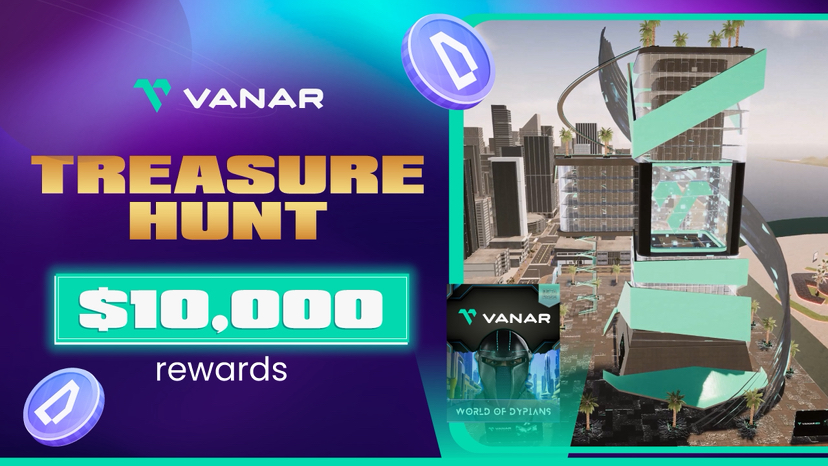
On the Web2 traffic migration front, Vanar has provided a massive C-end user base for institutional-level applications through deep cooperation with Viva Games Studios. Viva Games Studios has accumulated 700 million downloads and owns top IP licensed works such as Hasbro and Disney, accurately introducing over 100 million mobile users into the Vanar ecosystem—these users seamlessly completed the migration from Web2 to Web3 through low-threshold methods such as on-chain asset integration and on-chain task exchanges for VANRY rewards, forming a large C-end consumer market and providing a broad circulation scenario and liquidity support for institutional RWA assets. Meanwhile, the VGN gaming network and Virtua metaverse rely on the Kayon inference engine to achieve personalized storyline generation and dynamic economic balance, with total in-game asset trading exceeding $1.5 billion, forming a virtuous cycle of "play to earn," making entertainment scenarios a value connection bridge between institutional assets and C-end users, constructing a complete ecological closed loop of "institutional asset on-chain - user consumption circulation - value accumulation and appreciation."
The prosperity of the developer ecosystem provides continuous motivation for innovation in institutional-level applications. Vanar has built a full-cycle developer support system: multilingual SDKs (supporting JavaScript, Python, Rust) and detailed documentation lower technical barriers, while tools such as RPC nodes, testnet faucets, and blockchain explorers improve the development environment; the "Vanguard Program" and "Vanar Kickstart" program work together, providing comprehensive support for development teams, from funding assistance and security protection (collaborating with Immunefi to offer bug bounty rewards) to distribution and promotion (Magic Square application store ecosystem access). As of January 2026, over 200 development teams have settled in, with hundreds of active developers continuously submitting code on GitHub every week, launching over 100 DApps covering diverse scenes such as RWA, PayFi, AI agents, and the metaverse, with user activity growing by 70% annually, forming a positive cycle of "technical empowerment - developer innovation - scene richness - institutional settlement."
III. Industry strategic positioning: Defining core hubs in the wave of "institutionalization + intelligence"
The Web3 track in 2026 has formed a competitive landscape of "functional differentiation and scene focus": Ethereum serves as the settlement layer for high-value RWA, Solana dominates high-frequency trading and payments, and Layer 2 platforms like Base have become traffic hubs with a 46.6% share of total value locked (TVL), while Vanar, with its differentiated positioning of "AI agents + RWA + cross-chain services," has become a core player in institutional-level infrastructure and occupies a strategic high ground in industry transformation.
Compared to Ethereum, Vanar's differentiated advantage lies in its AI native capability and RWA scaling efficiency. Ethereum has become the preferred settlement layer for high-value RWA due to its strong network effects, but it lacks native support for the AI agent economy, and issues of transaction congestion and high fees restrict the scaled circulation of RWA. Vanar's 3-second block time, 30 million gas limit, and fixed fee model completely resolve the "clogged and expensive" pain points of traditional public chains, while Kayon inference engine's AI agent support significantly enhances the operational efficiency of RWA assets, better meeting institutional users' core demands for low cost, high efficiency, and intelligence.
Compared to Solana, Vanar's advantages lie in compliance and scene inclusivity. Solana dominates high-frequency trading scenes thanks to its high TPS advantages, but it has shortcomings in compliance adaptation and complex scene support, making it difficult to meet institutional users' compliance requirements for RWA assets. Vanar provides a safe and reliable operational environment for institutional users through deep adaptation to regulatory frameworks and a full-process compliance review mechanism, while its diverse scene layout avoids the dilemma of Solana's "single scene, weak ecosystem," achieving a synchronous enhancement of ecological scale and institutional value.
Compared to other AI native public chains (such as Bittensor and Vana), Vanar's advantages lie in the practicality of institutional landing and the inclusivity of its ecosystem. Bittensor focuses on decentralized AI collaboration networks, while Vana focuses on data sovereignty, but both face issues of single scenes and slow landing, making it difficult to attract large-scale institutional user settlement. Vanar quickly achieves commercial landing of technology through the combination of "RWA + AI agents," while lowering development barriers with EVM compatibility and multilingual SDKs, attracting developers and institutions from different backgrounds, with its ecological inclusivity far exceeding similar projects, making it the preferred partner for institutional Web3 transformation.
Conclusion: Technology for good, building a new value order in the Web3 institutional era
Vanar's rise is not accidental but a necessary result of the Web3 industry's transformation from "speculative hype" to "institutionalization and practicality." It reconstructs the underlying logic of institutional-level applications through the automation innovation of the V23 protocol, seizes the strategic opportunity of the agent economy with AI native architecture, connects the real economy and Web3 through comprehensive compliance solutions for RWA, and anchors long-term value with a sustainable economic model. In the year 2026, when institutional capital enters, AI agents explode, and RWA scales, Vanar is becoming the core hub connecting traditional institutions and the Web3 ecosystem with a development logic based on "technological innovation at the core, ecological integration as wings, and compliance landing as the basis," reconstructing a new order of industry value distribution.
From the underlying innovation of technical protocols to the value symbiosis of institutional ecosystems, from the future layout of AI agents to the current landing of RWA, every step of Vanar closely follows the core trends of industry transformation, proving the institutional value of blockchain technology with pragmatic landing results. In the future, with the landing of the Axon intelligent automation layer and Flows industry application layer, as well as the continuous expansion of global institutional markets in Europe, the Middle East, and Southeast Asia, Vanar will surely write a new chapter in institutional-level infrastructure in the wave of the Web3 institutional era, becoming the core force defining the development of the Web3 industry in 2026 and beyond.#Vanar $VANRY @Vanarchain
