
Reject air tokens! After researching for so long @Walrus 🦭/acc I realized that we should not focus on those elusive so-called 'governance voting rights,' but should truly study WAL as a commodity with 'essential' attributes — how it is consumed, locked, and circulated in the real business world.
In the world of Web3, 99% of tokens are 'air governance tokens' — they are worthless except for voting on logo colors within large investor groups. The value of such tokens completely depends on sentiment. However, Walrus ($WAL) belongs to that other 1%. It is not just a simple ballot; it is the 'digital fuel' driving the entire decentralized storage network. If we compare the Walrus network to the electricity grid of Web3, then WAL is the electricity. As long as someone uses electricity (stores data), $WAL must be consumed. This supply-demand relationship based on real business needs is the hard truth that transcends bull and bear markets.
1. Business closed loop: Returning from 'speculation logic' to 'supply and demand logic'
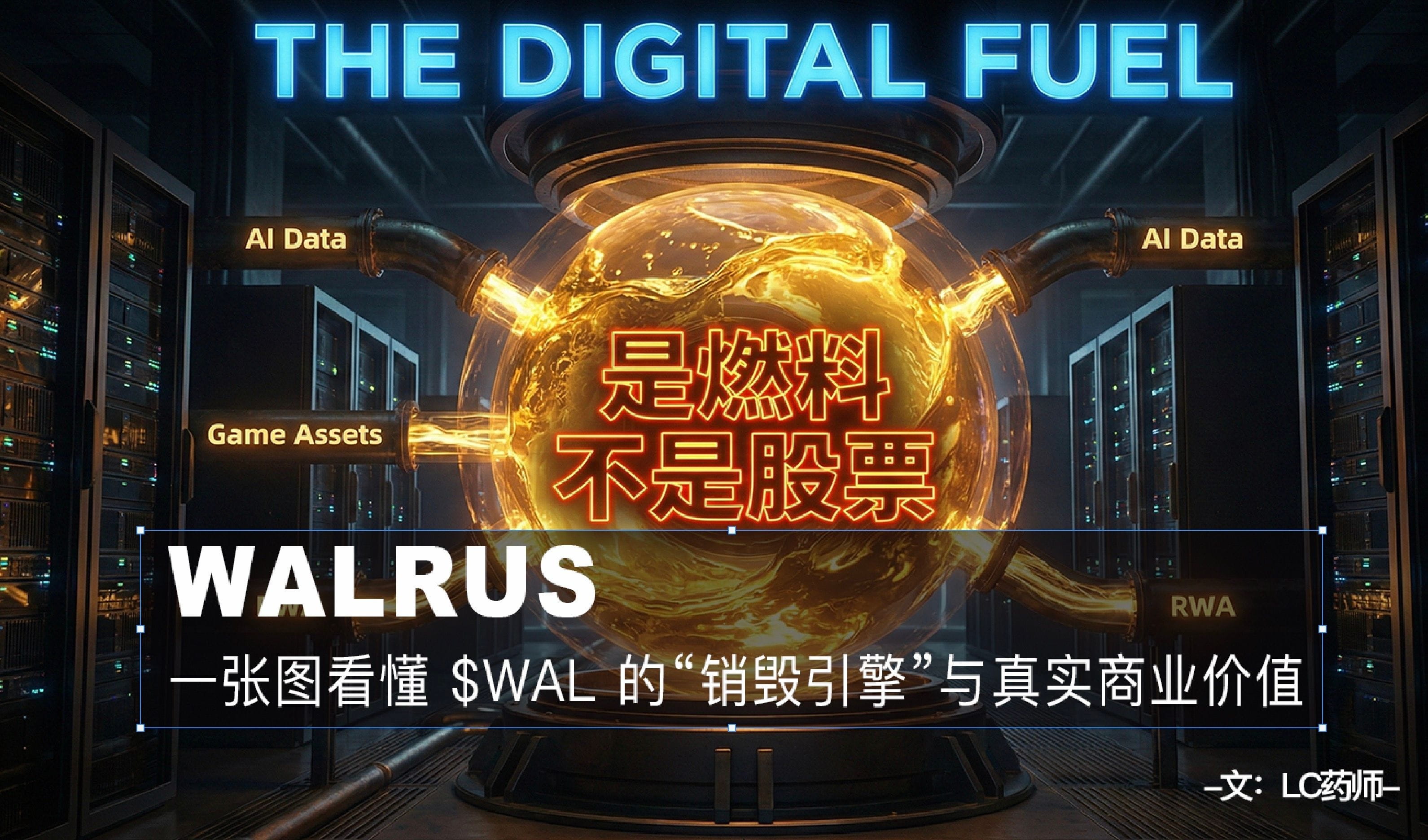
The price increase logic for many public chain tokens is 'manipulation by big players'. But the price increase logic for Walrus is 'rigid redemption'.
Why? Because Walrus's services are clearly priced.
When Team Liquid wants to store their 10 years of match footage, when AI companies want to store 500TB of training datasets, they can't generate love; they must go to the market to purchase WAL to pay for storage fees.
This creates a continuous 'rigid buying pressure' in the market, unrelated to the fluctuations in coin prices.
Whether today is a bull market or a bear market, as long as Team Liquid still needs to operate, as long as AI still needs data, they have to buy $WAL. This 'business flow' brings a cash flow that supports Walrus's market value. It is no longer solely influenced by Bitcoin's price movements, but deeply tied to the growth of Web3 data.
2. Destruction and black holes: The innovative 'storage fund' model
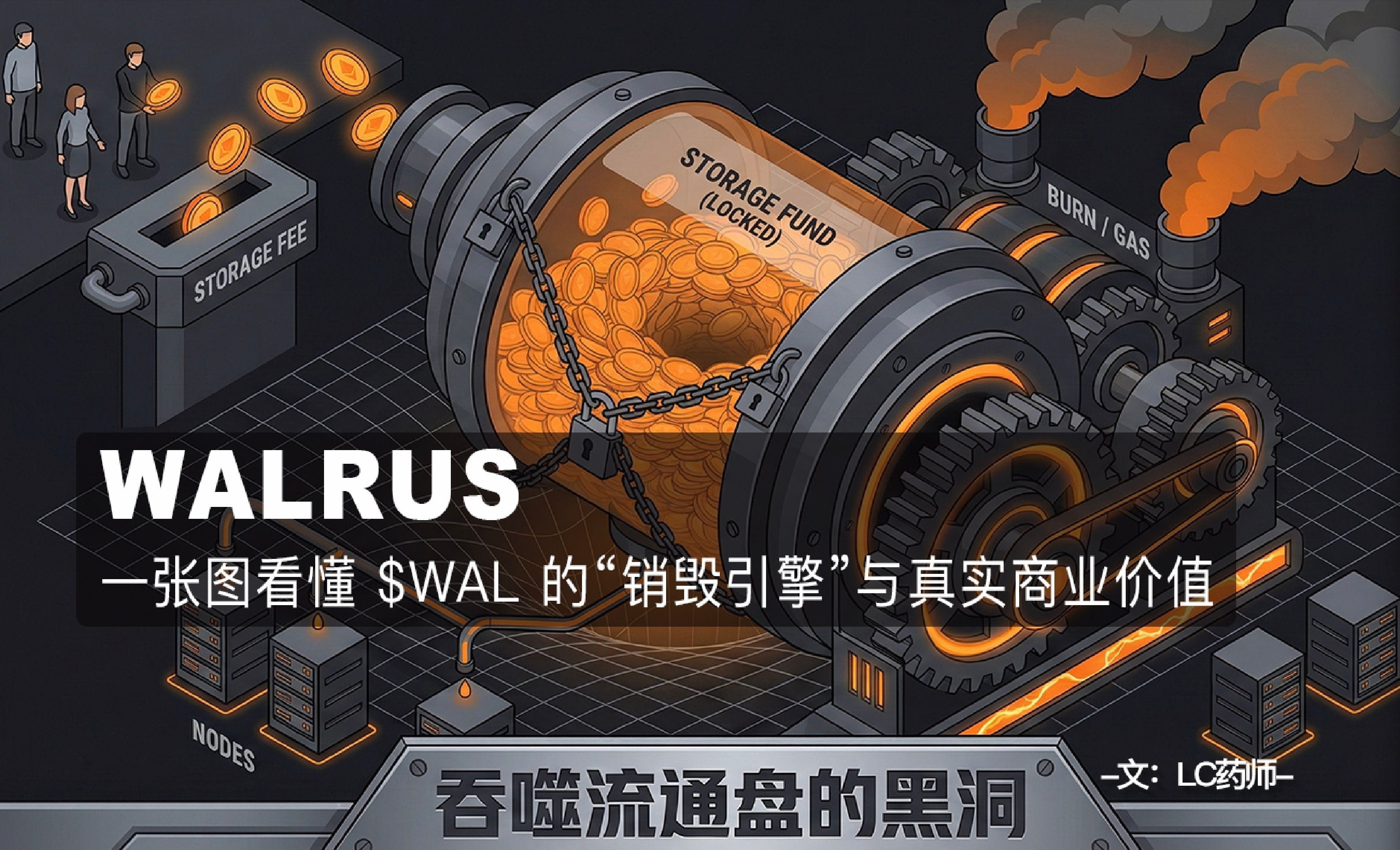
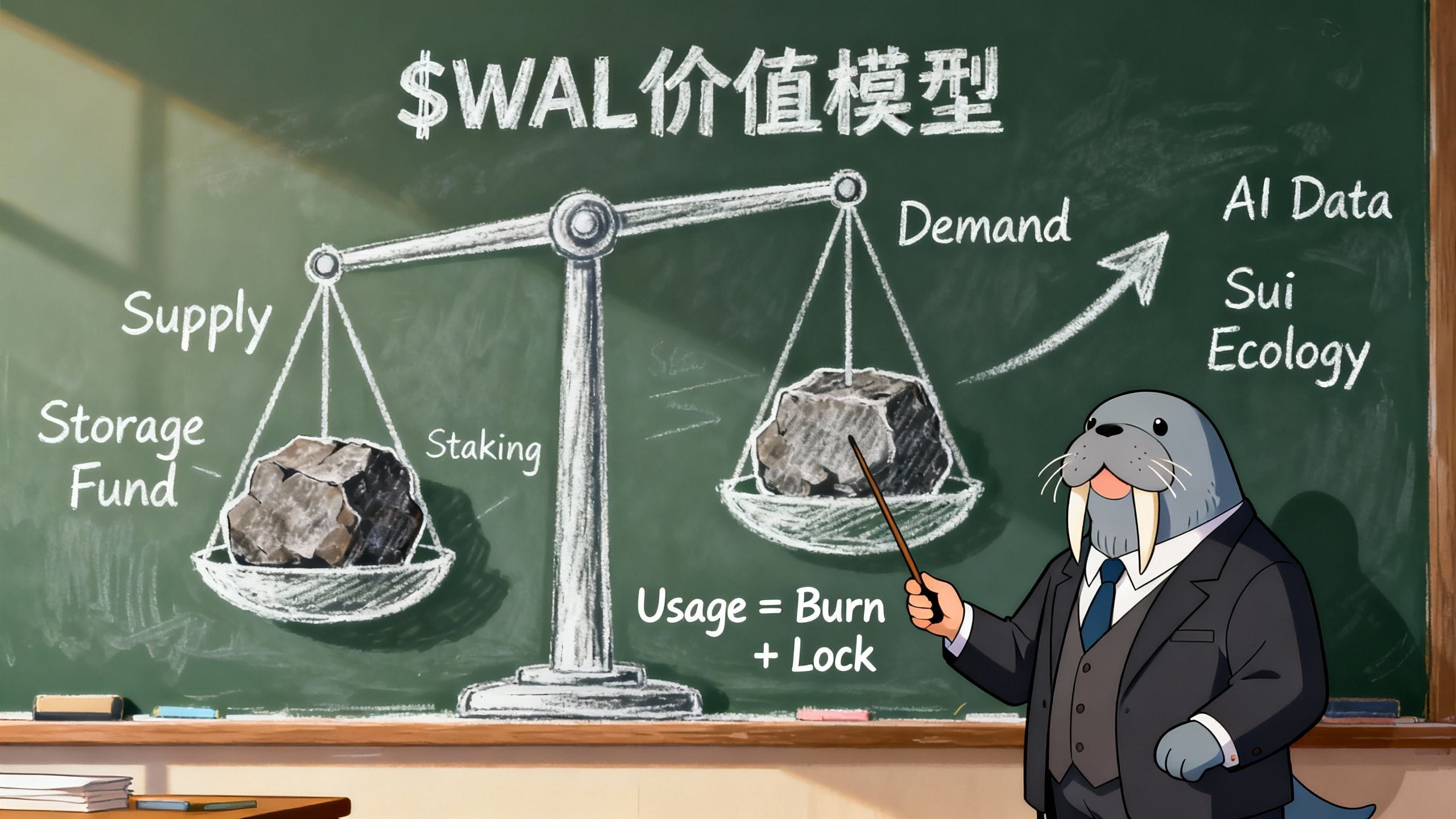
The most ingenious design of Walrus's economic model is that it constructs a 'black hole' that absorbs circulating supply—the storage fund.
1. Payment equals lock-up
In the Walrus protocol, when users pay for storage fees, this WAL is not directly given to node miners to sell off. Instead, this money first enters a public 'storage fund pool'.
It's like you paid a year's rent, but this money is frozen in a regulatory account.
For the market, this part of WAL instantly disappears from the circulating supply (it is locked). This leads to a contraction in circulation.
2. Gradual release of funds
Node miners can only gradually receive their wages from the fund pool over time, after proving that they have indeed stored the data.
The key point is: users store data with a 'one-time large payment' (instant lock-up), while miners sell coins with 'linear slow release'. This time difference of 'fast inflow and slow outflow' creates a natural upward buffer zone for WAL's price. With the explosion of the Walrus ecosystem, the number of tokens locked in the fund pool will far exceed the number sold by miners, thus driving up the coin price.
3. Network Gas and deflationary effects
Besides storing data, Walrus is also a high-frequency interactive network.
Walrus is closely integrated with the Sui public chain. Every data indexing, updating, deletion, and even metadata modification requires consuming WAL as network resource fees (Gas).
In the era of AI + DePIN, this interaction occurs at a frequency of hundreds of millions.
Imagine thousands of AI engines reading and writing data on Walrus every day, each breath burning $WAL. Although the individual Gas costs are not high, they accumulate. The tokens consumed here effectively create a deflationary effect, continuously reducing the total supply of WAL, making the chips in hand become scarcer.
4. Supply shock from the staking side
While discussing the demand side, don't forget the supply side.
To become a validating node or storage node of Walrus, it's not enough to just download software; you must stake a large amount of $WAL.
This is for security—if you act maliciously or lose data, your stake will be forfeited.
As the scale of the Walrus network expands (just look at the official vision), the number of required nodes increases, and the amount of WAL being staked and locked also increases.
This is another powerful engine for reducing circulating supply.
On one side, AI and large clients are buying coins in the secondary market for rent (increasing demand), while on the other side, nodes are locking up tokens for mining (reducing supply). A surge in demand + a contraction in supply means what in economics? I don't need to explain further, right?
5. Conclusion: Don't sell gold as scrap metal
In the cryptocurrency market, the ability to distinguish between 'air coins' and 'value coins' determines whether you are a loser or a winner.
The value of air coins relies on hype, while the value of Walrus relies on 'usage'.
Every byte of stored data is a brick that supports the price of WAL.
When we understand Walrus's 'storage fund black hole' and 'rigid commercial demand', you will realize that today's WAL is like coal and oil on the eve of the Industrial Revolution.
It may currently seem like an inconspicuous token, but with the explosion of AI, RWA, and Web3 data, it will become the underlying fuel driving this new digital world.
So, hold onto your $WAL tightly and don't sell your precious fuel as scrap metal when the engine has just been ignited.

